A mobile clinic is not a truck with a consultation couch bolted inside. It is a vehicle in which the body structure, the power supply, the water system, the climate control and the medical equipment are designed as one working environment. That is why the manufacturer matters more than the chassis badge: the same ISUZU, FOTON or IVECO cab can become a clinic that sees 80 patients a day for a decade, or a showroom vehicle that fails on its first field visit. Prices for a complete unit run from roughly USD 28,000 for a van conversion to USD 150,000 for a district-level rigid clinic before medical equipment, and the equipment itself can add another 30–60 percent. This guide covers the body classes, the layout rules that decide whether clinicians can actually work, the electrical and cold-chain sizing, the two separate approval tracks your market will apply, the 2026 price bands, running costs and the maintenance plan.
An ambulance moves a patient and delivers care on the way. A mobile clinic brings a service to people who cannot reach a hospital. A screening bus moves many people through a short protocol. These three jobs produce different bodies, and a vehicle built for one performs badly at another. Ambulances prioritise stretcher access, oxygen, monitoring and a short crew workflow. Clinics prioritise room to examine, visual and acoustic privacy, storage for consumables, a stable power supply for diagnostic equipment and a workflow that lets one or two clinicians see 40–120 patients a day. Screening buses prioritise throughput: wide doors, a one-way patient path and enough waiting space outside the vehicle.
The missions we configure most often are primary care and community screening (blood pressure, glucose, BMI, vision, general consultation); maternal and child health (antenatal checks, ultrasound, immunisation, growth monitoring, with a 2–8 °C vaccine fridge); dental and eye care (a dental chair with its own compressor and suction, or an optometry lane); field laboratory (sample preparation, microscope, centrifuge, reagent storage, a sink with clean and waste water separation); occupational health at mines and construction sites (audiometry, spirometry, ECG and fitness-to-work checks); and disaster or public-health response (triage, rapid testing, isolation of a suspected case and independent power for several days). Write the mission down before comparing quotations, because each one changes the body length, the door positions, the power budget and the price.
Five classes cover most tenders. The usable area figures are interior floor area after cabinets and the driver area; the price bands are factory-direct, FOB China, for a standard body without medical equipment, early 2026.
| Class | Chassis and GVW | Usable area | Typical service | Indicative FOB (body only) |
|---|---|---|---|---|
| Van conversion | Van body, 3.5–5 t | 6–8 m² | Primary care, vaccination outreach, blood pressure and glucose screening; one clinician | USD 28,000–45,000 |
| Light truck box body | 4x2, 5–8 t | 10–14 m² | Community screening, dental or eye lane, maternal and child checks; one or two clinicians | USD 55,000–95,000 |
| Rigid clinic truck | 4x2 or 4x4, 10–12 t | 15–22 m² | District clinic with laboratory bench, minor treatment room, pharmacy store and waiting awning | USD 95,000–150,000 |
| Bus conversion | Coach or city bus chassis | 20–28 m² | Mass screening, blood donation, immunisation campaigns; high throughput, shallow cabinets | USD 130,000–220,000 |
| Trailer or modular unit | No chassis; towed or craned | 18–30 m² | Fixed-site outreach, long-stay camps, field laboratory; no self-propulsion | USD 60,000–120,000 |
A van conversion is the cheapest way to reach narrow streets and villages, but it gives one room, limited storage and no realistic way to run a dental chair and a laboratory at once. A light truck box body is the class most NGOs and health ministries buy: the box gives a square interior, two rooms, a side door with steps, an awning and a roof position for the air-conditioning or generator. A rigid 10–12 t body adds a third room, a laboratory bench and enough water and waste capacity for a full day, which is what district-level service needs. A bus conversion offers a long flat floor and wide doors, but the curved walls and window line limit cabinet depth — good for screening, awkward for a laboratory. A trailer or modular clinic gives the largest room area per unit cost and no chassis maintenance, at the price of needing a tow vehicle or a crane to move it.
CLW builds these bodies on mobile medical truck chassis from ISUZU, JMC, FOTON, IVECO and DONGFENG, in left- or right-hand drive depending on the model and the destination market. Confirm right-hand-drive availability at quotation stage rather than assuming it, because the body, the door position and the equipment layout all change with the steering side.
A clinic that photographs well can still fail in service because the flow is wrong. Walk the route a patient takes: entry step, waiting, registration, triage, examination, treatment, pharmacy or sample collection, exit. Each move should be short, and the dirty and clean routes must not cross — a used dressing trolley should never pass between a clean instrument bench and the door. In a two-room body the usual arrangement is a front consultation room and a rear treatment or laboratory room, connected by an internal door, with separate outside doors where the body length allows.
Practical details decide whether the clinic is usable: a door wide enough for a wheelchair, steps with handrails and a grab handle, non-slip flooring, rounded cabinet corners, a sink reachable from the examination couch, locked storage for medicines, a sharps container bracket, and lighting bright enough for examination without glare on screens. Ask for dimensioned drawings of every wall rather than a rendered image. The drawing should show cabinet volumes, door swings, equipment footprints, cable routes, water and waste tank positions, the generator locker and the air-conditioner positions — and it should show them in millimetres, because a 50 mm error at the drawing stage becomes a cabinet removed at the factory.
| Zone | Minimum clear size | What the dimension is for |
|---|---|---|
| Entry door and steps | 850–900 mm clear width, two steps with handrail | Wheelchair and stretcher access, safe boarding on uneven ground |
| Consultation room | 2,400 × 2,600 mm | Examination couch, clinician stool, desk and a hand-wash basin reachable from the couch |
| Treatment or minor surgery room | 2,600 × 2,800 mm | Trolley movement on both sides of the couch, instrument bench, waste bin and sharps bracket |
| Laboratory bench | 600 mm deep × 900 mm high, with sink at one end | Centrifuge and microscope footprint, clean and waste water separation |
| Vaccine cold chain position | 800 × 700 mm, ventilated, away from the door | 2–8 °C fridge with data logger, insulated boxes and a backup power point |
| Washroom | 900 × 1,200 mm | Hand-wash basin and toilet with a waste tank, not a cassette in a cupboard |
| Generator locker | Separate fire-rated compartment with air intake and exhaust | Fuel vapour, heat and carbon monoxide must not enter the clinical space |
Power is the most common source of field failure, and "with generator" is not a specification. Start from a load list in watts, the daily running hours and the autonomy you expect, then size the generator, the battery bank and the inverter from that list. A diesel generator sized for the air-conditioning, the autoclave and the diagnostic equipment at the same time is the baseline. Shore power with an isolation transformer lets the clinic run from a hospital or a site supply without putting the medical devices at risk. A battery and inverter, charged from the generator or from solar panels, keeps the vaccine fridge and the laboratory running during generator service and at night.
| Load | Rated power | Duty | Sizing note |
|---|---|---|---|
| Air conditioning, two units | 1,200 W each | Continuous in hot climates | Highest continuous load; inverter units start softer than fixed-speed units |
| Autoclave | 2,000 W | 1–2 cycles per day | Heating element load for 30–60 minutes; run it before the air-conditioning peak |
| Dental chair and compressor | 1,500 W | Intermittent | Compressor inrush needs generator headroom |
| X-ray or ultrasound | 3,000 W / 300 W | Momentary / continuous | X-ray surge decides the generator frame size, not the average load |
| Laboratory equipment | 400–800 W | Intermittent | Centrifuge and incubator; keep them off the inverter circuit |
| Vaccine fridge and lighting | 150 W / 500 W | Continuous | These stay on the battery and inverter circuit overnight |
| Water pump and misc. | 400 W | Intermittent | Include in the generator total, not in the night autonomy |
A working rule: add the continuous loads, add the largest motor or heater inrush, then choose a generator about 25 percent above that peak, and keep the generator loaded above roughly 40 percent of its rating so a small diesel does not glaze its cylinders running at idle. For the example above, that lands a two-room clinic on a 6–8 kW set, with a 3–5 kWh battery and a 2–3 kW inverter for the night circuit. Ask the builder for the load list, the generator rating and the autonomy calculation in writing; a clinic that loses its fridge overnight loses its vaccine stock the same night.
Water needs a clean tank, a waste tank and a separation between the two, sized with 10–15 percent headroom: a two-room clinic with a laboratory typically carries 200–400 L of clean water and 250–450 L of waste. A laboratory needs a sink with a trap, a hand-wash basin in each room and a floor drain that does not pass under clean storage. Cold chain is a medical requirement, not an accessory: a 2–8 °C fridge with a data logger, a temperature alarm and a backup power source, plus insulated boxes for transport. Climate control must handle the destination rather than the factory: 45 °C ambient in the Sahel, high humidity on the coast, or cold nights at altitude. For TB or isolation work, specify ventilation and, where the protocol requires it, negative pressure with HEPA filtration.
Medical devices bring electrical safety rules that a normal truck body does not meet. IEC 60601-1 governs the devices themselves, IEC 60601-1-2 governs their electromagnetic compatibility, and the installation has to keep leakage currents low enough that a device does not become dangerous when a patient is connected to it. In practice that means an isolated power system with an insulation monitor for the treatment room, residual-current protection graded for medical locations, a single equipotential bonding bar for all metal parts of the body, and separated routing for power and signal cables so the ultrasound image does not carry the generator's noise.
Integration also has to survive motion. Cabinets need positive latches, not friction catches; the dental chair and the X-ray arm need their own floor reinforcement and a transport locking position; gas cylinders — oxygen, and medical air if fitted — must be secured upright in a ventilated compartment with a pressure regulator that is closed during travel. Ask for the equipment schedule with each item's power, weight and fixing method, and confirm that the body's structure was calculated with that schedule in hand. A body designed for a consultation desk and later fitted with a dental unit is a body that cracks at the wheel arch within a year.
The vehicle, the body and the medical equipment are three separate approval questions, and buyers routinely win the first and lose the second. The vehicle is registered in its own class — truck, bus or trailer — and needs the usual homologation, emissions and labelling documents. The medical equipment inside it is a medical device in most jurisdictions, and needs its own registration, which the vehicle manufacturer usually cannot provide. Confirm both tracks before production starts: the certificate the vehicle authority accepts, and the licence the device regulator requires for the equipment you intend to install.
| Market | Vehicle track | Medical device track | Practical note |
|---|---|---|---|
| Saudi Arabia and the Gulf | SASO / SABER (KSA), ESMA (UAE), GSO standards | SFDA medical device marketing authorisation (KSA); MOH registration in the UAE | Arabic labelling on both the vehicle and the devices; allow months for device registration |
| Kenya, Tanzania, Uganda | KEBS PVoC, TBS, UNBS pre-shipment inspection | PPB (Kenya), TMDA (Tanzania), NDA (Uganda) | Device registration is applied for by the importer, not the Chinese supplier |
| Nigeria and West Africa | SONCAP certificate and pre-shipment inspection | NAFDAC registration for medical devices | NAFDAC needs product labelling and a local applicant; start early |
| Brazil, Mexico and Latin America | INMETRO (Brazil), NOM (Mexico), national homologation elsewhere | ANVISA (Brazil), COFEPRIS (Mexico) | Spanish or Portuguese labelling and manuals for both tracks |
| Russia, CIS and EAEU | EAC conformity, TR CU 018/2011 | Roszdravnadzor device registration | Russian manuals, cold-climate package and heated fuel filter |
| Right-hand-drive markets | National homologation, often with local inspection | National device authority | Order RHD at the factory; a later conversion usually voids the body warranty |
Useful standards to name in a tender: ISO 13485 for the device maker's quality system, IEC 60601-1 and IEC 60601-1-2 for the equipment, ISO 14971 for risk management, ISO 7396-1 where medical gas is piped, and the WHO performance, quality and safety specification for vaccine refrigerators. Naming them tells a supplier that you will check, and it tells a body shop that it is out of its depth.
The bands below are factory-direct, FOB China, for the body with standard fittings — air conditioning, generator, water system, cabinets, lighting, wiring — and without medical equipment. Dental units, ultrasound, X-ray, laboratory analysers and fridges are usually bought separately, and on a fully equipped clinic they add 30–60 percent to the vehicle price. That split matters at budget stage: a ministry that compares "clinic truck USD 60,000" with "clinic truck USD 95,000" is often comparing two different equipment lists.
Compare the same line items: body panel construction and insulation, generator brand and rating, air-conditioning capacity, water and waste tank sizes, cabinet specification and latches, wiring standard, shore-power inlet and isolation transformer, and the dimensioned drawings delivered before production. A quotation that lists only "mobile clinic truck, 1 unit, USD 70,000" cannot be compared with another, because the two bodies may differ by a 6 kW generator, an isolation transformer and a year of service life.
Purchase price is roughly a third of what a clinic vehicle costs over five years. The table is an illustrative model for a 7 m light truck clinic covering 20,000 km a year and running its generator eight hours a day at USD 1.10 per litre of diesel. Your rates will differ; the order of the items rarely does.
| Item | Basis | Five-year total (USD) | Share |
|---|---|---|---|
| Purchase and delivery | USD 78,000 FOB plus freight and duty estimate | 86,000 | 31 % |
| Generator fuel | 3 L/h × 8 h × 220 days a year at USD 1.10 | 29,000 | 10 % |
| Vehicle fuel | 20,000 km at 18 L/100 km, USD 1.10 | 19,800 | 7 % |
| Generator and body maintenance | Oil and filters, belt, battery, AC service, cabinet hardware, water tank cleaning | 12,000 | 4 % |
| Tyres and chassis service | Two tyre sets and scheduled chassis service | 6,500 | 2 % |
| Equipment calibration and cold chain | Annual calibration, fridge logger checks, replacement probes | 9,000 | 3 % |
| Driver and operating staff | Salaries and local overhead, not included here | — | — |
The lesson is not the exact total but the order: purchase dominates, then fuel, and the equipment running costs are large enough that a generator chosen 2 kW too small — or an air-conditioner chosen 2 kW too large — shows up in the budget every year. A body that is 8 percent more expensive but insulated properly and fitted with inverter air-conditioning usually pays the difference back within two or three years of daily service.
Send these twelve answers with your mission description and destination port, and a clinic builder can return a line-item quotation instead of a range.
| # | Input | What to state | Why it changes the quotation |
|---|---|---|---|
| 1 | Mission | Primary care, maternal and child, dental, eye, laboratory, occupational health, screening or emergency response | Sets rooms, equipment and water capacity |
| 2 | Patients per day | Expected consultations and peak throughput | Sets waiting space, doors and staff positions |
| 3 | Body class | Van, light truck box, rigid truck, bus or trailer | Sets chassis, floor area and price band |
| 4 | Route and road condition | Paved, gravel, mine site or seasonal track; daily distance | Sets suspension, 4x4 need and tyre choice |
| 5 | Climate | Ambient temperature, humidity, dust, altitude | Sets air-conditioning, insulation and generator cooling |
| 6 | Power budget | Equipment list in watts with daily running hours | Sizes generator, battery and inverter |
| 7 | Autonomy | Hours or days the clinic must run without refuelling or mains | Sizes fuel tank, battery bank and solar option |
| 8 | Water and waste | Litres per day and whether a laboratory is fitted | Sizes tanks and sink separation |
| 9 | Cold chain | Vaccine fridge capacity and required backup hours | Sets the fridge circuit and alarm |
| 10 | Driving side and registration | Left- or right-hand drive, GVW class and local approval | Changes body layout and homologation documents |
| 11 | Equipment schedule | Devices proposed, with power, weight and fixing method | Determines reinforcement and electrical design |
| 12 | Service plan | Spare parts kit, training on site and warranty terms | Affects the price and the availability you can expect |
CLW builds to MIIT catalog requirements in an ISO-certified factory. Export files include certificate of origin, commercial invoice, packing list, bill of lading and inspection report on request. A standard light truck clinic takes 25–40 working days after deposit and drawing approval; a rigid clinic with a laboratory or a bus conversion takes 35–60 working days. Imaging bodies with shielding take longer, because the shielding design is approved before the body is welded.
Factory acceptance inspection is worth the trip on any unit above USD 60,000: run the generator under load, operate the air-conditioning, check the fridge holds 2–8 °C with the door open for a minute, and measure the insulation resistance of the medical circuits. If travel is not possible, ask for a video inspection against the drawing and the load list, item by item, and for the insulation-resistance and earth-bonding test values in writing. Small units ship in a 40 ft container or on a flat rack; rigid clinics and buses normally move by RoRo. CKD and SKD packs are available with assembly drawings and an engineer attending the first batch; more body types are covered in the buying guides.
A clinic vehicle is serviced on two clocks: the chassis follows kilometres, the clinic follows hours. Both need a written schedule, and both need a parts kit on site, because a van in a district hospital waits days for a generator belt.
| Interval | Checks | Parts to keep in stock |
|---|---|---|
| Before every trip | Generator oil and coolant, fuel level, tyre pressure, door latches, cabinet latches, fridge temperature and logger download, water tank level, sharps bracket | Fuel and oil, fuses, lamps, fridge probe |
| Every 250 generator hours | Engine oil and filter, air filter, belt tension, exhaust for leaks, battery terminals | Filter set, belt, battery |
| Every 10,000 km | Chassis oil and filters, brake adjustment, suspension, wheel bearings, body-to-chassis mounts | Filter set, brake pads, grease |
| Every 6 months | Air-conditioner filters and gas charge, water tank and pipe disinfection, waste tank inspection, insulation-resistance test of medical circuits, earth-bonding continuity | AC filters, disinfectant, seals |
| Annually | Equipment calibration, fridge validation, generator load test, structural inspection of cabinet fixings and floor reinforcement, re-torque of body mounts | Calibration service, mounting hardware, gaskets |
The three hazards that put a mobile clinic out of service are electrical, biological and exhaust-related. Electrically, treat every treatment room as a medical location: isolated supply with an insulation monitor, residual-current protection, one bonding bar for all metalwork, and no extension leads across the floor. Test the insulation monitor and the bonding bar on the schedule, not after a shock.
For infection control, keep the clean and dirty flows apart on the drawing and in daily practice: a used dressing trolley should never pass the instrument bench, sharps go into a dedicated container fixed to the wall, and the waste tank is emptied at an approved point rather than a roadside drain. For the generator, the locker must be sealed from the clinical space, ventilated to the outside, and never used to store fuel cans or oxygen cylinders; carbon monoxide has no smell and a clinic parked with its generator running under an awning is the classic exposure. Finally, secure every cabinet and device for travel: a 20 kg monitor that becomes a projectile at 60 km/h injures the clinician, not the truck.
Send your mission, patient volume, equipment list and destination port through the contact page to receive a configuration with a dimensioned body drawing, a load and autonomy calculation and a line-item quotation. If you are still comparing body classes, read the rest of our buying guides first: on the same chassis a clinic, an ambulance and a personnel carrier are different vehicles, and the body choice usually matters more than the badge on the grille.
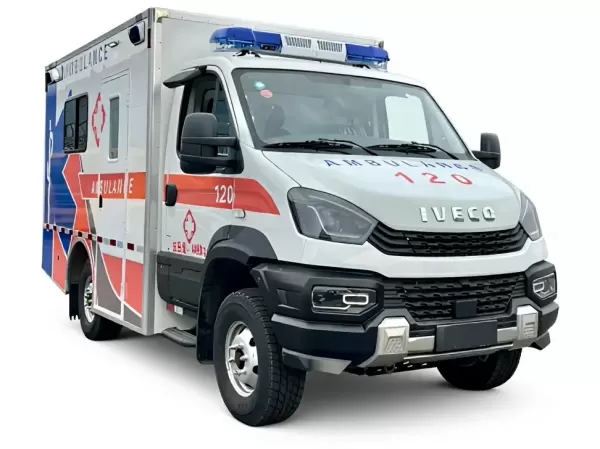 IVECO Daily ICU Ambulance for Critical Care Transport
Mobile Medical Truck
 IVECO Daily Transfer Ambulance for Hospital Patient Moves
Mobile Medical Truck
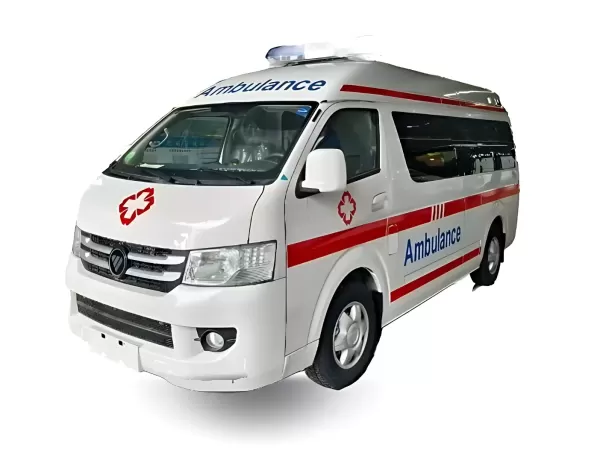 FOTON View G9 Ambulance 5-7 Seats for Clinic Response
Mobile Medical Truck
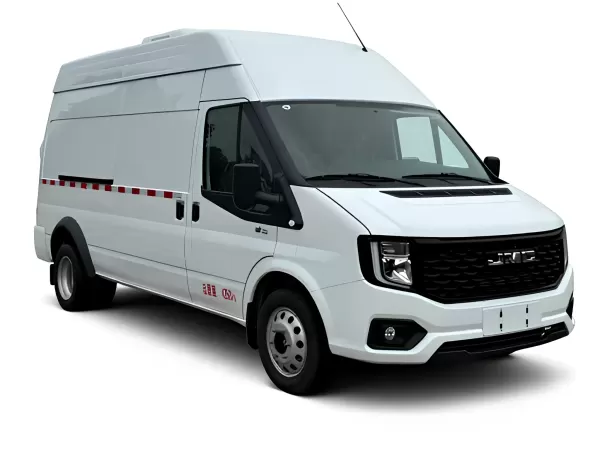 JMC Mobile Clinic Van for Community Health Screening
Mobile Medical Truck
Tell us your truck model and quantity — an engineer replies within 12 hours with a factory-direct price.
Tell us the model and your requirement — an engineer replies within 12 hours, factory direct.