A line of polished-aluminium tanks with orange hazard banding stood nosed to windscreen across the apron — ten twenty-cubic-metre fuel carriers finished for the long roads of Kazakhstan.
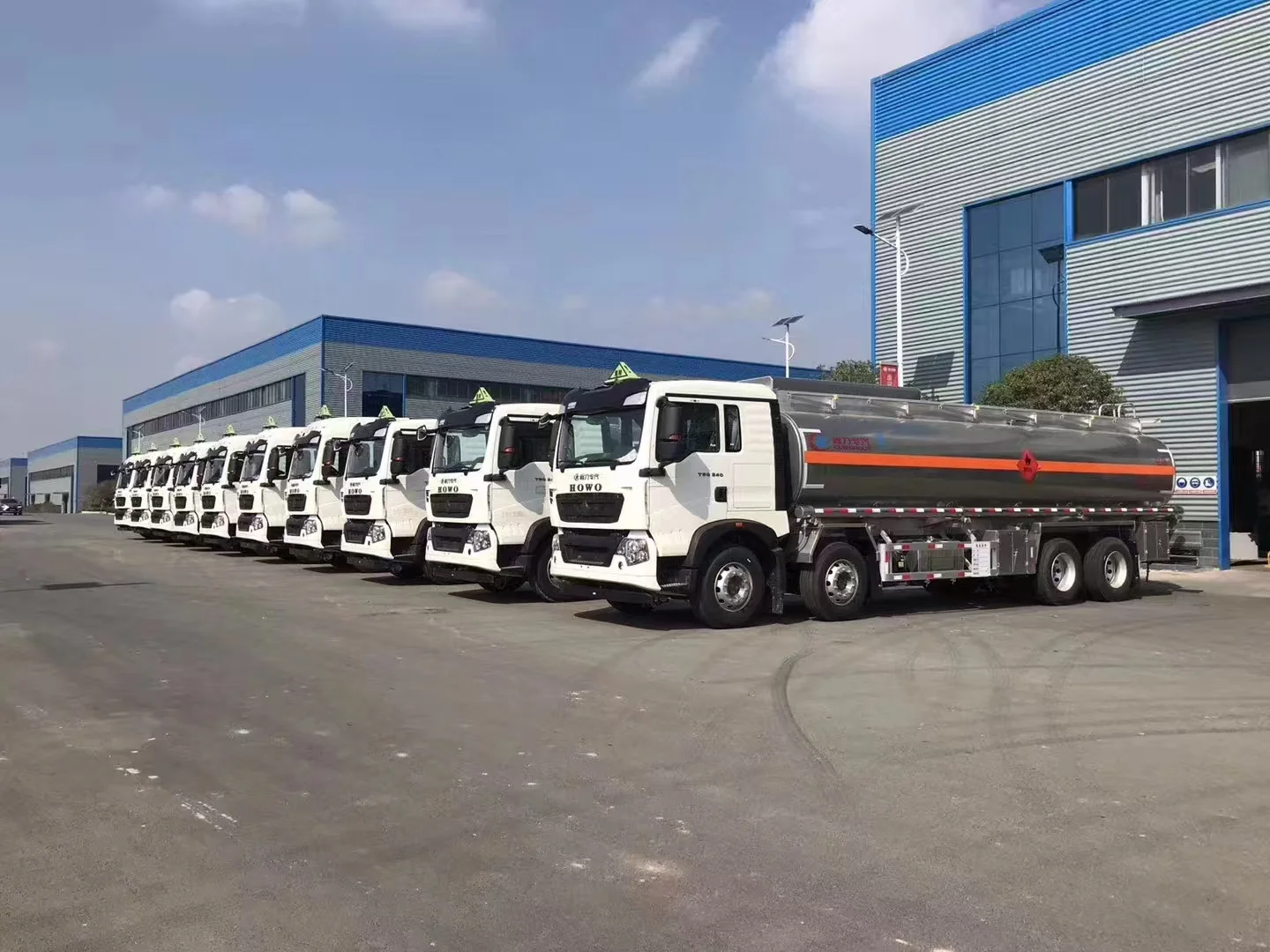
Kazakhstan’s fuel geography is distance. Product moves from a handful of refineries out to station networks across thousands of kilometres of steppe highway, and a tanker earns its keep by splitting as many stops as possible into one round. This ten-unit order answers that with a straightforward formula: the Sinotruk HOWO tanker chassis carrying a 20-cubic-metre tank divided into two compartments — one vehicle, two grades, one delivery round.
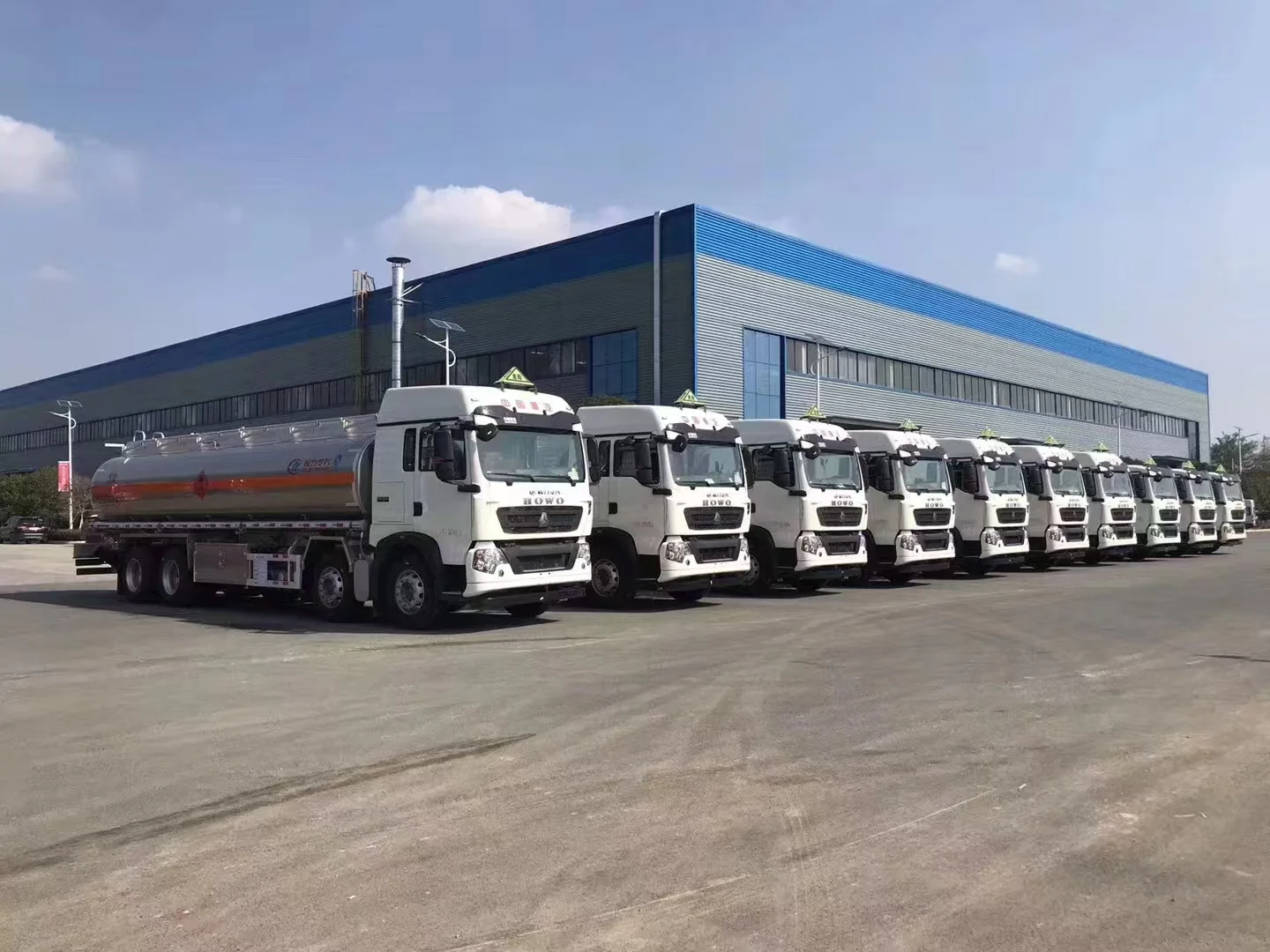
The tank is partitioned into two independent compartments, each with its own valves and piping to the pump and metering panel at the rear. On the loading rack that means taking two products in a single trip; on the route it means serving two demand lines — two fuel grades, or fuel plus a return to the terminal — without doubling the mileage that decides a tanker operator’s margin. Load identity is made unmissable from a distance: the orange hazard band, the flammable placard and the roof board are applied to the same drawing on every unit, the way dangerous-goods practice expects.
A Kazakhstan spec is a temperature-range spec: these runs see deep winter and full sun inside the same season. The pump fittings, valve seals and the tank’s expansion and breather arrangement were specified for that swing rather than for a mild-climate brochure, and the chassis package behind the tank — cooling capacity, electrical sealing and brake margin under full payload — was ordered to the same standard across all ten trucks.
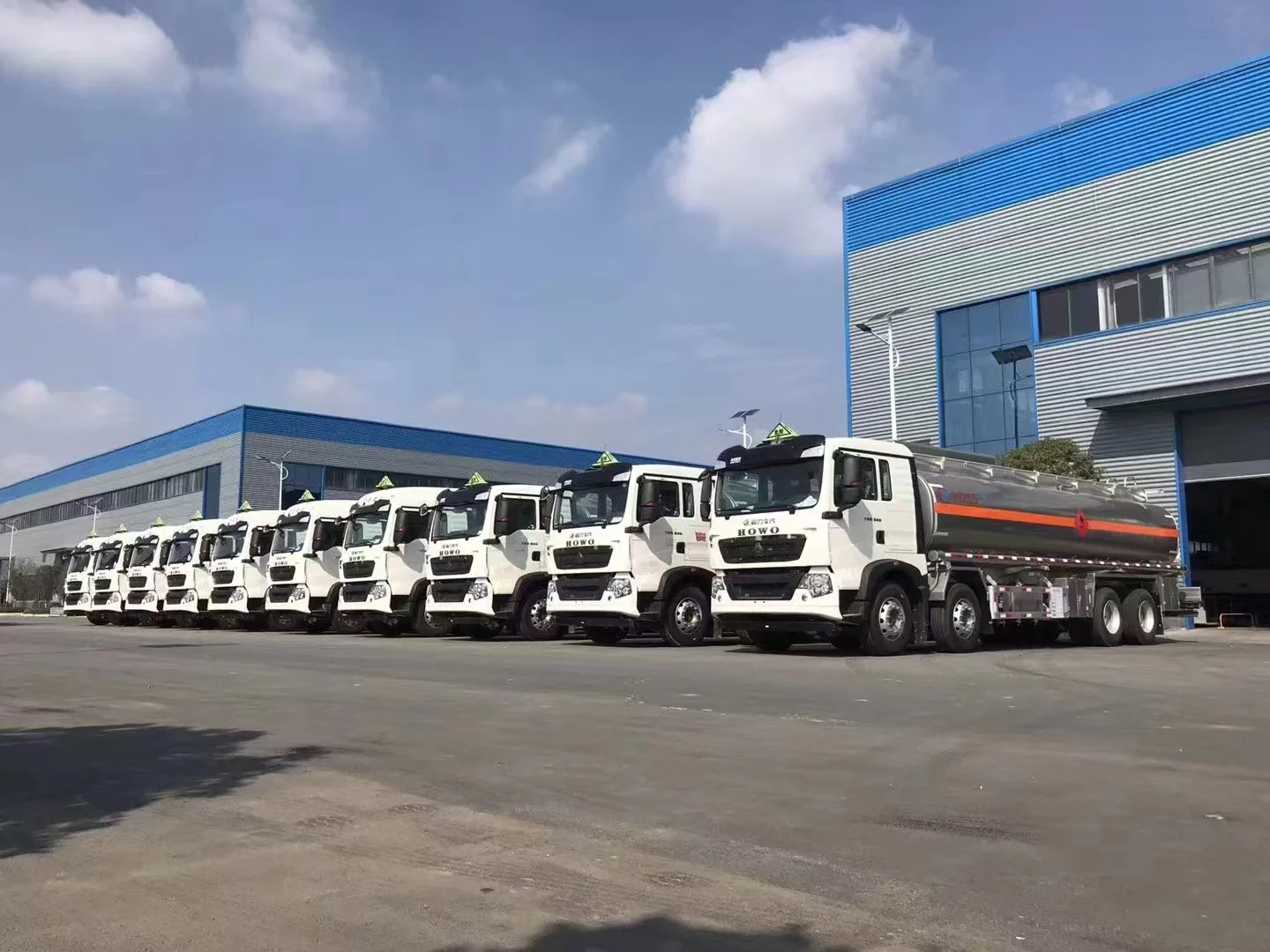
Photographed nose-on, the batch shows exactly what fleet buyers audit for: no unit carrying a different mirror, a different decal height or a different hose stow. Before release for export each truck’s pumps, valves and meters were function-checked compartment by compartment, and the marking package verified against the certification file — the paperwork pass that lets a tanker roll straight into a Central Asian product-delivery operation on arrival.
Fuel distribution for a Central Asian market? Send us the grades, the round length and the terminal’s loading setup — and we will size chassis, compartment split and pump-metering configuration from a single unit to a full fleet, with export documentation handled at the factory.
Photographed at the CLW Suizhou plant during staging and batch verification of the ten-unit Kazakhstan tanker order.
Tell us your truck model and quantity — an engineer replies within 12 hours with a factory-direct price.
Tell us the model and your requirement — an engineer replies within 12 hours, factory direct.