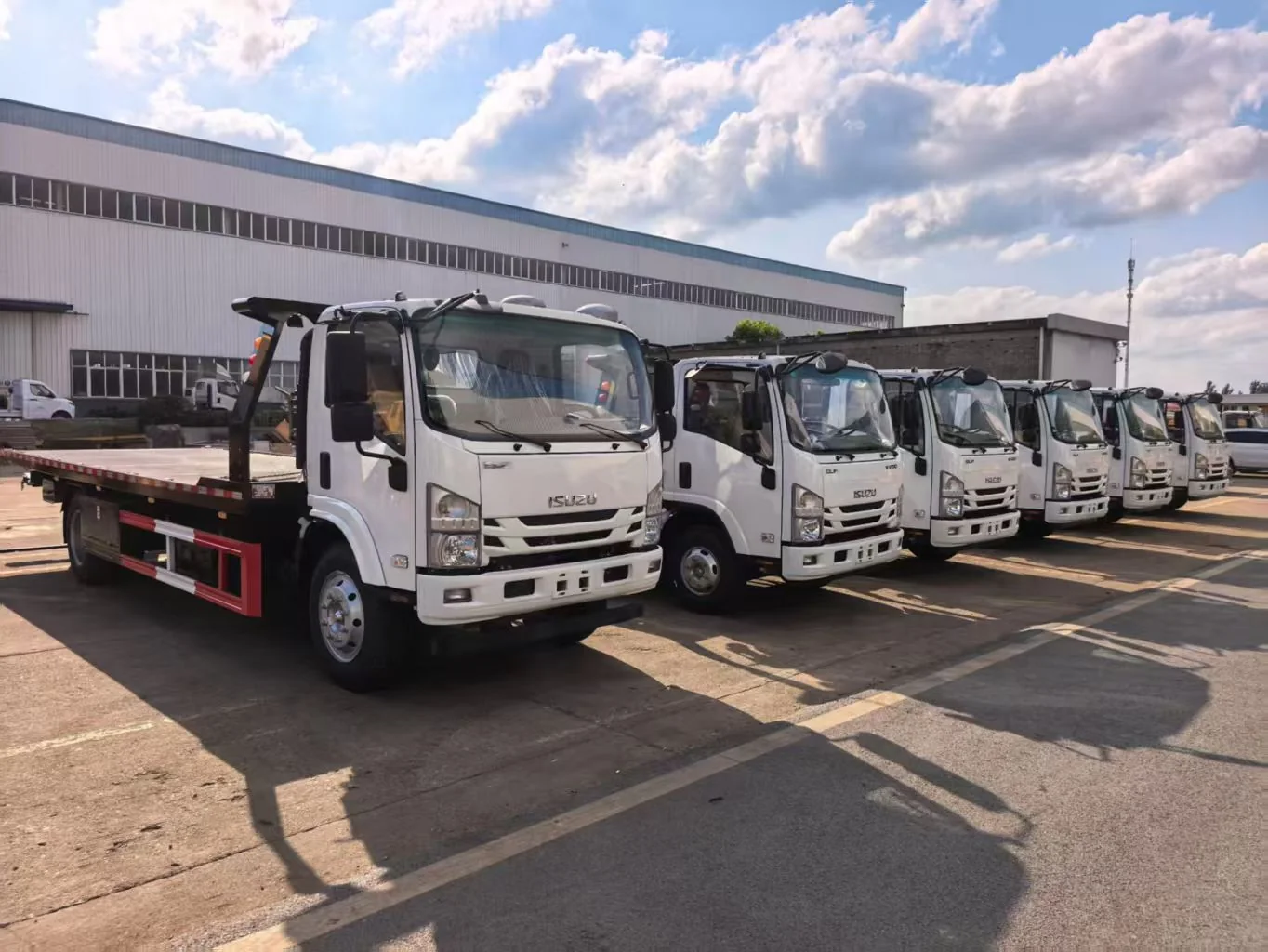
Six white Isuzu cabs, six long aluminium decks — the Uganda recovery batch stood checked nose-to-sky on the apron, ready for the inland run to Kampala.
In a city like Kampala, a blocked lane is the whole story: an overturned pickup or a disabled matatu at the Nyabugogo junction can idle a district before a recovery vehicle is even found. The answer most East African operators have settled on is the light wheel-lift flatbed — one driver, one truck, and a sedan or SUV lifted, rolled and carried off the road inside fifteen minutes. This six-unit order is that answer, six times over.
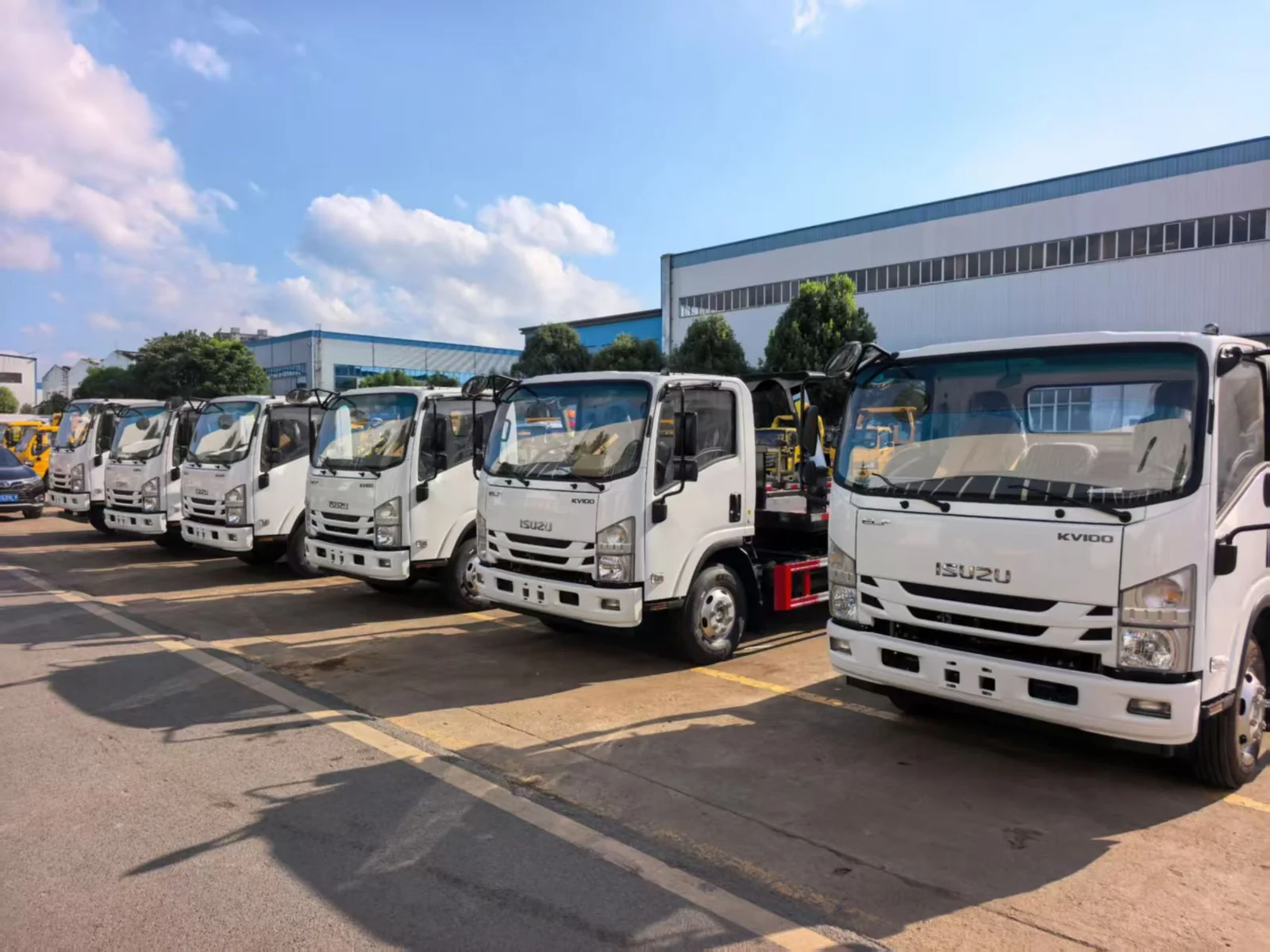
The carrier is a deliberate choice, not a catalogue default. Isuzu light trucks run as taxis, ambulances and delivery vehicles across Uganda, which means the KV100’s diesel service items, brake parts and driveline components sit on shelves in Kampala garages that have never seen a Chinese brand. A recovery fleet built on that chassis never waits on a container of spares — the parts chain is already national. For a municipal or police-contracted recovery operation, that availability is the whole uptime argument.
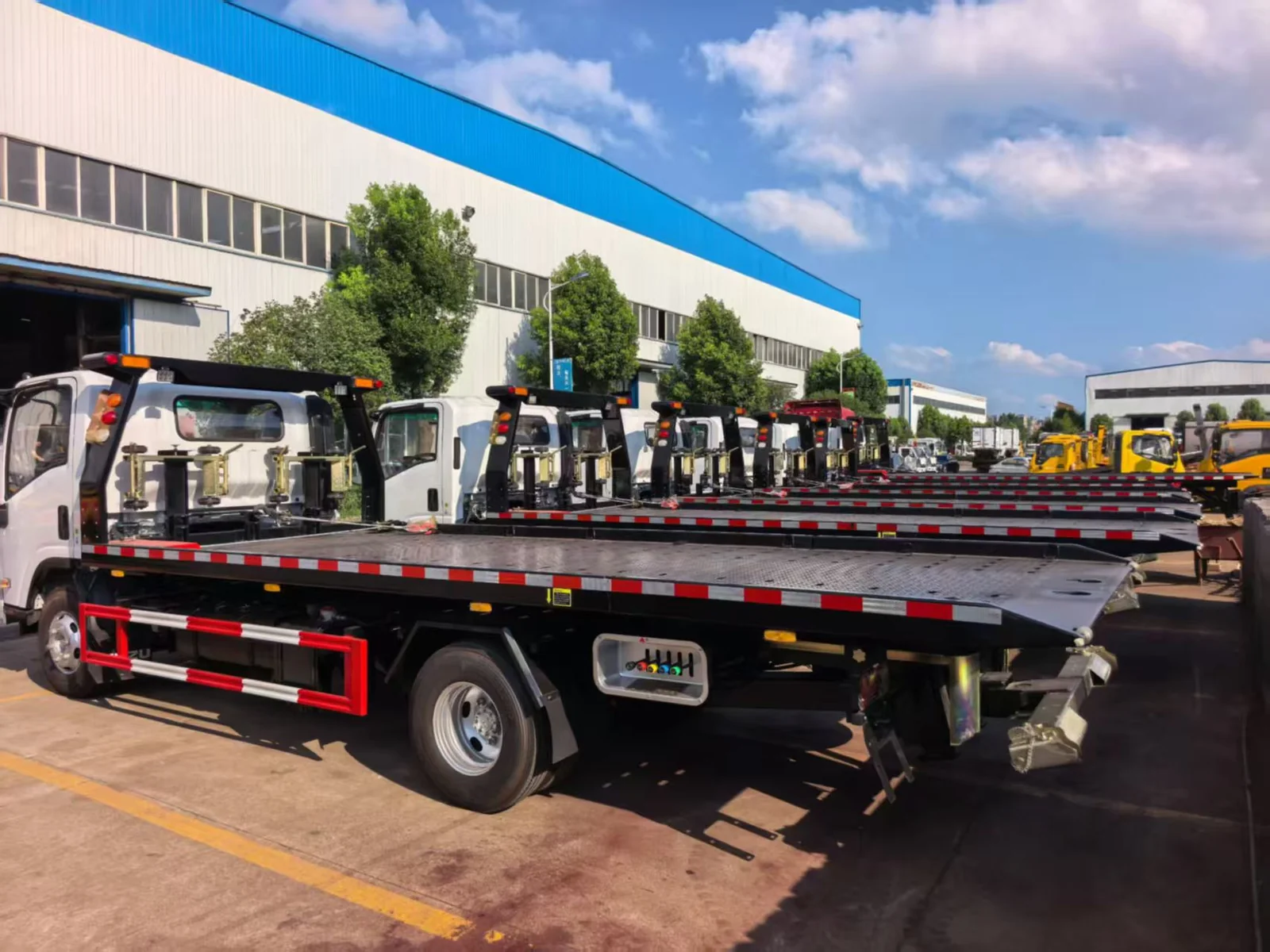
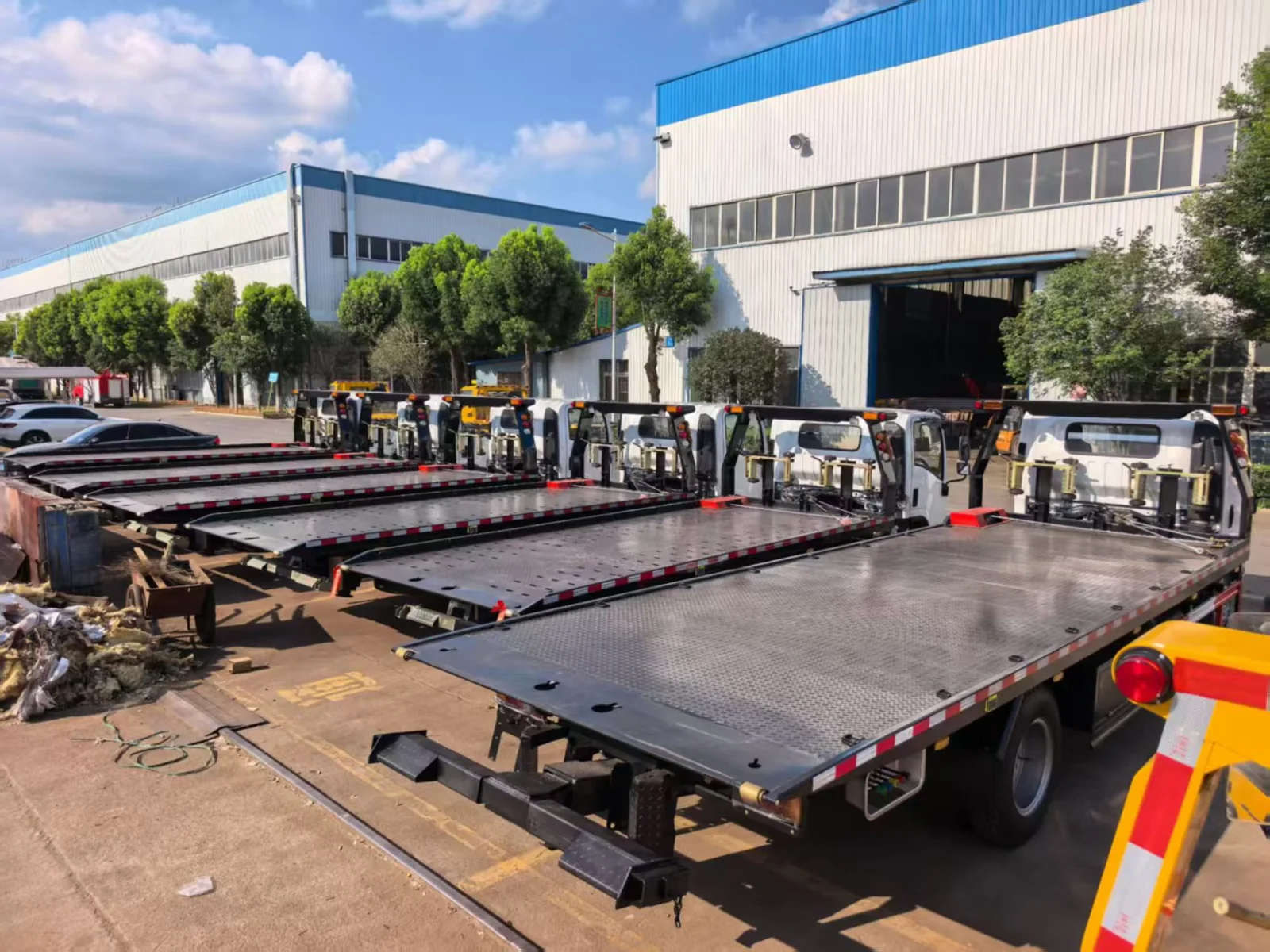
Each unit works the job in two moves: the rear wheel-lift picks sedans, pickups and SUVs up by their wheels without dollies, then the hydraulic tilt deck takes the load aboard at a shallow angle and locks it on chocks and hard straps. The four-tonne class carries the mass-market of East African traffic — pickups, matatus, light vans. Control valves ride at the side of the deck where the operator can watch the load the whole way up; lamp and marker clusters are raised onto the cab back so a full deck never blocks the signals. Every lift, tilt and winch function was cycled unit by unit during batch acceptance.
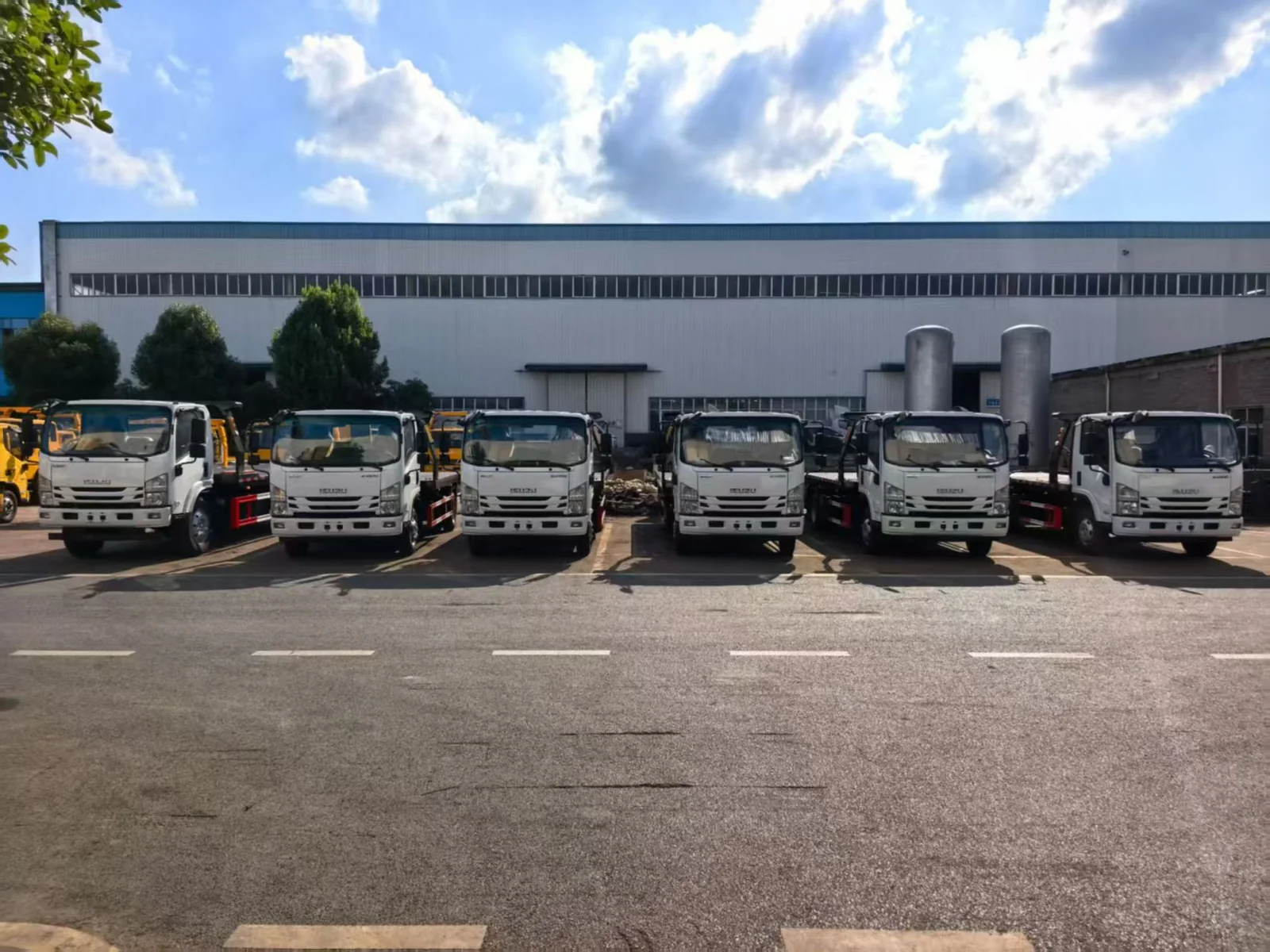
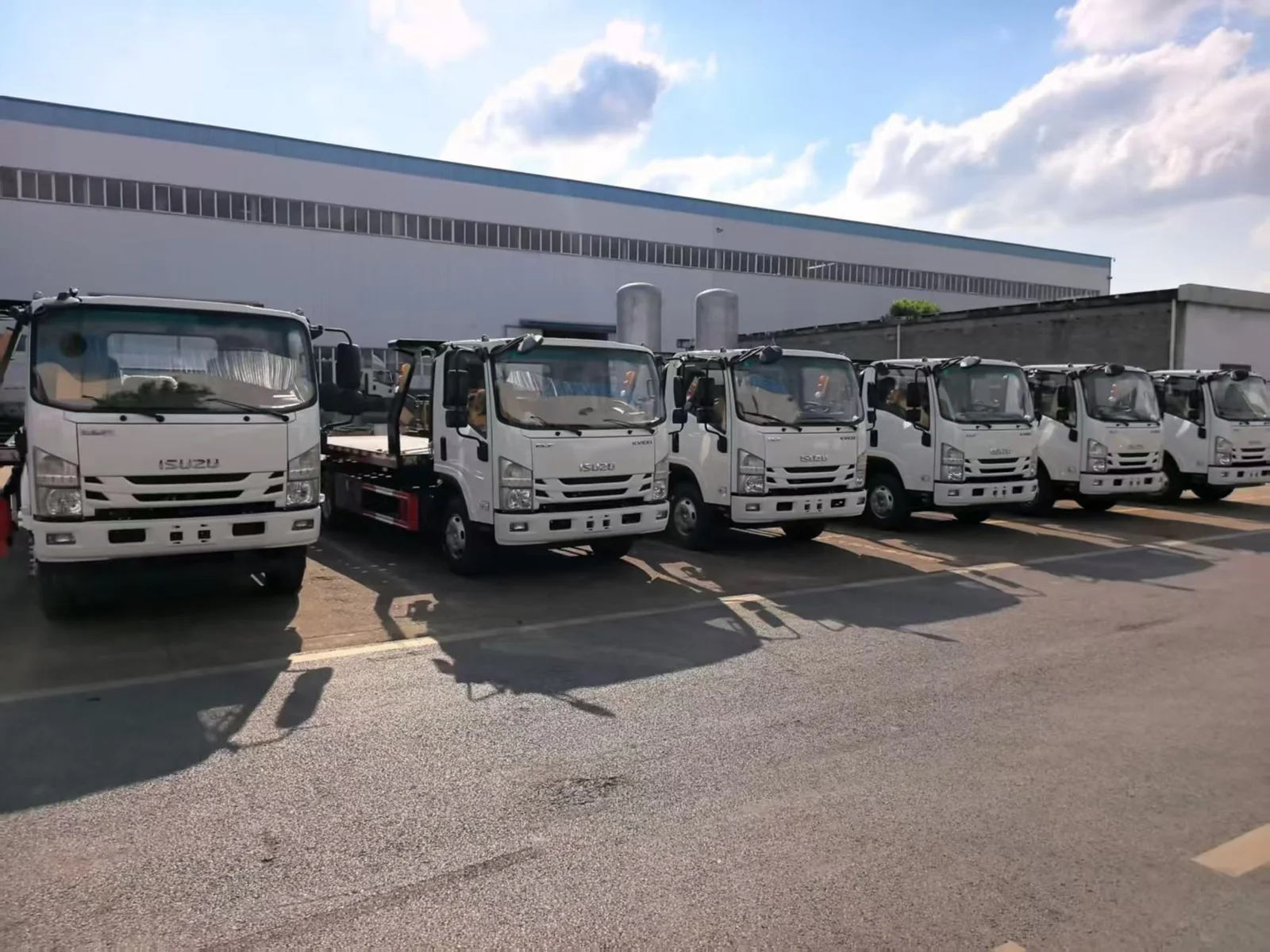
Photographed nose-on, the batch presents the way contracts are actually won in recovery: one specification repeated without drift. Same cab, same deck length, same lift geometry, same light bar. Six trucks that share one parts list, one driver-training routine and one warranty conversation — and a service story in Kampala written by a chassis the city already drives every day.
Building a recovery fleet for East Africa? Tell us the load mix you tow most — sedan, pickup, light van or heavier — and we will match chassis, wheel-lift class and deck length from a single unit to a full batch, with acceptance photos and function-cycle records for every truck.
Photographed at the CLW Suizhou plant during acceptance of the six-unit Uganda recovery batch.
Tell us your truck model and quantity — an engineer replies within 12 hours with a factory-direct price.
Tell us the model and your requirement — an engineer replies within 12 hours, factory direct.