Six working booms lifted to the same drill height, alloy platforms parked in the clouds — the Peru batch held its acceptance pose on the apron before the voyage across the Pacific.
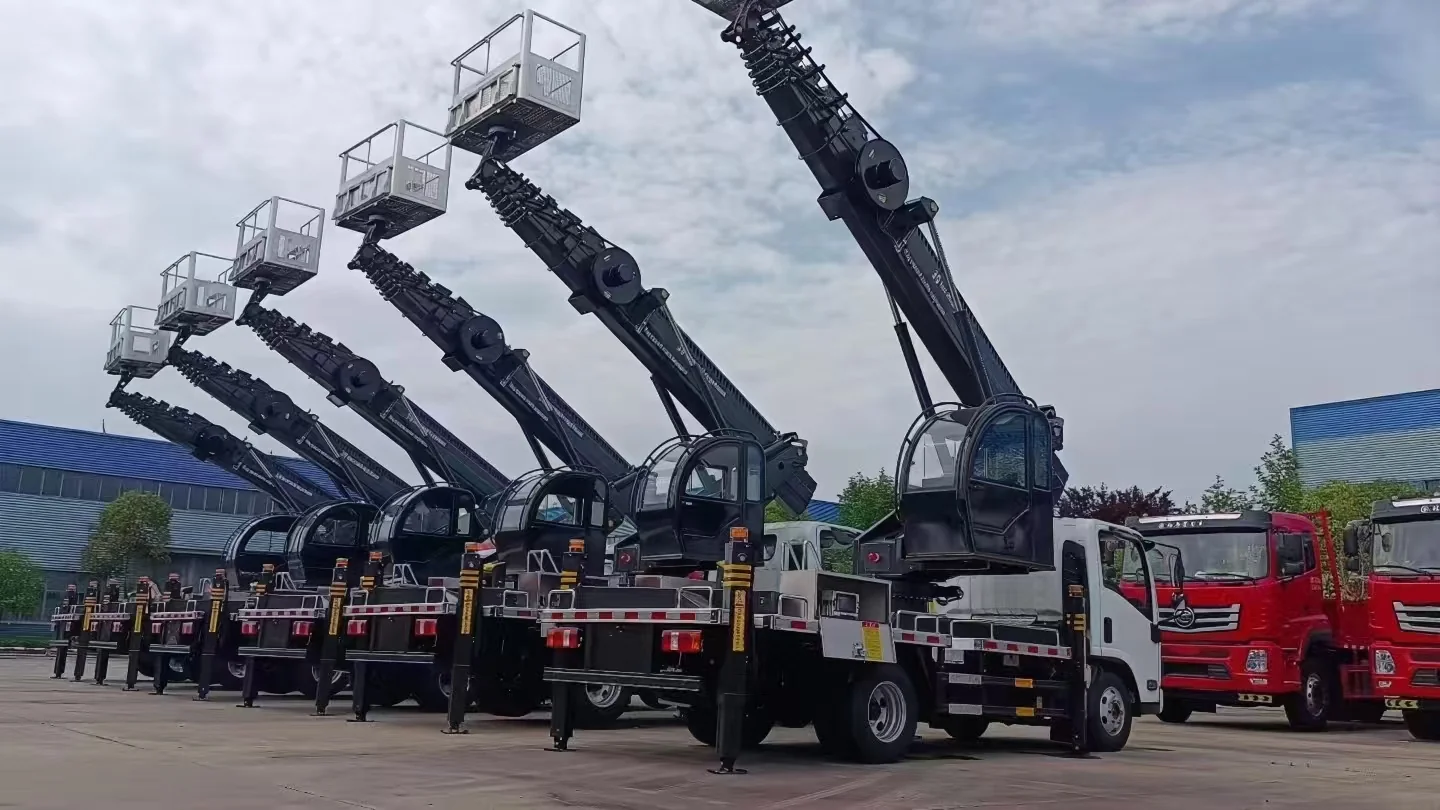
Lima’s grid, its expanding metro corridors and its roadside construction all put the same demand on aerial work platforms: a truck that reaches the wire, sets up fast in traffic and stays legal on the road between jobs. This six-unit order answers with a proven pairing — the Isuzu 700P 4x2 chassis behind an articulated-and-telescopic boom in the thirty-metre class, finishing with a powered alloy platform.
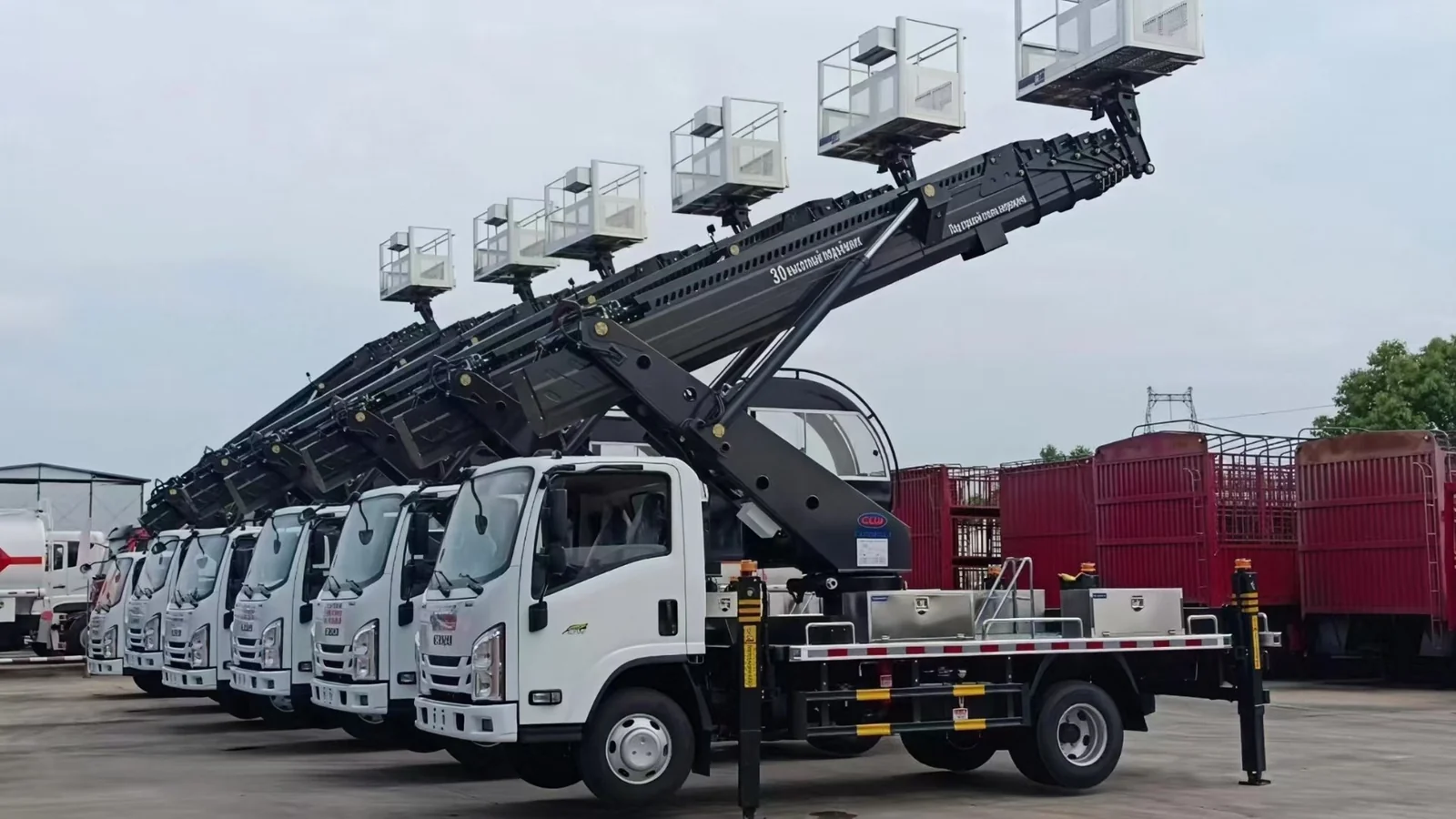
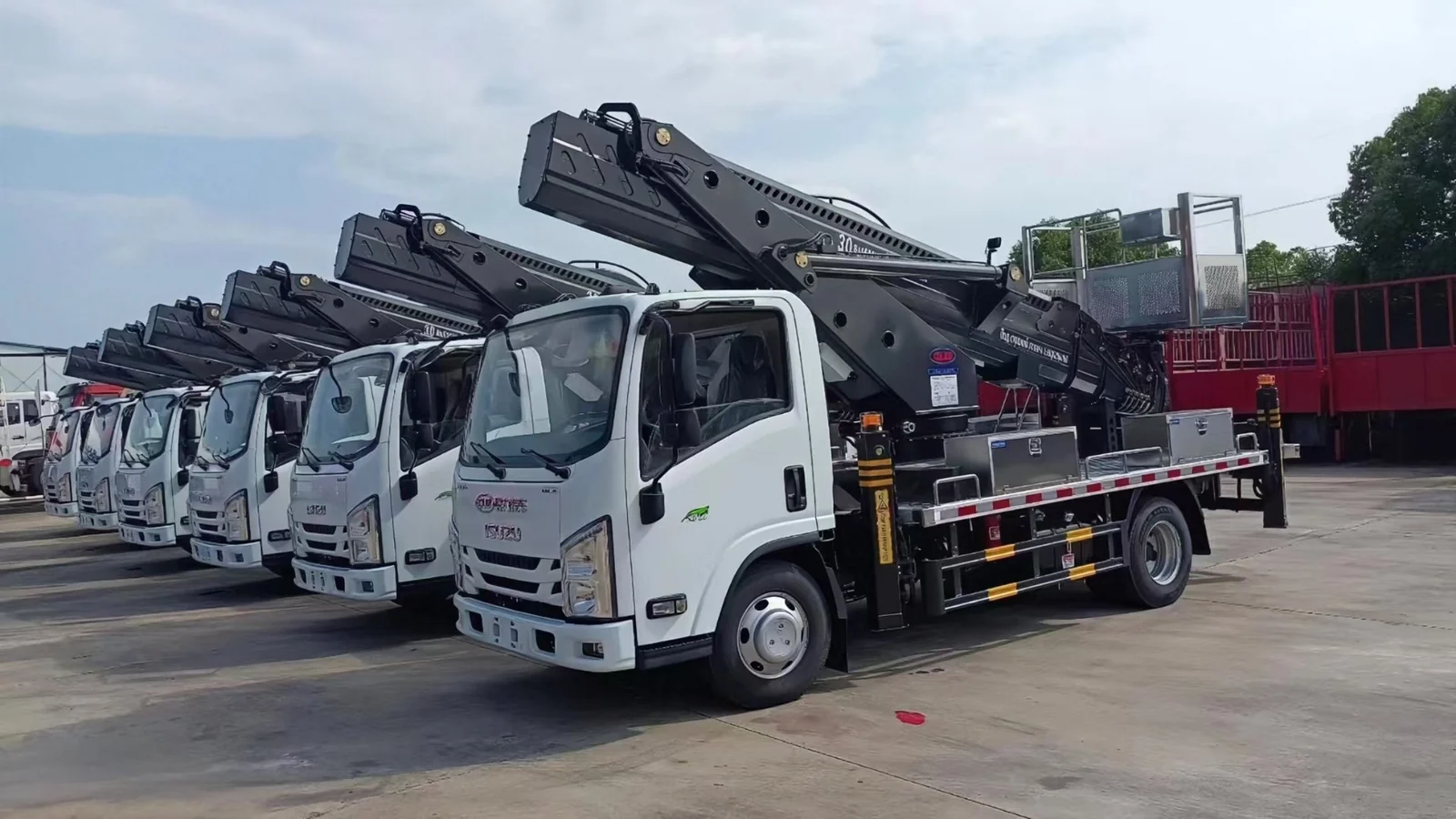
The boom combines articulation with telescoping: knuckle sections unfold over parapets, canopy rows and other things standing between the outriggers and the work, then the telescopic section extends the reach out to its thirty-metre class working height. A winch drum and hose runs serve the platform along the full boom line, and the turntable cab behind the crew cab gives the operator a ground-side control station for the same motions — the two-position setup that doubles as the safety layer on every lift.
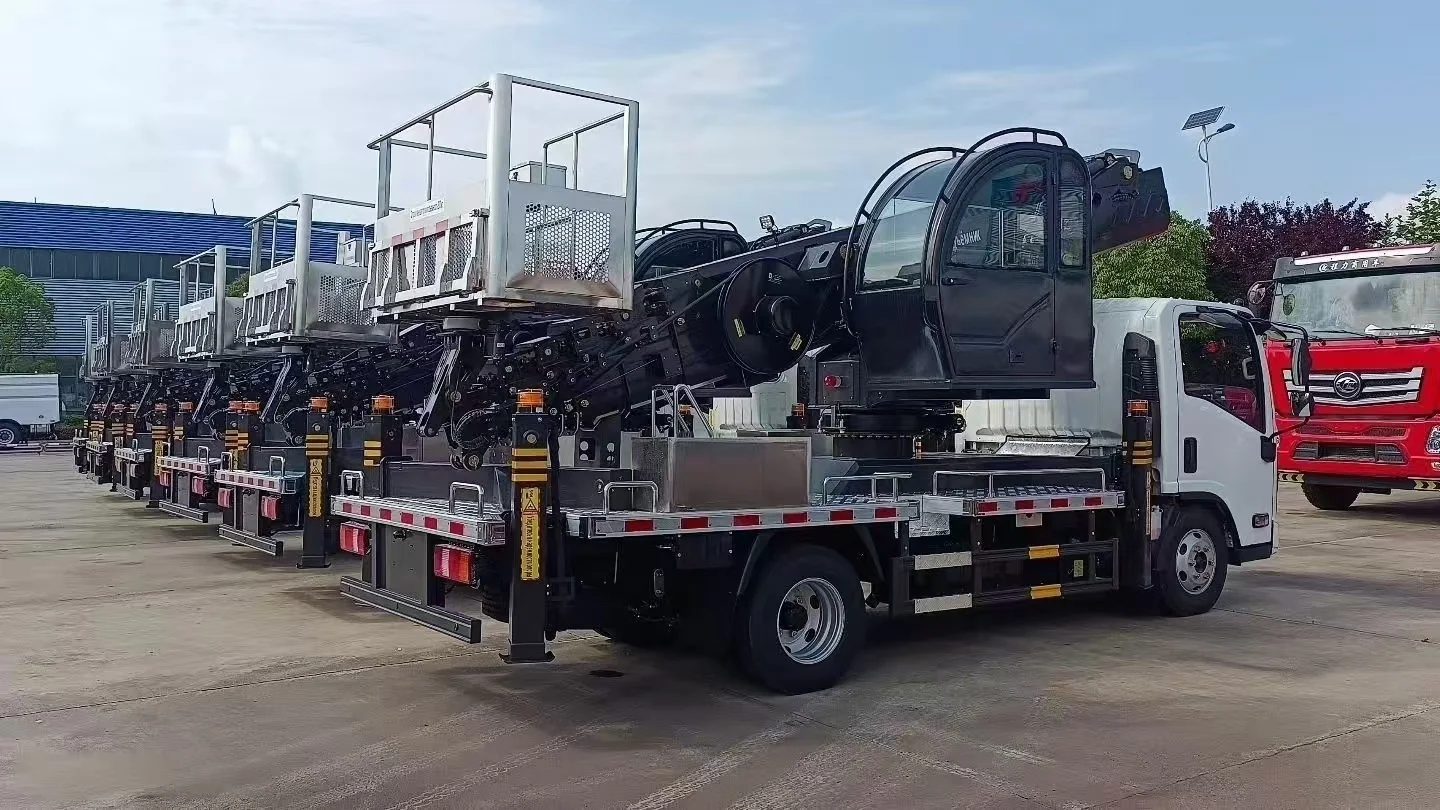
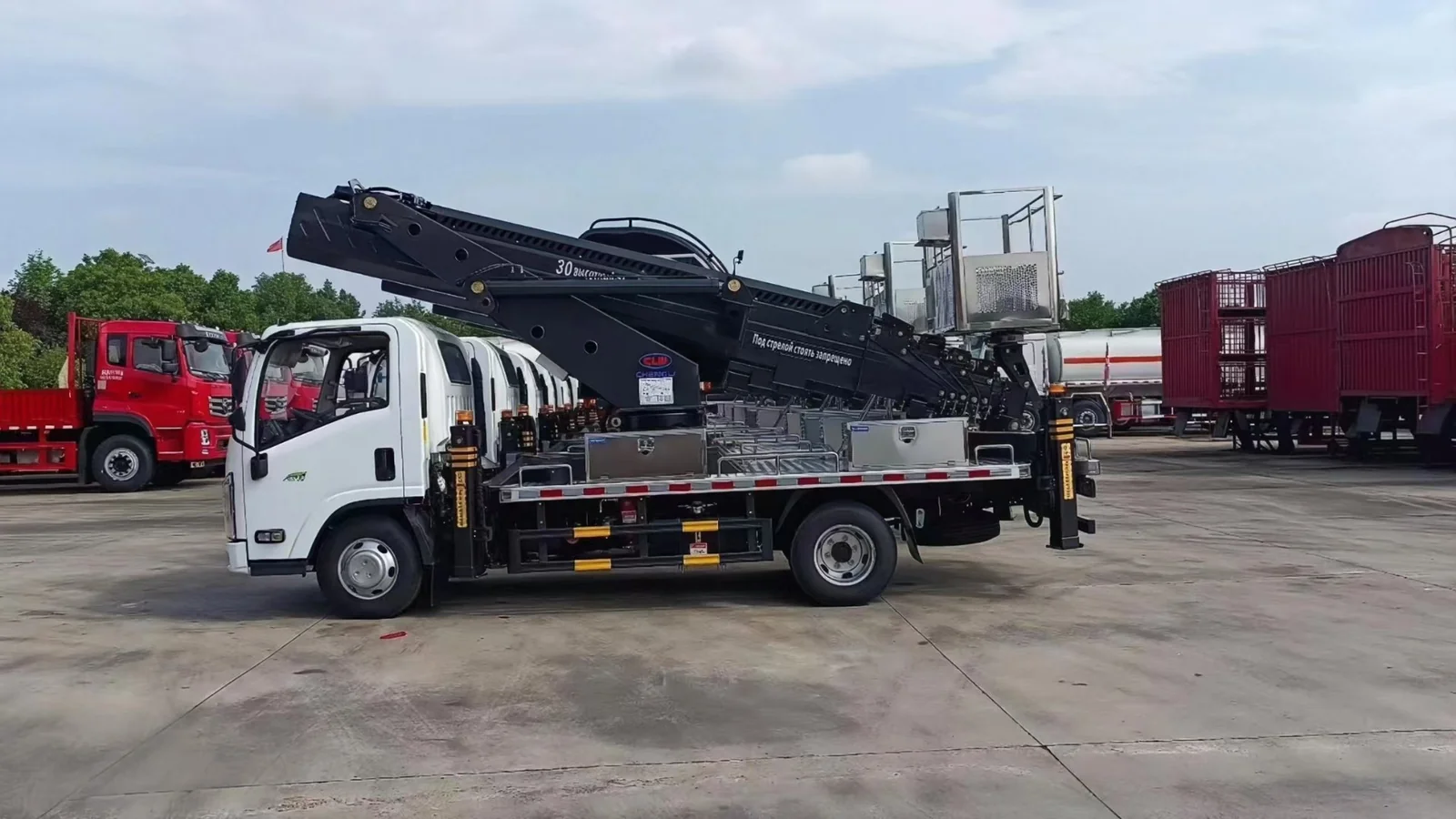
At the business end sits a light-alloy two-person platform with guard rails, an entry gate and its own proportional control station — fine-feel movements for wire work, with the basket and turntable sharing command under interlock. Parked, the whole boom folds flat behind the cab: the stowed profile shown in the side view is what keeps these units road-legal and garage-clearable between sites, which matters as much as reach in a city fleet.
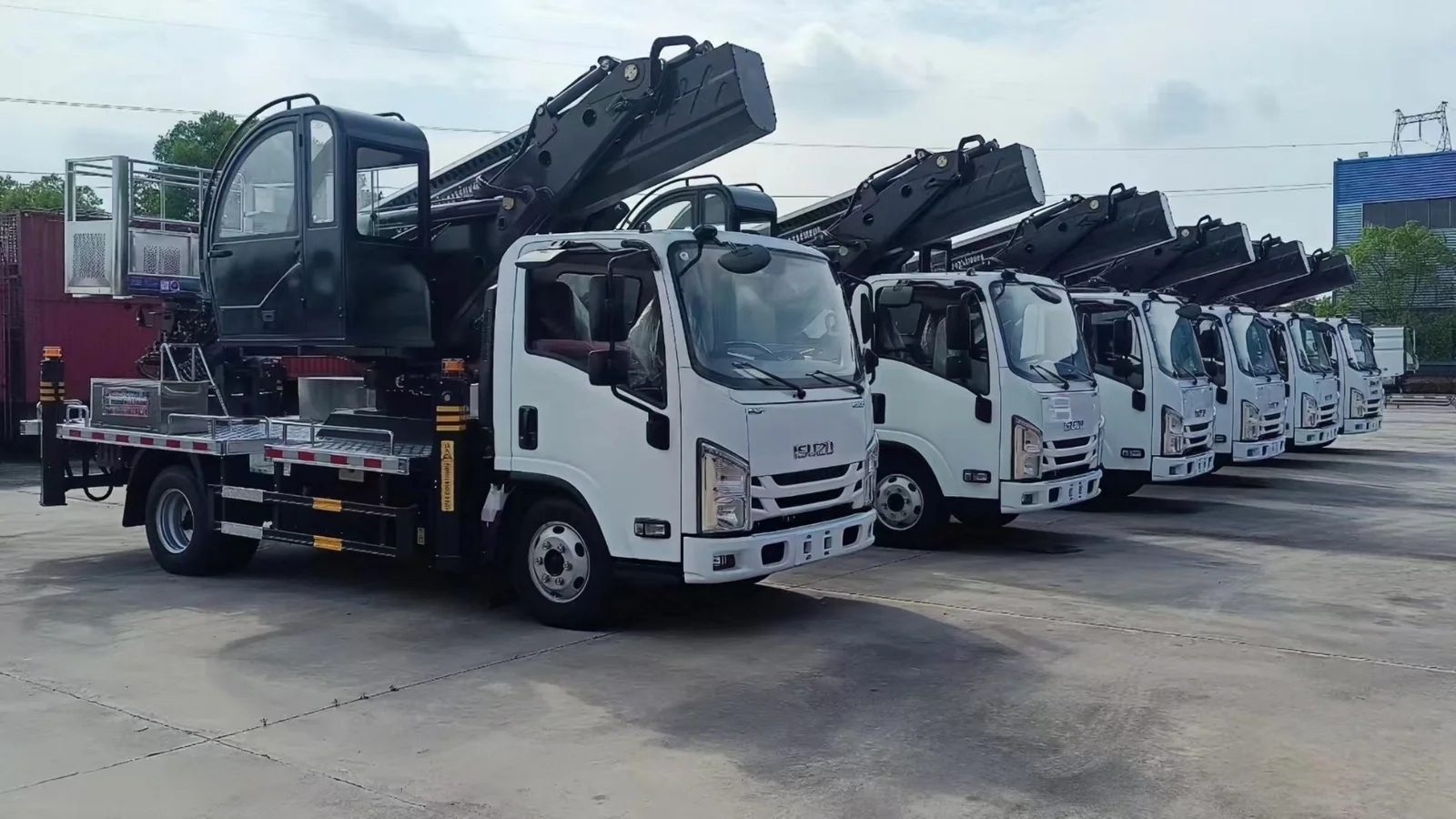
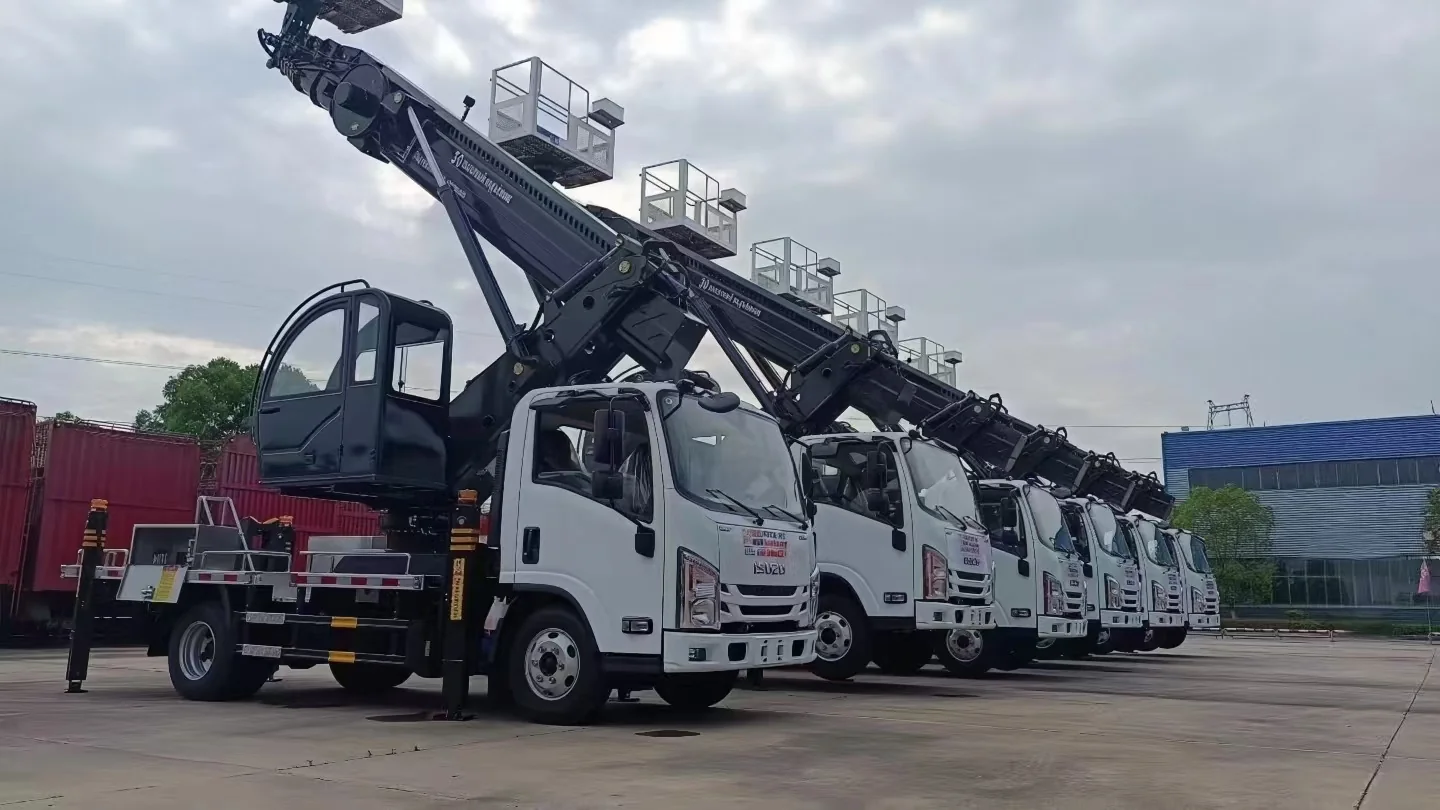
The carrier is as considered as the boom. Isuzu light-truck platforms carry one of the strongest service footprints in Peru, so 700P filters, brake parts and driveline components are found locally rather than imported — the quiet argument that keeps an aerial fleet actually flying. Cab, chassis and superstructure were accepted as one package per unit, so the importer receives six trucks with one parts list and one service story.
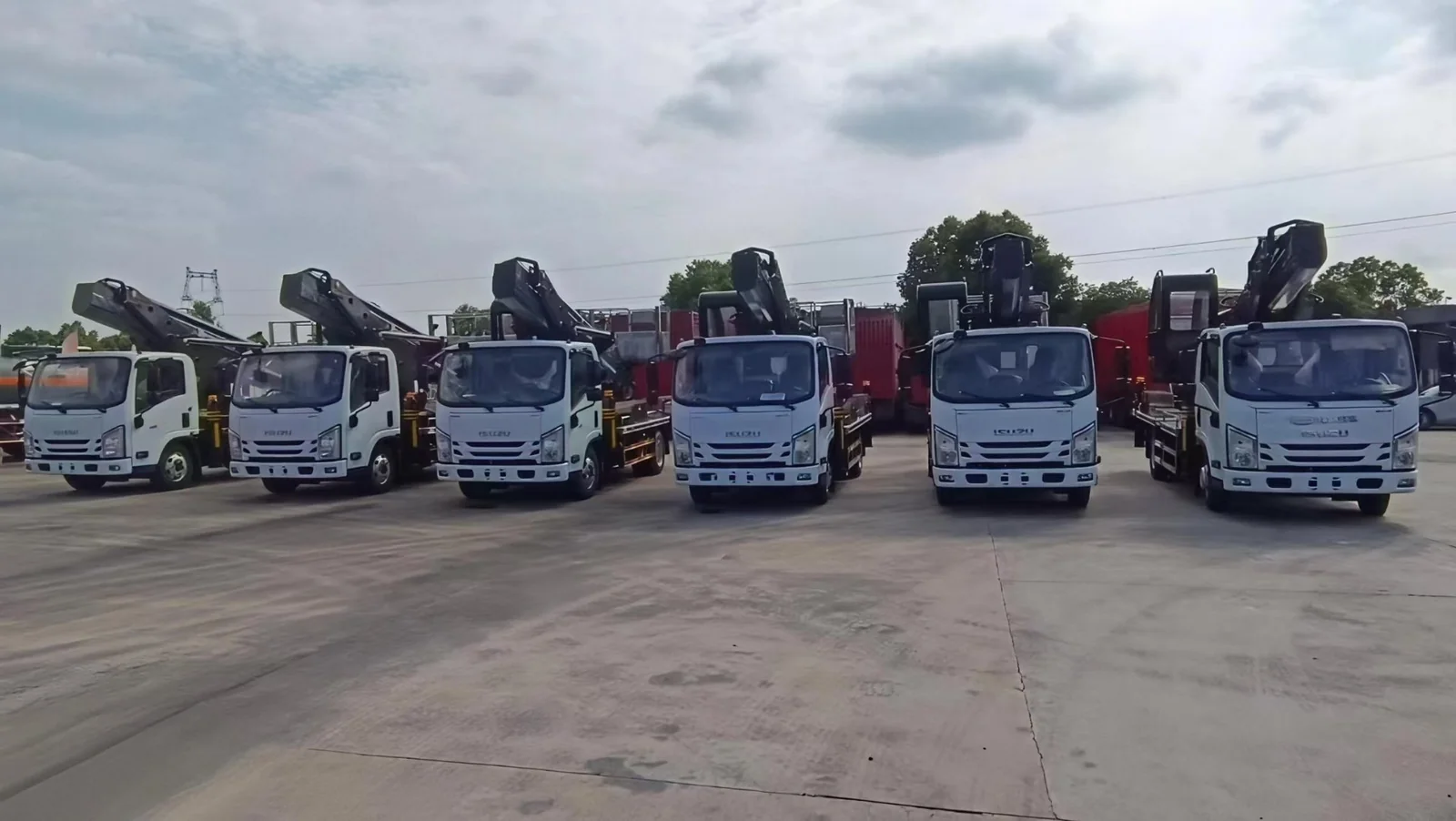
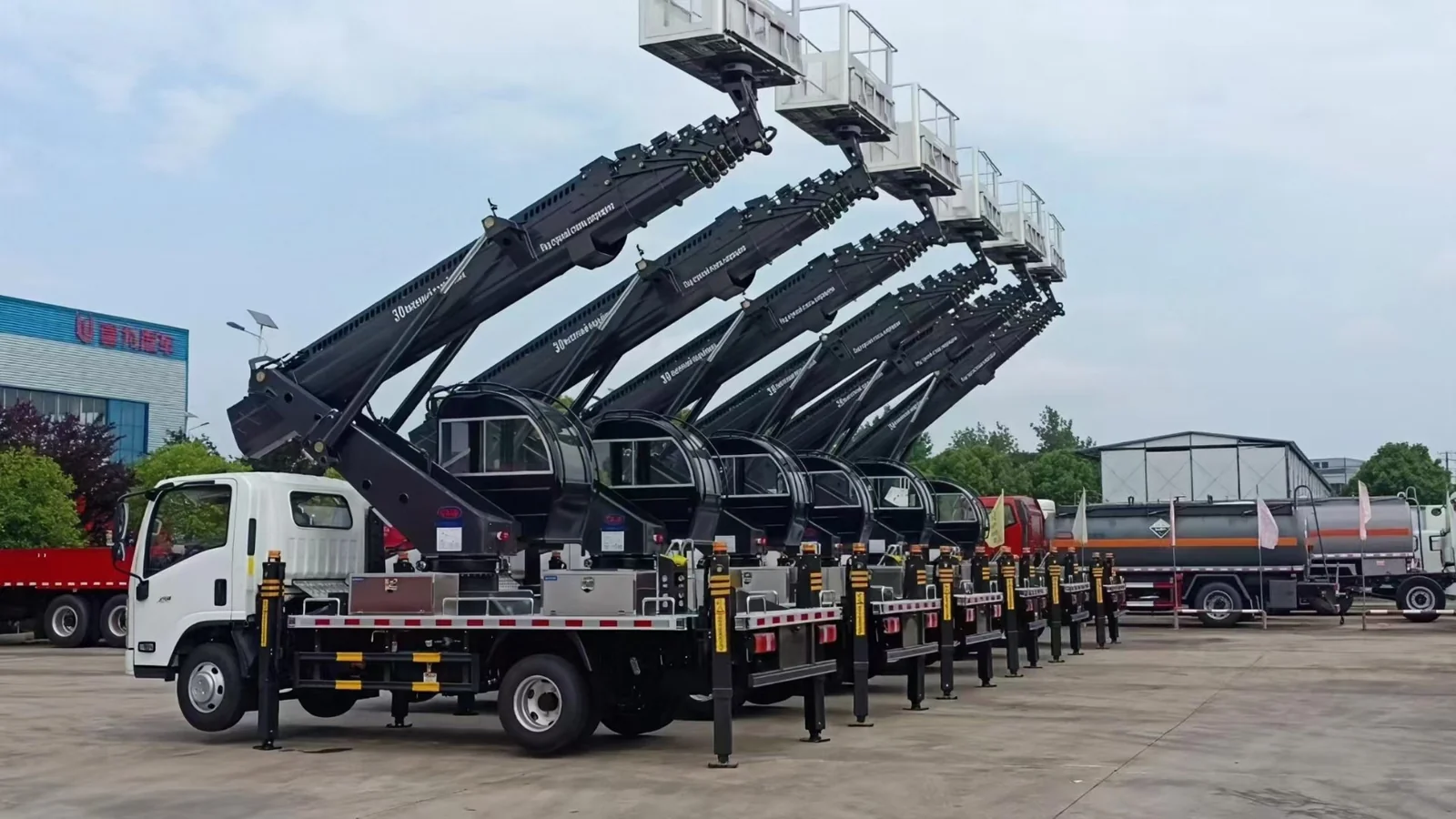
Photographed head-on, the batch presents exactly as ordered: six identical cabs, six identical booms resting at the same attitude, identical bed layout from tool boxes to outrigger plants. For a contractor or rental yard in Lima, that uniformity is the product — six trucks, not six versions of a truck, with the same training routine and the same spares bin covering the whole fleet.
Working at height for a Latin American market? Tell us the job — line maintenance, signage, lighting or facility work — and we will match chassis, boom class and platform spec from a single unit to a full batch, with export preparation and acceptance photos for every order.
Photographed at the CLW Suizhou plant during acceptance drills of the six-unit Peru aerial work batch.
Tell us your truck model and quantity — an engineer replies within 12 hours with a factory-direct price.
Tell us the model and your requirement — an engineer replies within 12 hours, factory direct.