Two full lanes of white ambulances down the hall, a red rank of response units on the flank, and a finished floor being filmed before the loading crews arrive — this is what an emergency-fleet order looks like from the inside, one hall before the voyage.
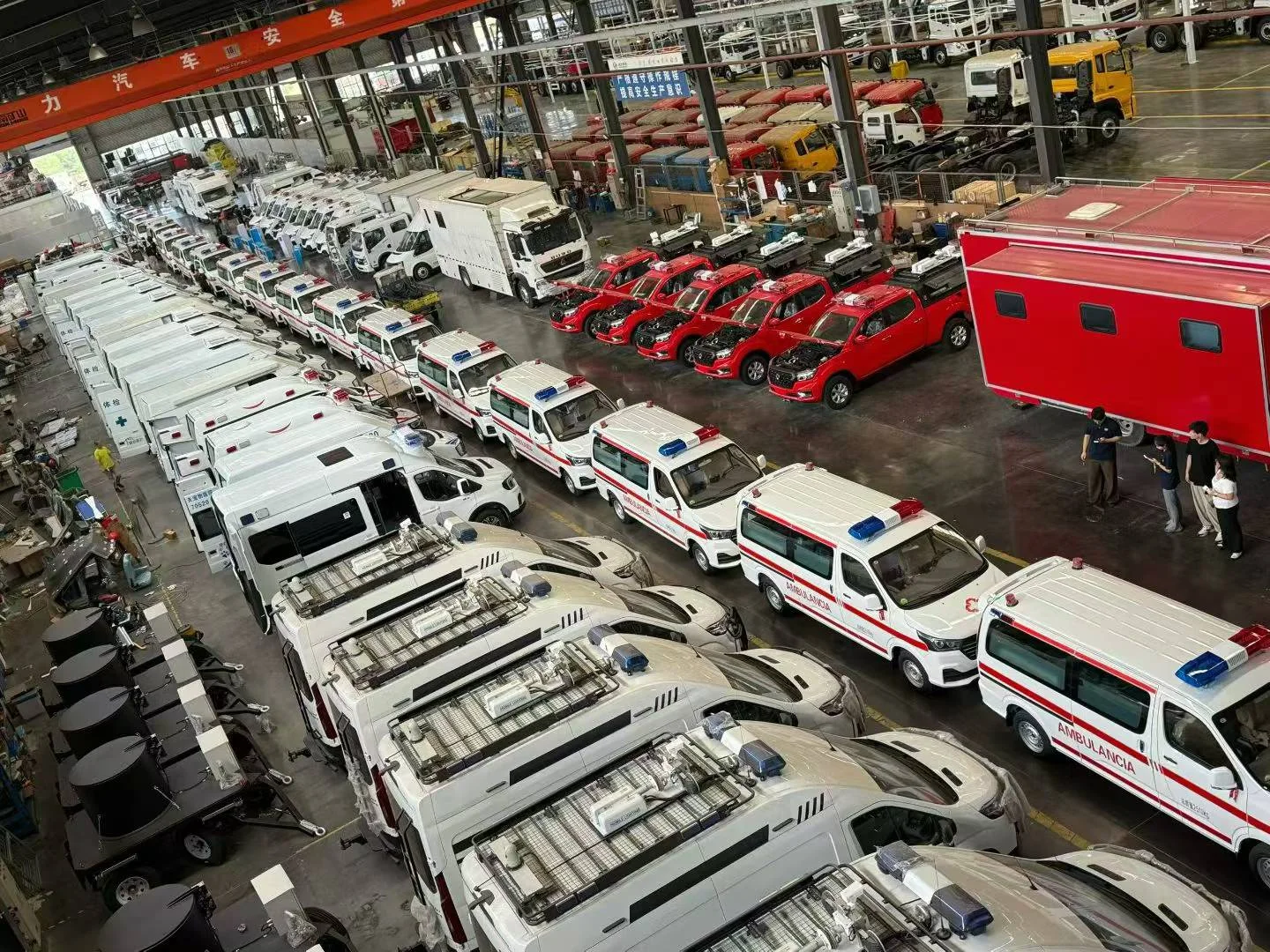
For a fleet order that is the entire news: these units are not on the line any more, they are in the lanes — liveried, light-barred, stickered and standing in shipping formation. We keep the camera in this story deliberately. When a hospital service or a municipal emergency operator buys a batch that crosses an ocean, a walk-through film of the finished hall is not marketing; it is the acceptance record the buyer inspects instead of standing in Suizhou.
“JMC Ambulance Are Ready for The Port” — official CLW GROUP footage from the Suizhou assembly floor.
What the film shows, the photographs below confirm unit by unit: one mixed emergency batch, built from a single chassis family, finished in a common livery scheme — and staged the way a port inspection day would expect to find it.
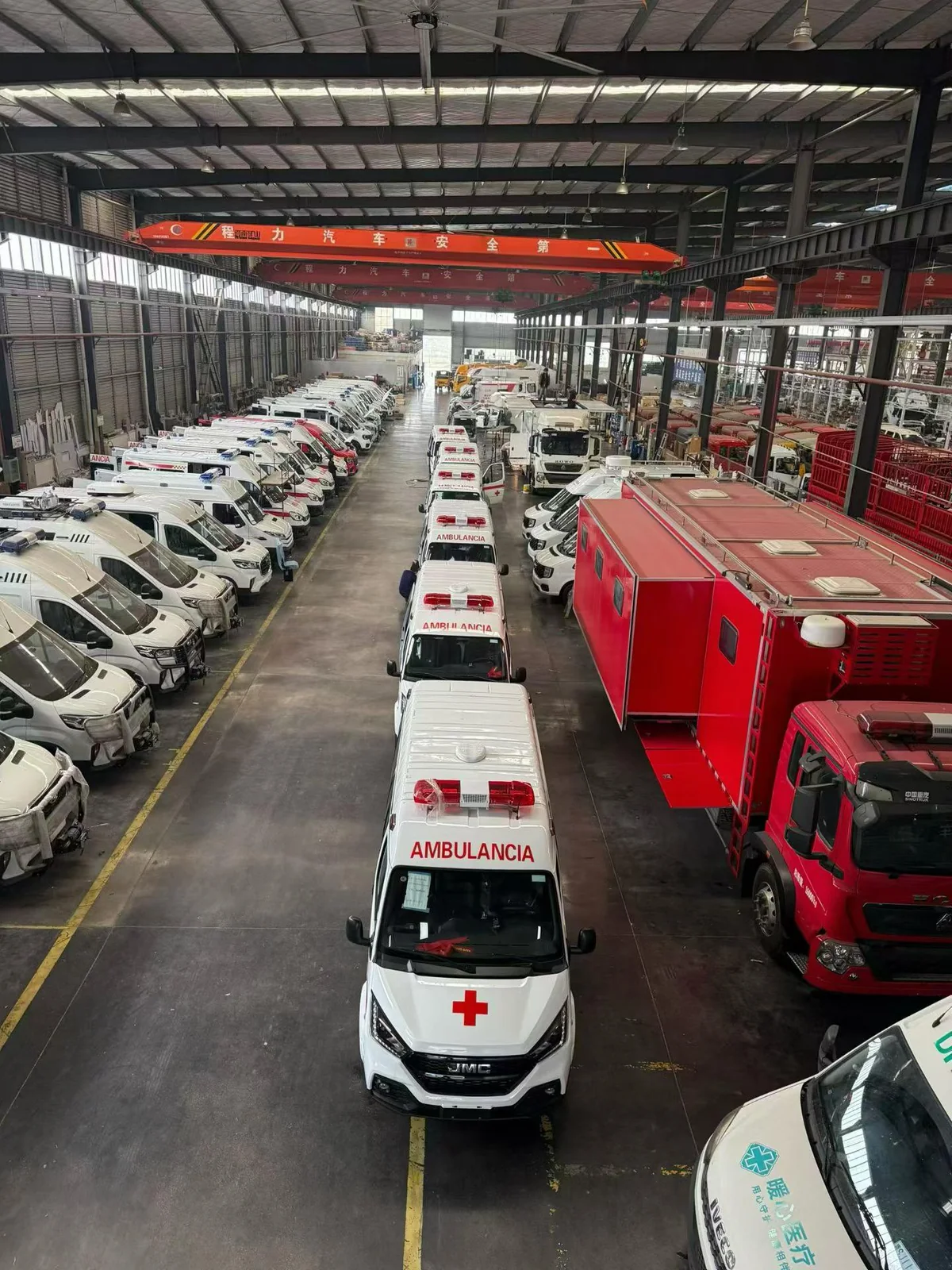
The hood of the lead van spells it the way the receiving country reads it: AMBULANCIA — the Spanish and Portuguese form of the word. That single decal is a sample of how a fleet order is actually composed: service booklets and radio-call conventions in the local language, emergency terminology written the way the national system writes it, marking checked against the buyer’s regulation rather than ours. A transport ministry signs off on paperwork like this long before it signs off on price.
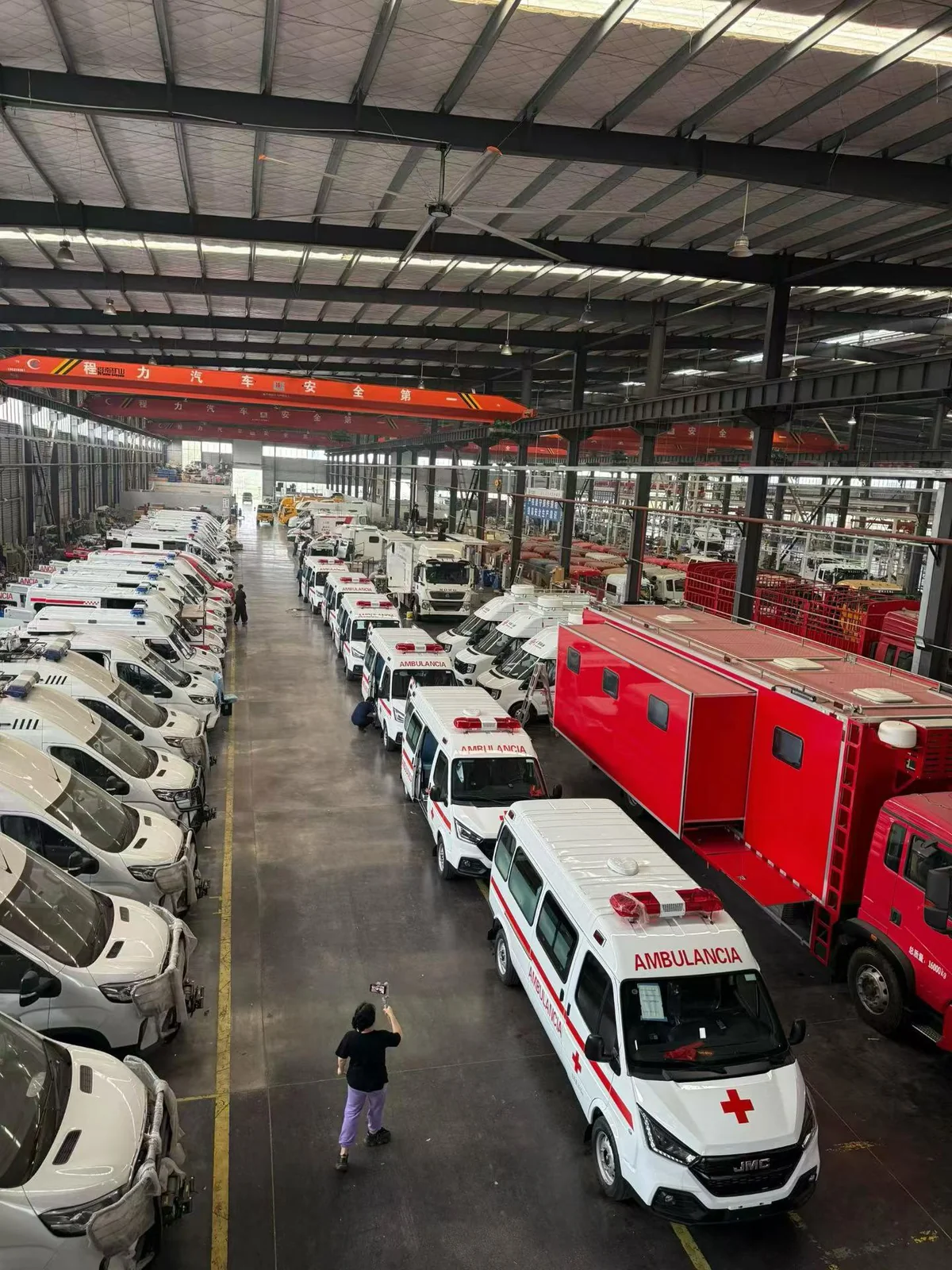
Down the centre aisle run the patient-transport ambulances: the working middleweight of the batch — full-height van cabin, strobe bar on the roofline, red cross and reflective banding applied lane-for-lane identically. This is the configuration that carries a stretcher and an attendant and does the daily mileage of an emergency system.
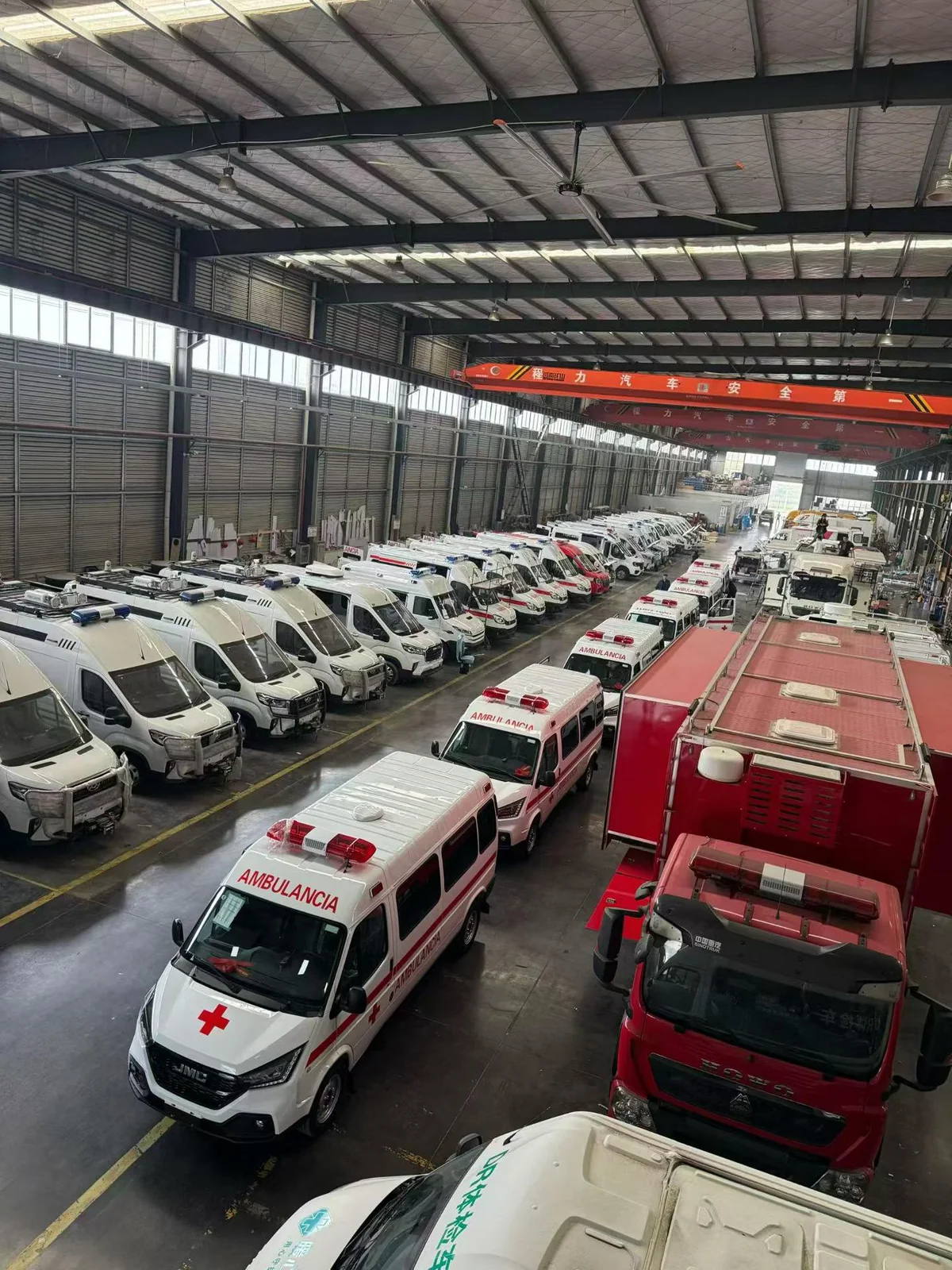
The lane on the left is a different animal under the same paint. These are the high-top units: raised roofs that let a clinician work upright over a stretcher — the mobile-ICU role — and roof racks along the top line for long gear and backboards. Same cab, same driving cab, same parts shelf; a ward behind the bulkhead instead of a bench beside the stretcher. One chassis family covering both duties is what keeps a national fleet trainable on one syllabus.
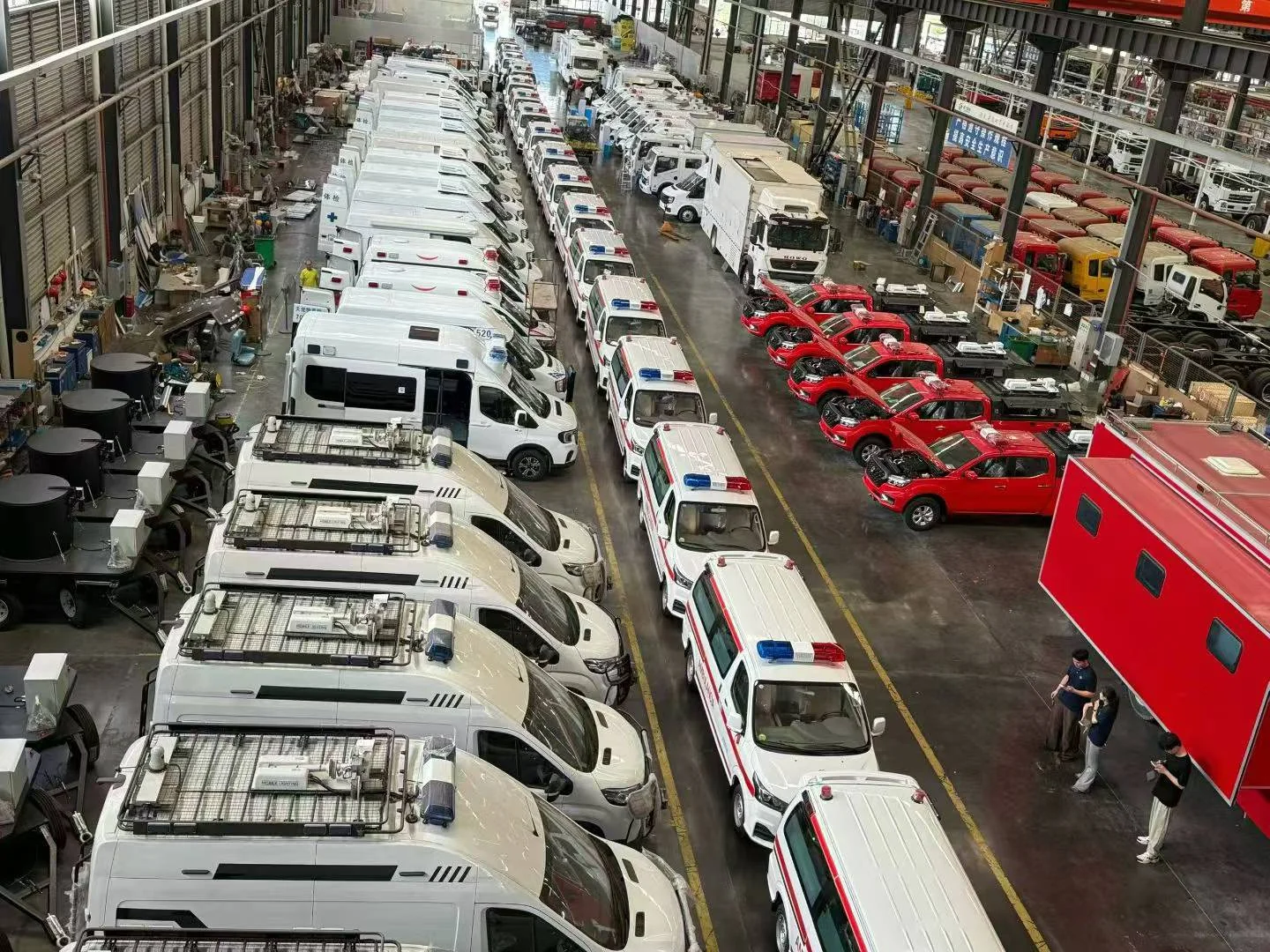
And not every first arrival on an emergency is an ambulance. The red double-cab pickups on the flank are the rapid-response element — a crew and their kit reaching the scene ahead of the transport — while the red box-bodied mobile medical units at the end of the lane carry the station role: a staffed point that a mass-casualty or rural circuit can run from. Transport, intensive care, response and field station, bought once, shipped together.
A photograph like the wide shot above is the hardest deliverable in export vehicle work. It means one order was executed without drift: livery films cut and positioned the same on every hood, beacon bars mounted at the same height, one batch of decals covering every unit, the same inspection walk closed on the same day for dozens of vehicles. It means the buyer’s drivers will train on one set of controls, the ministry’s garages will stock one parts list, and one warranty conversation covers the entire shipment. That uniformity — not any single van — is the product.
Specifying an emergency fleet? Tell us the roles you need covered — patient transport, mobile ICU, rapid response, field station — and the numbers and destination market for each. We will compose the mixed batch on one chassis family with one livery scheme, and film the finished hall for you the same way, before it ever reaches the port.
Filmed and photographed on the CLW Suizhou assembly floor during completion of the JMC ambulance batch; video published on the official CLW GROUP channel.
Tell us your truck model and quantity — an engineer replies within 12 hours with a factory-direct price.
Tell us the model and your requirement — an engineer replies within 12 hours, factory direct.