CLW (Chengli Special Automobile Co., Ltd.) has built special-purpose vehicles since 2004 and exports to more than 100 countries, including long-standing deliveries to East, West, Southern and North Africa. The company builds more than 800 models on ISUZU, DONGFENG, FOTON, SHACMAN, SINOTRUK HOWO and FAW chassis. Whether you need one mobile clinic or a fifty-unit municipal order, selection starts with the route and the payload — not with the brochure.
Start with the route and the payload, not the truck
The most expensive mistake in an African truck purchase is choosing a body size before mapping the route. A rear-loader sized for European kerbside collection will not survive unsealed roads, overloaded bins or a transfer station that tips from the side. Before quoting, CLW asks four questions:
- What is the daily route? Households per shift, bin volume, distance to the disposal site, and whether the road is sealed or unsealed.
- What is the legal axle load? A 12 m³ compactor on a 4×2 chassis can be legal in one country and overloaded in another. We match body volume to the permitted gross vehicle weight.
- Who will maintain it? Hydraulic systems, electronic injectors and after-treatment need local skills. We recommend configurations your workshop can service with common tools and a standard spare-parts kit.
- Which port and which documents? The destination port determines shipping mode, while the country determines the conformity route. Both should be settled before production starts.
New truck or refurbished HOWO: compare the landed cost, not the sticker price
Refurbished Sinotruk HOWO trucks are a common choice in African fleets, and the appeal is easy to understand. A rebuilt tractor unit or dump truck can be offered at half — sometimes a third — of the price of a new vehicle. For a contractor who needs a working truck this quarter and is buying against a capital budget rather than a fleet plan, that gap is difficult to ignore. But the purchase price is not the landed cost, and the landed cost is not the cost of ownership.
"Refurbished" describes very different products. A factory-remanufactured truck with documented engine work, a new cab and a parts book is one thing; a workshop rebuild assembled from several donor trucks — common in the informal trade — is another. The risk sits mainly in the second category. Injectors, turbochargers, brake chambers, hydraulic valves and body panels are often non-genuine or mismatched to the engine's emission variant. The truck may run cleanly on delivery and then become almost impossible to diagnose months later. On a common-rail HOWO, one incorrect sensor or non-original injector can send a workshop down a fault-finding path that ends in replacement rather than repair.
The parts problem is structural, not bad luck. Most African importers buy vehicles and spare parts by sea, so a parts container leaves China with the same 20–40-day ocean transit as the truck, before clearing and inland haulage. A component that is not stocked locally — exactly what happens with a non-standard refurbished specification — can keep a unit idle for several months. For a municipal collection fleet or a contractor working to a completion date, that downtime usually costs more than the saving on the purchase price. Refurbished units also carry little or no warranty, and many African markets restrict used-vehicle imports or cap vehicle age, which can complicate registration and resale.
This is why our specification conversation starts with the route, the payload and the workshop — not with the lowest quote. A new CLW unit is built to the route, documented as new for the conformity file, and delivered with a parts catalogue that matches the vehicle. It is not always the cheapest way to begin; it is usually the cheapest way to keep a fleet working. Where the budget is genuinely tight, the honest alternatives are a smaller new unit or a new chassis with a simpler body — not a refurbished truck whose specification cannot be verified.
If you are evaluating a refurbished offer, ask five questions before paying a deposit:
- Can the engine, gearbox and axle numbers be traced to the original vehicle? A rebuild that cannot be traced is a parts lottery.
- Which components are genuine and which are pattern parts? Ask for the purchase invoices or packing lists for injectors, turbo, brake valves and the hydraulic pump.
- What emission variant is it, and which diagnostic tool does it need? A truck that requires dealer-level software your workshop does not own is not a bargain.
- What is the realistic parts lead time? Compare it with the local stock available for the new model you are considering.
- Can it be imported and registered in your country? Check the age limit and conformity route before shipment, not after arrival.
Truck types African fleets buy most
| Truck type | Typical CLW range | Common chassis | Typical duty |
|---|---|---|---|
| Rear-loader compactor | 5–12 m³ body, 4–14 t payload | ISUZU, DONGFENG, FOTON, SINOTRUK | Municipal solid waste, transfer stations |
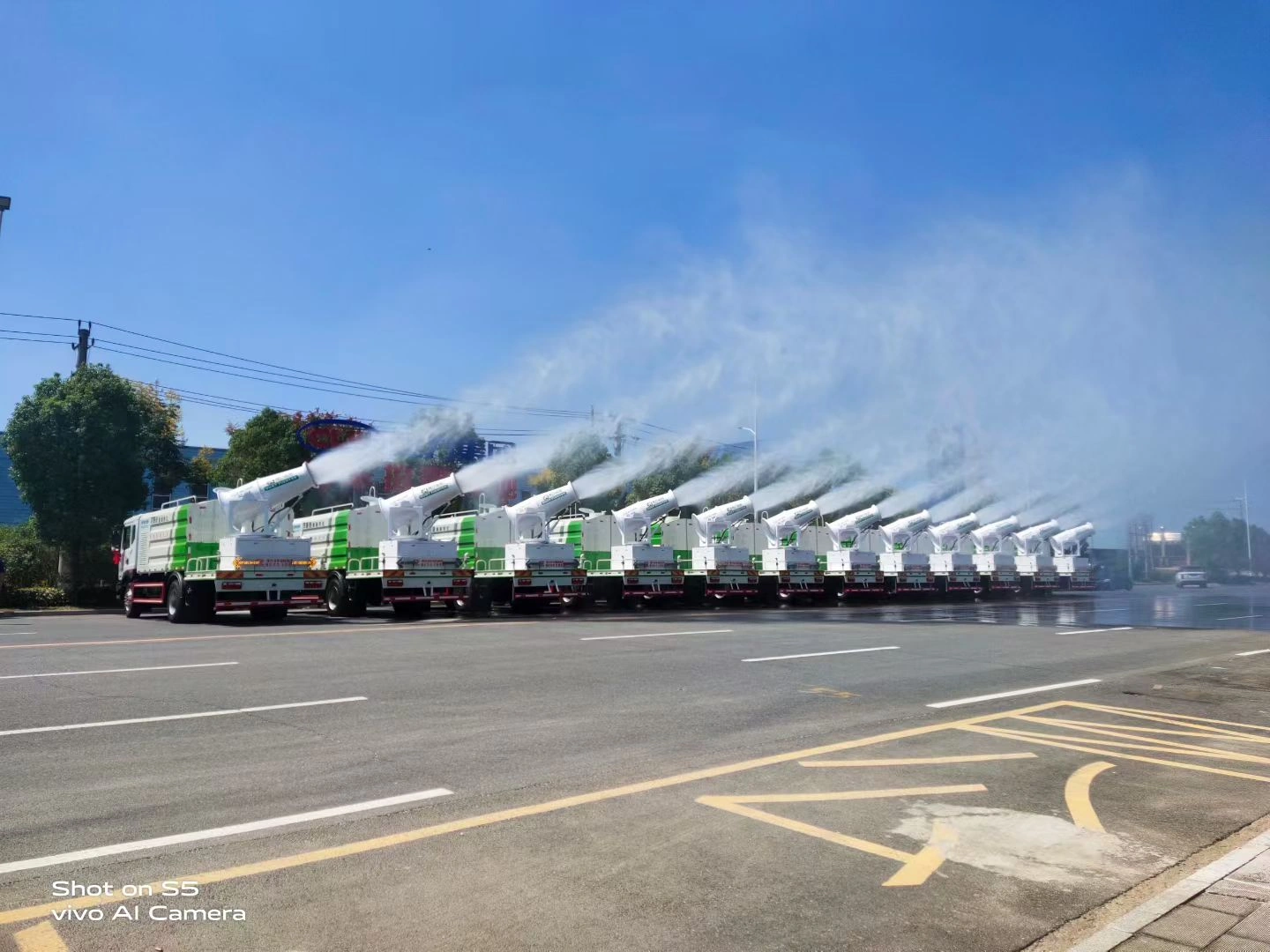
| Water tanker / sprinkler | 5,000–30,000 L, carbon steel or 304 stainless | DONGFENG, SINOTRUK, ISUZU | Dust suppression, potable water, road washing |
| Fuel tanker | 5,000–30,000 L, 2–5 compartments | SINOTRUK HOWO, DONGFENG, SHACMAN | Depot delivery, cross-border fuel transport |
| Mobile clinic / ambulance | 3.5–7.5 t van or truck body | ISUZU, JMC, FOTON, IVECO | Rural clinics, ICU transfer, screening programs |
| Aerial work platform | 12–45 m working height | ISUZU, DONGFENG | Utility maintenance, street lighting, tree work |
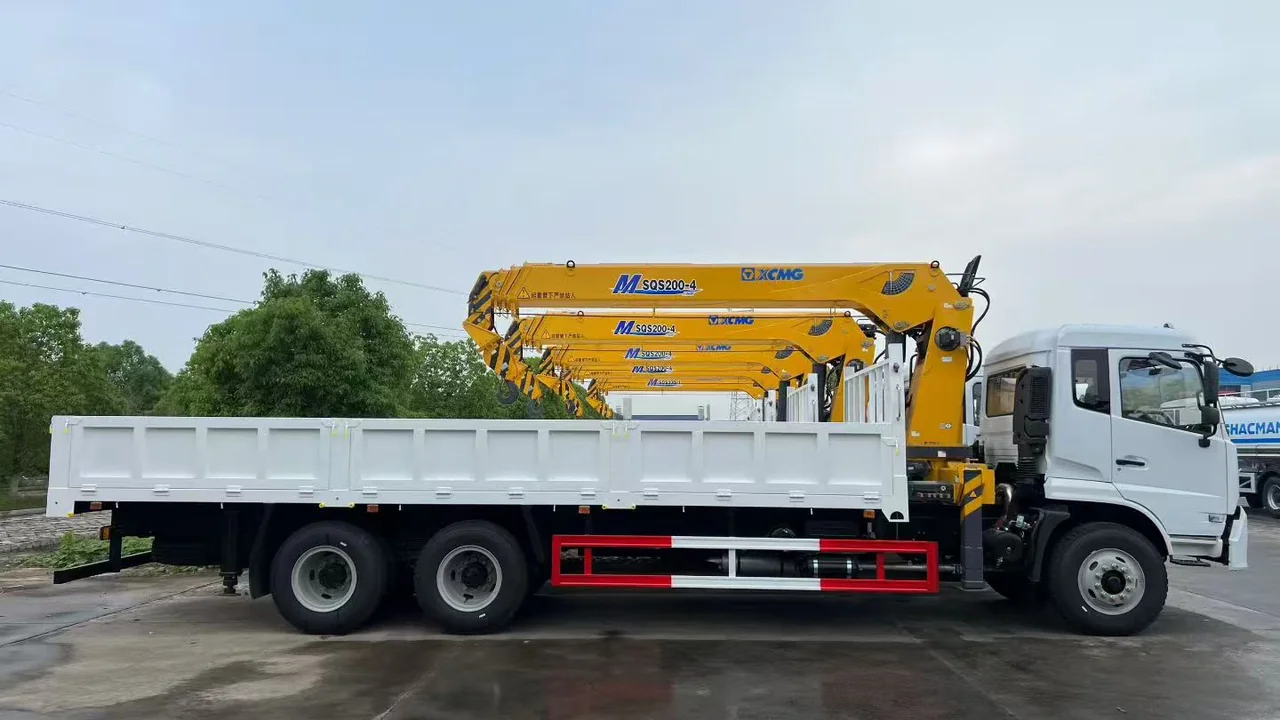
| Truck-mounted crane | 3–16 t lifting capacity | DONGFENG, SHACMAN, SINOTRUK | Construction logistics, equipment handling |
| Wrecker | 4–50 t tow capacity | ISUZU, JAC, SHACMAN | Highway recovery, municipal impound |
| Fire truck | 3,000–20,000 L water/foam, dry powder | SINOTRUK, DONGFENG, ISUZU | Municipal, airport, industrial fire response |
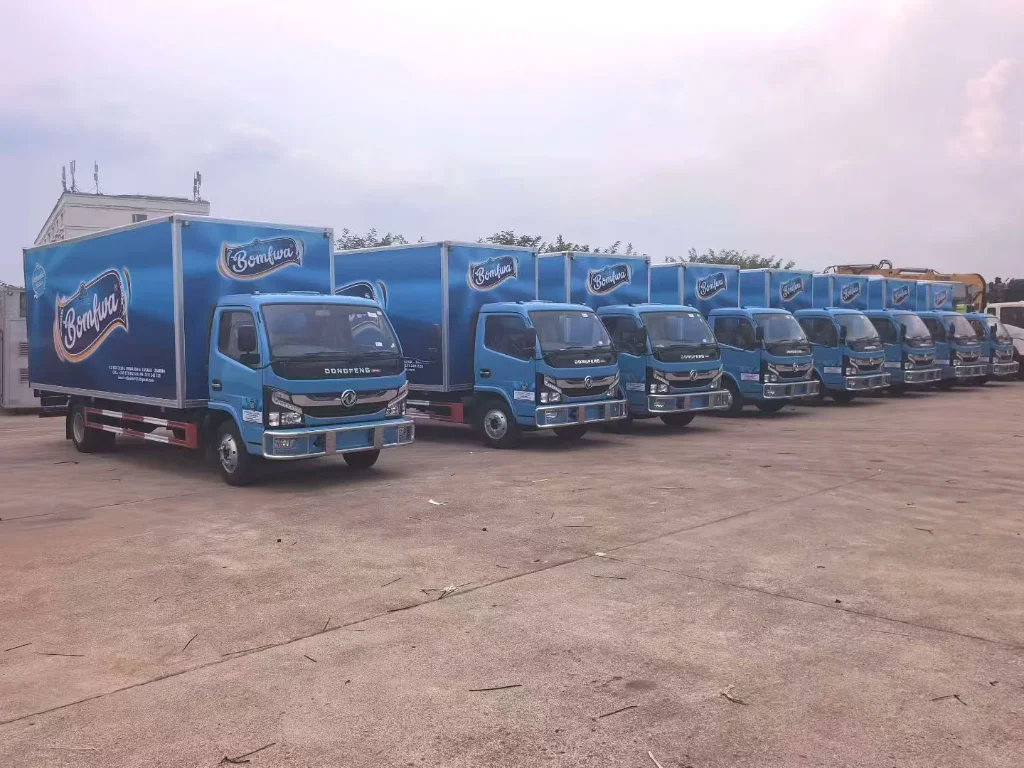
| Cargo, dump and reefer | 2–30 t payload | DONGFENG, FOTON, FAW, SINOTRUK | Distribution, construction, cold chain |
Every category can be supplied as a complete vehicle or as a body-only upfit for a chassis you already own. Body-only shipments are common for fleets that buy chassis locally to reduce duty and freight — a water tanker or truck-mounted crane body on a locally purchased chassis, for example. If you already operate a workshop, ask for the body drawing and the interface list (PTO, hydraulic take-off, electrical loom) before you compare prices.
Conformity, driving side and country differences
African countries do not share one vehicle approval system. The table below is a starting point for the pre-shipment conformity route; rules and nominated inspection agencies change, so confirm the current requirement with your clearing agent before production.
| Market | Typical conformity route | Driving side | Main port(s) |
|---|---|---|---|
| Nigeria | SONCAP + Form M | LHD | Apapa / Lagos |
| Ghana | GSA / COC | LHD | Tema |
| Kenya | PVoC / COC | RHD | Mombasa |
| Tanzania | PVoC / COC | RHD | Dar es Salaam |
| Uganda | PVoC / COC | RHD | Mombasa |
| Ethiopia | ESA / COC | LHD | Djibouti |
| Zambia | ZABS / COC | RHD | Dar es Salaam, Beira, Durban |
| South Africa | NRCS Letter of Authority | RHD | Durban |
| Egypt | GOEIC / COC | LHD | Alexandria |
| Algeria | COC | LHD | Algiers |
| Morocco | COC | LHD | Casablanca |
| Angola | COC | LHD | Luanda |
Driving side: RHD = right-hand drive (left-hand traffic); LHD = left-hand drive (right-hand traffic).
Right-hand drive: selected chassis can be supplied in RHD for South Africa, Kenya, Tanzania, Uganda, Zambia and other RHD markets, including certain ISUZU, JAC and FOTON models where the factory offers the configuration. RHD availability depends on the model and axle configuration, so confirm it at quotation stage rather than assuming it.
Used-vehicle rules: several countries restrict the import of used vehicles or set a maximum age. CLW supplies new vehicles; if your project involves used equipment, check the destination rule before ordering.
Ports, shipping modes and transit planning
- West Africa: Lagos/Apapa, Tema, Abidjan, Cotonou, Dakar.
- East Africa: Mombasa, Dar es Salaam, Djibouti, Port Sudan.
- Southern Africa: Durban, Walvis Bay, Beira, Maputo.
- North Africa: Alexandria, Casablanca, Algiers, Tunis.
- Central Africa: Douala, Pointe-Noire, Matadi.
Complete vehicles usually ship by RoRo or break-bulk; smaller units can be containerised. Large fire trucks, 45 m aerial platforms and heavy wreckers need careful stowage planning and should be quoted as break-bulk or flat-rack cargo. CLW can quote FOB, CFR or CIF, and you may nominate your own forwarder. For landlocked markets such as Zambia, Uganda and Ethiopia, the quote should include the transit leg and the destination clearance documents, not just the ocean freight.
Specification choices that matter in Africa
- Tropical cooling package: larger radiator, high-capacity fan and insulated lines for 45 °C ambient operation.
- Dust protection: heavy-duty air filter, fuel pre-filter and sealed electrical connectors for unsealed roads.
- Reinforced suspension and tyres: matched to the route, not to the lowest quotable price.
- Anti-corrosion: shot-blasted and primed tank shells, galvanised sub-frames and stainless fasteners for coastal humidity.
- 24 V electrics and common parts: easier to service in markets where 12 V components are less available.
- RHD or LHD: confirmed at quotation, with the dashboard, steering and pedal layout changed at the factory.
- Speed limiter and tachograph: required in some markets and for some municipal tenders.
- Spare wheel, tools and manuals: shipped with every unit; a 12-month wear-parts kit is recommended for remote fleets.
Avoid over-specifying electronics that the local workshop cannot diagnose. A mechanically injected engine or a common-rail engine with a supported diagnostic tool is often a better fleet decision than the highest-specification brochure engine.
Five costly mistakes in an African truck order
- Sizing the body to the brochure, not the route. A 12 m³ compactor on a 4×2 chassis may be legal on paper but overloaded on a wet laterite road.
- Leaving the conformity route to the last week. SONCAP, PVoC and COC need product data and an inspection booking; a late file can hold a completed truck at the factory.
- Buying a chassis the local workshop cannot service. Check filter, brake and injector availability before choosing an uncommon model.
- Forgetting the transit leg. A CIF price to Mombasa is not the landed cost in Kampala; include clearing, transport and the destination documents.
- Ordering no wear parts. Filters, seals, hoses and brake linings are the first failures; a 12-month kit avoids a truck parked for a $30 part.
Documents and pre-shipment inspection
A typical export package includes the proforma invoice, commercial invoice, packing list, bill of lading, certificate of origin, insurance certificate, chassis certificate and the conformity document required by the destination country. Where the destination requires SONCAP, PVoC or a COC, CLW prepares the product data and coordinates with the inspection agency nominated by the buyer. The buyer's clearing agent remains responsible for confirming the current rule and for destination clearance.
Before shipment, you or a third party such as SGS, Bureau Veritas or Intertek can inspect the finished units at the factory. CLW provides photographs and videos of the completed body, the hydraulic test, the pump test and the odometer reading. This is especially important for municipal tenders where the acceptance report is part of the contract.
Spare parts, training and after-sales
Special trucks fail on the wear parts first: filters, brake linings, hydraulic seals, hoses, lamps and tyres. We recommend a 12-month wear-parts kit sized to the fleet, shipped with the vehicles or in a consolidated container. Each unit comes with an operation and maintenance manual, a parts catalogue and a wiring diagram. For fleets new to the model, CLW can provide video training and remote troubleshooting; on-site commissioning can be arranged by contract.
Recent deliveries in Africa
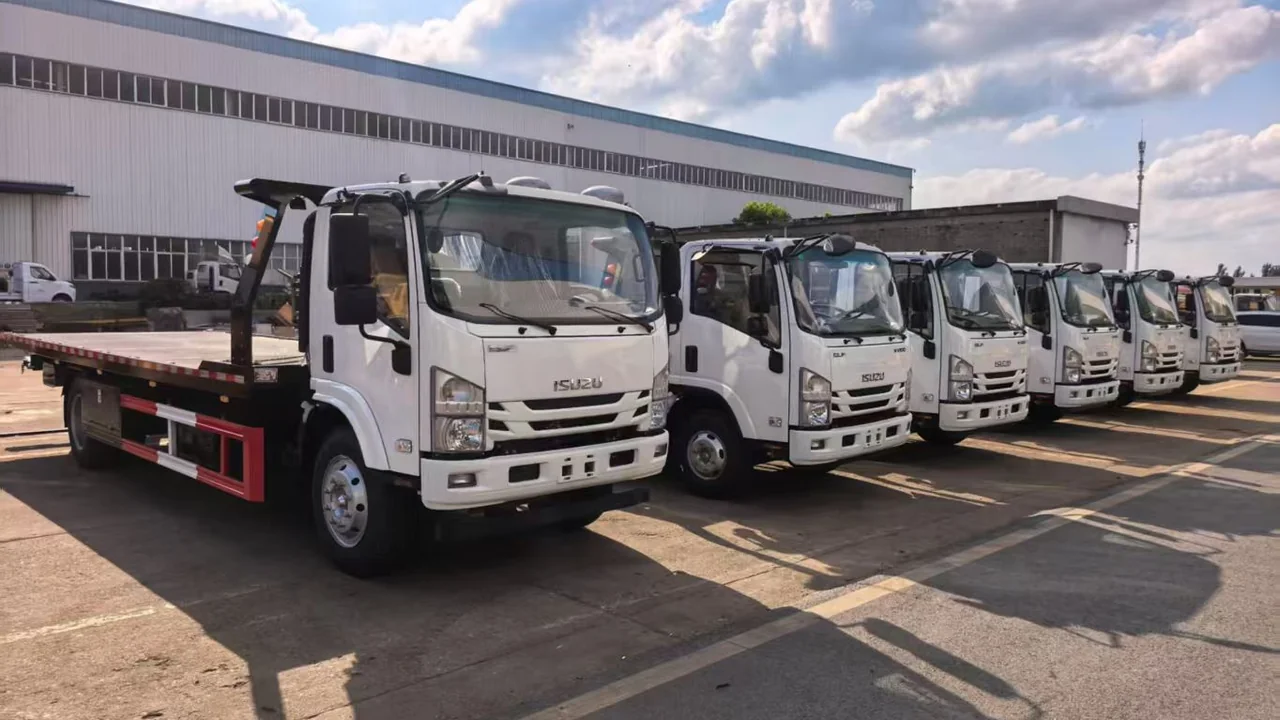
How to order
- Send the route, payload, destination country and port, plus any tender specification.
- CLW proposes a chassis, body volume, equipment list and compliance route.
- Confirm the proforma invoice and payment terms; production is scheduled.
- Receive progress photos at chassis arrival, body assembly and painting.
- Arrange pre-shipment inspection, if required.
- CLW books shipping or hands over to your forwarder; documents are couriered.
- Spare parts, manuals and after-sales support follow the delivery.
Frequently asked questions
What is the minimum order quantity for trucks to Africa?
One unit is possible for most models. Fleet pricing and production scheduling improve from five units upward.
Can you supply right-hand-drive trucks?
Yes, on selected ISUZU, JAC and FOTON chassis where the factory offers the configuration. Confirm RHD availability by model before the proforma invoice is issued.
Which documents do I need for Nigeria or Kenya?
Nigeria typically requires SONCAP and Form M; Kenya and Tanzania use PVoC or COC. CLW prepares the technical file and coordinates with the inspection agency nominated by the buyer.
What is the lead time for a special truck to Africa?
Standard bodies are typically 25–45 days after deposit and drawing approval. Shipping adds roughly 20–40 days depending on the port and sailing schedule.
Can you customise the body, equipment and paint?
Yes. Body volume, compartment layout, pump and meter set, crane model, clinic layout, livery and logo can be specified. A drawing is issued for approval before production.
Do you provide spare parts and training?
Yes. CLW recommends a 12-month wear-parts kit, supplies manuals and parts catalogues, and supports local workshops with video training and remote troubleshooting.
Should I buy a new truck or a refurbished HOWO for Africa?
It depends on the route and the workshop, not only the price. A refurbished HOWO can cost half as much, but non-original parts and sea-freight lead times can keep it idle for several months. If the truck must earn every week and the local workshop cannot source parts, a new unit specified for the route and delivered with a wear-parts kit is usually the lower-cost choice over three to five years.
What are the payment terms?
T/T and L/C terms are confirmed per order and per destination. Ask for the current terms with your quotation.
Can you ship to a landlocked African country?
Yes. CLW quotes to the destination port and can include the transit leg to Zambia, Uganda, Ethiopia and other landlocked markets through Mombasa, Dar es Salaam, Djibouti, Beira or Durban.
Sources and further reading
- Nigeria: Standards Organisation of Nigeria (SON) — SONCAP and product conformity.
- Kenya: Kenya Bureau of Standards (KEBS) — PVoC programme.
- South Africa: National Regulator for Compulsory Specifications (NRCS) — Letter of Authority.
- Pre-shipment inspection: SGS, Bureau Veritas, Intertek.
- CLW company profile and certificates: About CLW.
Tell us what the fleet has to do
Send your route, payload, destination port and any tender document. CLW will return a configuration, a compliance route and a quotation with the shipping option that fits your market — not a generic brochure price.