A fire truck is specified by the fire it has to fight and the water supply it will find on arrival, not by the badge on the door. A municipal pumper that arrives at a hydrant needs pump capacity and hose; the same chassis in a district without hydrants needs a water tank and a rapid-attack line. Industrial sites need foam, airports need a vehicle that can leave the pavement at speed, and wildland districts need a light 4x4 that fits a forest track. Factory prices in 2026 range from roughly USD 38,000 for a 4x4 wildland brush truck to more than USD 400,000 for a 6x6 airport crash tender, and the spread is mostly pump, tank, foam system, crew cab and certification rather than the chassis. This guide covers the duty classes, the vehicle families, pump ratings against standards, water and foam sizing, crew cab and chassis requirements, equipment, conformity, price bands, five-year costs, the twelve-point RFQ, export and the maintenance and safety rules that decide whether the truck is available when the alarm sounds.
Three questions decide the specification before any equipment is discussed. What burns — a building, a vehicle, a fuel tank, a forest or an aircraft? Where does the water come from — hydrant, tanker shuttle, open water, or only the truck's own tank? How long is the first response, and how many crew arrive? A truck that is right for a hydrant-fed municipal pumper is wrong for a district where every fire starts with 5,000 litres and a 20-minute drive to the nearest source.
| Duty | Typical incident | Water and foam | Pump and equipment | Vehicle |
|---|---|---|---|---|
| Municipal structural | Buildings, vehicles, rubbish | Hydrant supply, 2,000–4,000 L on board | 1,500–3,000 L/min pump, hose, ladders, SCBA seating | 4x2 or 6x4 pumper with crew cab |
| Water tender for no-hydrant districts | Any fire beyond a hydrant | 5,000–12,000 L tank, quick dump valve | 1,000–2,000 L/min pump, portable tank | 6x4 or 8x4, high payload |
| Industrial and petrochemical | Fuel, chemical, tank farm | Foam concentrate 500–3,000 L, monitors | Foam proportioning, high-flow monitor, dry powder option | 6x4 heavy chassis, foam-compatible materials |
| Airport crash tender (ARFF) | Aircraft fuel fire, off-pavement | 3,000–12,000 L water plus foam, fast attack | High-flow pump, bumper and roof monitors | 6x6 or 8x8, high power-to-weight, acceleration requirement |
| Wildland and brush | Grass, forest, interface | 500–2,000 L, skid or slip-on unit | High-pressure low-flow pump, 4x4 traction | Light 4x4 pickup or small cab-over |
| Rescue and command support | Vehicle extrication, technical rescue | Small tank or none | Generator, lighting mast, rescue tools | Box body, crew cab, storage |
In markets where the fire service is municipal, the vehicle is also a political object: the livery, the siren standard and the radio fittings are often specified by the department's own rules, and those rules should be collected before the quotation is written rather than after the truck arrives.
| Family | Water | Pump | Best for | Limits |
|---|---|---|---|---|
| Pumper (engine) | 2,000–4,000 L | 1,500–3,000 L/min at 10 bar | Hydrant-fed structural firefighting | Needs a water source; limited on-board water |
| Water tender | 5,000–12,000 L | 1,000–2,000 L/min | Rural and no-hydrant districts, tanker shuttle | Heavy, slow, needs a dump site |
| Foam tender | 4,000–8,000 L water, 500–3,000 L foam | 2,000–4,000 L/min, foam proportioning | Fuel depots, ports, refineries | Foam concentrate logistics and shelf life |
| ARFF crash tender | 3,000–12,000 L plus foam | High flow with bumper and roof monitors | Airports, military airfields | High purchase and training cost |
| Wildland brush truck | 500–2,000 L | High-pressure low-flow | Forest tracks, interface zones | Small crew, short duration |
| Combined rescue pumper | 2,000–4,000 L | 1,500–2,500 L/min | Towns that need one truck for everything | Compromises storage and payload |
For a first truck in a small town, a combined rescue pumper on a 4x2 chassis with 3,000 L of water is usually the best compromise: it carries enough water for the first ten minutes, has a pump that can use a hydrant when one exists, and has storage for rescue tools. For a district with no hydrants, the water tender is the primary truck and the pumper becomes the second call.
Pumps are rated as a flow at a pressure, and the two numbers must be read together. A pump described as "3,000 L/min" delivers that flow at its rated pressure — typically 10 bar in the EN 1846 classification — and much less at 15 or 20 bar. Two trucks both sold as "2,000 L/min pumps" can differ by a third in real performance if one is rated at 8 bar and the other at 10 bar, and neither will deliver the rated flow through a long hose layout with a nozzle at the end.
| Rated flow at 10 bar | Typical vehicle | Lines it can supply | Practical note |
|---|---|---|---|
| 1,000 L/min | Light 4x2 pumper, brush truck | Two 45 mm attack lines or one 70 mm line | Adequate for vehicle fires and small structures |
| 1,500 L/min | 4x2 pumper | Two 70 mm lines plus one attack line | Common municipal first-response specification |
| 2,000 L/min | 4x2 or 6x4 pumper | Multiple lines, one monitor | Needs a hydrant or a large tank to feed it |
| 2,500–3,000 L/min | 6x4 heavy pumper | Several lines plus monitors | Tank and hydrant capacity, not the pump, become the limit |
| 4,000 L/min and above | Foam tender, ARFF | Bumper and roof monitors | Specialist crew training and foam logistics |
Ask for the pump performance curve, not only the rated point, and for the suction and discharge plumbing sizes. A high-flow pump on a 3-inch suction with a long lift will cavitate before it reaches its rating, and a pump fed by a small on-board tank will empty the tank in three minutes at 2,000 L/min. The plumbing and the tank feed are part of the pump specification.
On-board water buys time, and time is what a first-response truck sells. A 3,000 L tank supplies a 1,500 L/min pump for about two minutes at full flow, or fifteen minutes at a hand-line flow of 200 L/min — which is why tank size and pump size are chosen together with the hydrant distance, not independently. Tanks are stainless steel, glass-reinforced plastic or polypropylene; stainless resists corrosion and impact but costs more, and polypropylene needs a baffled design to avoid surge in a partly filled tank on a slope.
Foam systems are specified by the concentrate type (AFFF, fluorine-free, protein), the proportioning method (inline inductor, balanced pressure, around-the-pump) and the proportioning range (typically 1–6 percent). A foam tender with a 3,000 L concentrate tank and a pump-proportioner at 3 percent delivers 100,000 litres of finished foam solution from that tank, which is the number the industrial client actually cares about. Foam concentrates have a shelf life of roughly three to ten years depending on type, and the drum store, the induction test and the annual proportioning check are part of the specification.
Fire trucks are heavy for their length: a pumper with 3,000 L of water, a pump, a hose bed, ladders and a crew cab can weigh 12–16 t, and a water tender with 10,000 L approaches 26 t. The chassis must be rated for that loaded weight with the crew aboard, and the body builder must confirm the axle loads with the tank full, because a truck that is legal empty is not legal when it arrives at the fire.
| Vehicle | Chassis | GVW | Crew | Note |
|---|---|---|---|---|
| Light pumper, 4x2, 2,000–3,000 L | Cab-over 4x2, wheelbase 3.6–4.2 m | 10–14 t | 1+5 or 1+7 in crew cab | Check rear axle rating with full tank |
| Heavy pumper, 6x4, 4,000 L | 6x4, wheelbase 4.2–4.8 m | 18–25 t | 1+7 | Pump drive and PTO layout matter |
| Water tender, 6x4, 8,000–12,000 L | 6x4, wheelbase 4.8–5.8 m | 25–31 t | 1+2 or 1+5 | Bridge limits and axle loads must be checked |
| Foam tender, 6x4 | 6x4 heavy, reinforced frame | 25–31 t | 1+5 | Foam tank and proportioner weight |
| ARFF, 6x6 or 8x8 | Specialist all-wheel-drive | 30–40 t | 1+3 | Acceleration and off-road performance requirements |
| Brush truck, 4x4 | Light 4x4 pickup or cab-over | 5–7.5 t | 1+4 | Ground clearance and approach angle |
The crew cab is a safety system, not a seating option. Crew seats should be forward-facing with restraints, and where the market requires it, each seat position needs space for a self-contained breathing apparatus set. The cab must have a separate crew door, a step that a firefighter in boots can use, interior lighting the crew can operate with gloves on and a radio position that does not obstruct the pump operator. These details are cheap at the factory and impossible to add later.
The body is an equipment store. A pumper needs a hose bed sized for the hose the department actually carries (typically 300–600 m of 45 mm and 70 mm lines), a ladder rack for a roof ladder and an extension ladder, compartments with roll-up or hinged doors that do not jam when the truck is on a slope, a pump panel with gauges the operator can read in daylight and a throttle that can be worked with a gloved hand, and a water monitor where the duty calls for one. Storage is often the first thing cut to reach a price, and it is the first thing the crew complains about at the first fire.
Specify the equipment list with the quotation: hose lengths and diameters, nozzle types, suction hose and strainer, ladder sizes and mounting, monitor, lighting tower, generator, winch, first-aid and rescue equipment, and the livery. A price for "fire truck with pump and tank" without an equipment schedule is a price for a shell.
Fire trucks are judged against a national standard, and two families dominate the export market: the European EN 1846 series and the American NFPA 1901. They differ in pump rating conditions, crew cab requirements, tank fill rates, equipment lists and marking, so a truck built to one is not automatically acceptable under the other. Most export markets accept EN 1846 or a national adaptation of it; some accept NFPA, and a few require both for different vehicle classes.
| Market | Vehicle track | Fire-equipment track | Practical note |
|---|---|---|---|
| Europe and EN 1846 markets | EU or national type approval, COC | EN 1846 conformity, pump performance test | Test report from an accredited body before delivery |
| Saudi Arabia and the Gulf | SASO / SABER (KSA), ESMA (UAE), GSO | Civil defence acceptance, pump and foam system test | Arabic labels and manuals; high-ambient cooling |
| Kenya, Tanzania, Uganda | KEBS PVoC, TBS, UNBS pre-shipment inspection | Fire brigade and municipal acceptance | Inspection before loading; crew training included |
| Nigeria and West Africa | SONCAP and pre-shipment inspection | Federal and state fire service acceptance | Spare parts kit and pump seals are essential |
| Brazil, Mexico and Latin America | INMETRO (Brazil), NOM (Mexico), national homologation | National fire-service standards, often NFPA-derived | Spanish or Portuguese manuals and panel labels |
| Russia, CIS and EAEU | EAC conformity, TR CU 018/2011 | National fire-technical regulation, pump certification | Cold-climate pump and tank specification, −30 °C start |
Ask for the pump performance test report with the truck, and check the test conditions: a report that states the flow, the pressure, the suction lift and the ambient conditions can be verified by the receiving authority; a certificate that names only the model cannot.
Compare line items: pump rated flow and pressure with the curve, tank material and baffles, foam system type and proportioning range, crew cab seating and SCBA positions, hose and ladder capacities, pump panel layout, equipment schedule and conformity documents. A price for "10,000 L fire truck, USD 95,000" hides whether the pump is 1,000 or 2,000 L/min, and whether the tank is stainless or polypropylene.
An illustrative model for a 4x2 pumper with 3,000 L of water and a 2,000 L/min pump, covering 12,000 km a year, 400 pump hours and weekly readiness drills, with statutory pump testing included. Labour of the crew is not included; your rates will differ, but the proportions are the point.
| Item | Basis | Five-year total (USD) | Share |
|---|---|---|---|
| Purchase and delivery | USD 92,000 FOB plus freight and duty estimate | 102,000 | 46 % |
| Fuel | 12,000 km at 32 L/100 km plus pump hours, USD 1.10/L | 21,000 | 9 % |
| Pump and valve service | Annual pump test, seals, valves, gauges, primer | 12,000 | 5 % |
| Tank and body repair | Tank inspection, baffles, paint, compartment doors, ladder rack | 8,000 | 4 % |
| Chassis service and tyres | Scheduled service, two tyre sets, brakes | 14,000 | 6 % |
| Equipment replacement | Hose, nozzles, SCBA seats, lighting, radios | 15,000 | 7 % |
| Insurance and certification | Vehicle cover, conformity and pump test fees | 13,000 | 6 % |
Availability is the cost driver that does not appear in the table. A truck that is out of service for a pump seal has a cost measured in response time, not in dollars, so the maintenance plan and the spare parts kit are part of the purchase decision. In fleets that keep one pumper for a district, a second-hand pump and a seal kit in the store are cheaper than a week without a truck.
| # | Input | What to state | Why it changes the quotation |
|---|---|---|---|
| 1 | Duty | Structural, wildland, industrial, airport, rescue | Sets the vehicle family |
| 2 | Water supply | Hydrant, tanker shuttle, open water, tank only | Sets tank size and pump feed |
| 3 | Pump | Rated flow at 10 bar, suction and discharge sizes | Sets pump class and plumbing |
| 4 | Water and foam | Litres of water, litres of concentrate, proportioning range | Sets tank material and foam system |
| 5 | Crew | Number of seats, SCBA positions, door layout | Sets crew cab and chassis length |
| 6 | Route and access | Street width, bridge limits, gradients, off-road need | Sets axle configuration and GVW |
| 7 | Equipment | Hose, ladders, monitor, lighting, generator, rescue tools | Sets body storage and price |
| 8 | Standard | EN 1846, NFPA 1901 or national adaptation | Sets cab, pump and equipment requirements |
| 9 | Livery and signals | Colour, markings, beacon and siren standard, radio fittings | Adds paint, electrical and integration work |
| 10 | Climate | Ambient maximum and minimum, dust, humidity | Sets cooling, cold-start and paint specification |
| 11 | Documents | Pump test report, conformity certificate, manuals language | Affects acceptance and price |
| 12 | Service | Spare parts kit, crew training, warranty and response time | Affects price and availability |
CLW builds fire bodies on ISUZU, DONGFENG, SINOTRUK HOWO and SHACMAN chassis in an ISO-certified factory, with pumps and foam systems from established suppliers. Standard pumpers up to 4,000 L take 35–55 working days after deposit and drawing approval; water tenders and foam tenders take 45–70 working days; ARFF vehicles and custom equipment packages take longer. Pump performance testing, livery and equipment installation add one to three weeks.
Factory acceptance should include a pump performance test at the rated flow and pressure, a tank fill and dump test, a foam proportioning test with the concentrate the client will use, a crew cab and equipment check against the schedule, and a road test at the loaded weight. If you cannot attend, ask for the pump test report, video of the foam test and the signed equipment list. Fire trucks normally ship by RoRo; small brush trucks can travel on a flat rack. For the medical side of emergency response, the mobile medical truck range covers ambulances and clinic vehicles built on the same chassis discipline.
| Interval | Checks | Parts to keep in stock |
|---|---|---|
| Weekly | Pump engage and prime, gauges, valves, tank level, foam level, battery, lights, sirens, hose condition, ladder mounts | Seals, lamps, fuses, hose gaskets |
| Monthly | Full pump run at working pressure, monitor operation, foam proportioning check, SCBA seat fixings, compartment doors, tyre pressures | Pump seals, foam sample, door hardware |
| Annually | Certified pump performance test, tank inspection, valve and primer service, chassis service, brake and tyre inspection, conformity review | Test service, seal kit, valve parts |
| After any fire use | Pump flush, tank and foam system rinse, hose inspection and drying, equipment restock, body wash | Foam concentrate, hose, nozzles |
| Every five years | Structural inspection of the body and tank, pump overhaul assessment, electrical system review | Overhaul kit, wiring, paint |
The truck is a workplace for people who arrive in a hurry. The pump operator must be able to see the gauges, reach the controls and hear the radio without leaving the panel, and the panel must be laid out so that a gloved hand cannot open the wrong valve. Crew seats need restraints and a clear exit path, and the step height must suit a firefighter in boots carrying equipment. On the road, the truck is heavy, it has a high centre of gravity when the tank is full, and its braking distance is longer than the driver's instinct — a partly filled tank surges on a bend, which is why baffles are specified rather than optional.
Two rules prevent the most common serious incidents. Never move the truck with a crew member on the step or the rear platform, and never operate the pump with a dry suction and a closed discharge for long; a pump run dry destroys its seals and can overheat in minutes. Foam concentrates are also chemical products: store them according to the safety data sheet, keep the drums out of sunlight, and record the batch so that a foam that has passed its shelf life is not used at a real fire.
Send the duty type, the water supply, the crew size, the standard you must meet and the equipment list through the contact page to receive a chassis and body configuration with the pump curve, tank and foam sizing, equipment schedule and a line-item quotation. If you are still comparing emergency vehicles, the rest of our buying guides cover the chassis, body and compliance decisions that apply to every special vehicle built on a commercial truck platform.
 SHACMAN X3000 6X4 Water Foam Fire Truck For Sale, 12000L Stainless Steel Tank 340HP Heavy-Duty Fire Engine For Industrial Petrochemical Port Mine Emergency Fire Rescue
Fire Fighting Truck
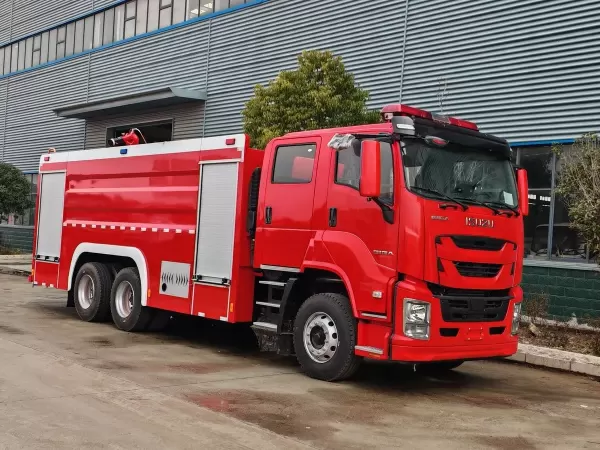 ISUZU GIGA 6x4 Water Foam Fire Truck 300HP Tanker Fire Engine with Air Pack
Fire Fighting Truck
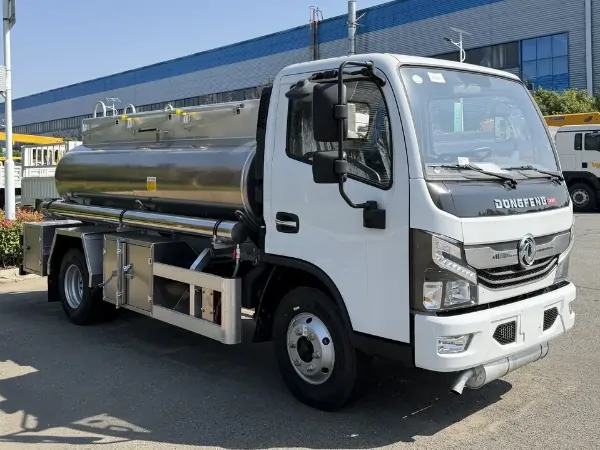 Dongfeng Captain E 4x2 Stainless Steel Potable Water Tanker Truck 4,000-6,000 L for Drinking Water Delivery
Tanker Truck
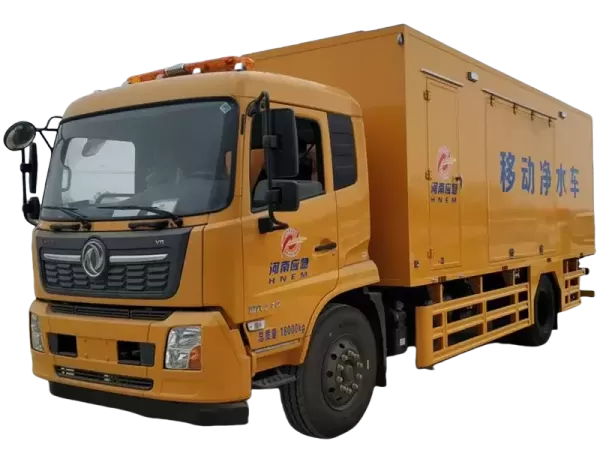 Dongfeng Mobile Water Purification Truck for Rural Supply
Tanker Truck
Tell us your truck model and quantity — an engineer replies within 12 hours with a factory-direct price.
Tell us the model and your requirement — an engineer replies within 12 hours, factory direct.