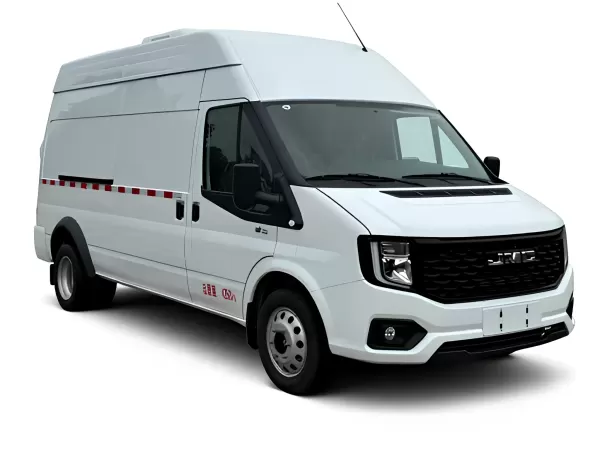
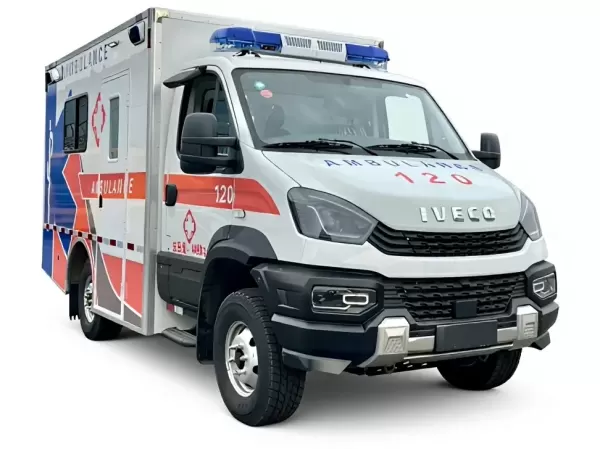
A mobile clinic is not a truck with a consultation couch bolted inside. It is a vehicle in which the body structure, power supply, water system, climate control and medical equipment are designed as one working environment. That is why the manufacturer you choose matters more than the chassis badge: the same ISUZU or FOTON cab can become a clinic that works eight hours a day, or a showroom vehicle that fails on its first field visit. This guide explains the body types, layouts, equipment integration, indicative factory prices and the twelve questions that separate a clinic builder from a body shop.
An ambulance moves a patient and delivers care on the way. A mobile clinic brings a service to people who cannot reach a hospital. The distinction sets the whole specification. Ambulances prioritise stretcher access, oxygen, monitoring and a short crew workflow. Clinics prioritise room to examine, visual and acoustic privacy, storage for consumables, a stable power supply for diagnostic equipment and a workflow that lets one or two clinicians see 40 to 120 patients a day.
The missions we are most often asked to configure are:
Common chassis for the first three classes are ISUZU, JMC, FOTON, IVECO and Dongfeng, in left- or right-hand drive depending on the model and the destination market. Confirm right-hand-drive availability at quotation stage rather than assuming it, because the body, door position and equipment layout change with the steering side.
A clinic that looks impressive in photographs can still fail in service because the flow is wrong. Walk the route a patient takes: entry step, waiting, registration, triage, examination, treatment, pharmacy or sample collection, exit. Each move should be short, and the dirty and clean routes should not cross. In a two-room body, the usual arrangement is a front consultation room and a rear treatment or laboratory room, with a connecting internal door and separate outside doors where the body length allows.
Practical details define whether the clinic is usable: a door wide enough for a wheelchair, steps with handrails and a grab handle, non-slip flooring, rounded cabinet corners, a sink reachable from the examination couch, locked storage for medicines, a sharps container bracket, and lighting bright enough for examination without glare on screens. Ask for dimensioned drawings of every wall, not a rendered image. The drawing should show cabinet volumes, door swings, equipment footprints, cable routes, water and waste tanks, the generator locker and the air-conditioner positions.
Power is the most common source of field failure. A diesel generator sized for the air-conditioner, the autoclave and the diagnostic equipment at the same time is the baseline. Shore power with an isolation transformer lets the clinic run from a hospital or a site supply without risking the medical devices. A battery and inverter, charged from the generator or solar panels, keeps the vaccine fridge and the laboratory running during generator service and at night. Specify the load list in watts, the daily running hours and the autonomy you expect; "with generator" is not a specification.
Water needs a clean tank, a waste tank and a separation between the two. A clinic with a laboratory needs a sink with a trap, a hand-wash basin in each room and a floor drain that does not pass under clean storage. Cold chain is a medical requirement, not an accessory: a 2-8 C fridge with a data logger, a temperature alarm and a backup power source, plus insulated boxes for transport. Climate control must handle the destination, not the factory: 45 C ambient in the Sahel, high humidity on the coast or cold nights at altitude. For TB or isolation work, specify ventilation and, where required, negative pressure with HEPA filtration.
The vehicle, the body and the medical equipment are three separate approval questions. The vehicle is registered in its own class - truck, bus or trailer - and the body must not change the permitted axle loads or obscure lights and plates. Medical devices installed in the clinic must meet the destination country's device rules, and the equipment manufacturer's certificates usually travel with the equipment, not with the vehicle. X-ray and other radiation equipment needs a licence in most markets. Electrical installations, medical gas and autoclaves have their own safety standards. Before production, confirm with your ministry of health and your registration authority which of these documents they will ask for.
For export, the vehicle also needs the conformity route of the destination country - COC, PVoC or SONCAP, for example. CLW prepares the vehicle technical file and coordinates with the inspection agency nominated by the buyer; the buyer's clearing agent confirms the current rule. Our Africa market guide sets out the routes and ports for each market. We do not claim to hold medical-device approvals in every country, and we do not present a vehicle certificate as a medical certificate.
These are factory-direct, FOB China, budget figures for the vehicle and body, and they exclude medical equipment unless stated. In a fully equipped clinic the devices, their installation and the clinical training can add 30 to 60 percent to the vehicle price, and a dental chair, a digital X-ray room or a full laboratory can add more. Treat the bands as a framework for comparing quotations, not as a price list: ask every supplier for a line-item breakdown of chassis, body, insulation, electrical system, generator, air-conditioning, water and waste, furniture and equipment installation, then compare the same lines.
A standard van or light truck clinic is typically built in 30 to 45 working days after drawing approval and deposit; a rigid three-room clinic or a bus conversion takes 45 to 60 working days, and imported medical equipment can extend that. Small units ship in a 40FT container or on a flat rack; buses and large rigid clinics ship by RoRo. Before shipment, inspect the finished unit with the equipment running: generator under load, air-conditioning at temperature, water pump and waste system, fridge pull-down test, and every device powered on. The shipment should include the commercial invoice, packing list, bill of lading, certificate of origin, vehicle certificate and the equipment certificates, manuals and warranty documents.
How much does a mobile clinic cost? A van or light truck clinic is commonly in the USD 35,000 to 80,000 range before medical equipment; a three-room rigid clinic is higher. The equipment package, not the vehicle, is usually the largest variable.
Can it work off-grid? Yes, with a correctly sized generator, a battery and inverter, and a fuel capacity matched to the daily route. Specify the load list and the hours of autonomy you need.
Can one vehicle do dental, laboratory and general consultation? A 10 to 12 t rigid body can carry two or three functions if the layout is designed around them. A van cannot; do not accept a layout that claims it can.
What is the minimum order? One unit. Fleet pricing and production scheduling improve from five units upward.
Do you supply right-hand drive? Yes, on selected ISUZU, JMC and FOTON models where the factory offers the configuration. Confirm by model before the proforma invoice.
Start from the mobile medical truck range, the clinic and laboratory van, the ambulance and patient transport bus pages, then send your service list, patient volume, route and destination port through the contact page. We will return a layout proposal, an equipment list and a line-item factory quotation, usually within 12 hours.
Tell us your truck model and quantity — an engineer replies within 12 hours with a factory-direct price.
Tell us the model and your requirement — an engineer replies within 12 hours, factory direct.