A water tanker truck is one of the most price-sensitive purchases in a municipal or contractor fleet: the chassis is standard, so the money sits in the tank, the pump and the fittings. This guide explains what is actually selling in 2026, how volume classes compare, what each class costs ex-works, and the eight checks that separate a good quotation from an expensive mistake.
Demand for water tanker trucks is no longer one market. Five segments buy on different priorities: municipal water supply and street washing (food-grade tank, low noise, spray bar, winter draining); construction dust suppression and concrete curing (fast fill, high-pressure rear spray, robust tyres); mining haul-road watering (large volume, wide spray, reinforced tank on 6x4 or 8x4); agriculture and livestock (field access, PTO pump, drinking-water quality); and events, camps and disaster relief (multi-function bodies that can also carry fire-fighting equipment).
Across all five, buyers are consolidating: one truck that can deliver drinking water, sprinkle a road and feed a fire monitor replaces two single-purpose vehicles. That shift is visible in enquiries, where multi-purpose specifications now outnumber plain sprinkler requests.
Tank material decides service life. Carbon steel with epoxy lining is the economic default; food-grade 304 or 316 stainless steel is required for drinking water; GRP suits aggressive water and very large volumes. Internally, a properly built tank has three or more anti-surge baffles, a manhole with a lockable lid, a vent, an overflow, a drain valve at the lowest point and a ladder with a safety cage.
Pump choice matters more than most buyers expect. A self-priming pump of 20-40 m3/h is enough for dust suppression; a PTO-driven pump with a 20-30 m jet reaches the far side of a site; a fire monitor of 20-30 m throw turns the same truck into a first-response unit. Specify pump flow, head and drive type in writing, because "standard pump" means different things to different factories.
The bands below are factory-direct, FOB China, for standard specifications; chassis brand, tank material, pump package, spray configuration, right-hand drive and destination freight move the number substantially. Treat them as a budget framework, not a quotation.
Two traps in this price range: comparing a carbon-steel tank with a 304 stainless tank as if they were the same product, and comparing pump flow rates that were never specified. Ask each supplier for a priced component list - tank material and thickness, pump model and flow, spray bar length, monitor, valves, paint system - then compare line by line.
A standard 4x2 water tanker is typically built in 20-30 working days after drawing approval and deposit; 6x4 and 8x4 units take 30-45 working days; stainless or multi-purpose bodies add a week. Small units ship in a 40FT container or flat rack, larger units by RoRo. Every shipment leaves with certificate of origin, commercial invoice, packing list, bill of lading, tank pressure and leak test record, and pump test data.
Start from the category pages for specifications and current stock: tanker trucks, water tank trucks, water sprinkler trucks and sewage suction trucks. For multi-purpose builds, the clinic and lab van pages show how we configure a body around a service list rather than a catalogue number.
How much water can one truck carry? From 3 m3 on a light 4x2 to 30 m3 on an 8x4. Choose by daily volume and route width, not by the largest tank available.
Can one truck do drinking water and street washing? Yes, with a food-grade tank, separate spray plumbing and a dedicated drain; the drinking-water line must not share fittings with the spray system.
What is the minimum order? One unit. Export documentation and spare-parts kits are quoted with the truck.
How long is delivery? 20-45 working days depending on class and specification, plus shipping.
Which chassis do you recommend? ISUZU or Dongfeng for 4x2 municipal work, SINOTRUK HOWO or SHACMAN for 6x4 and 8x4 construction and mining routes.
Send your daily volume, water source, route and destination port through the contact page and we will return a line-item factory quotation, usually within 12 hours.
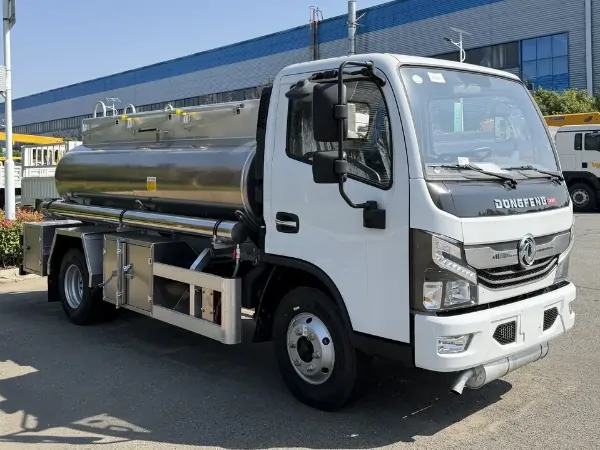 Dongfeng Captain E 4x2 Stainless Steel Potable Water Tanker Truck 4,000-6,000 L for Drinking Water Delivery
Tanker Truck
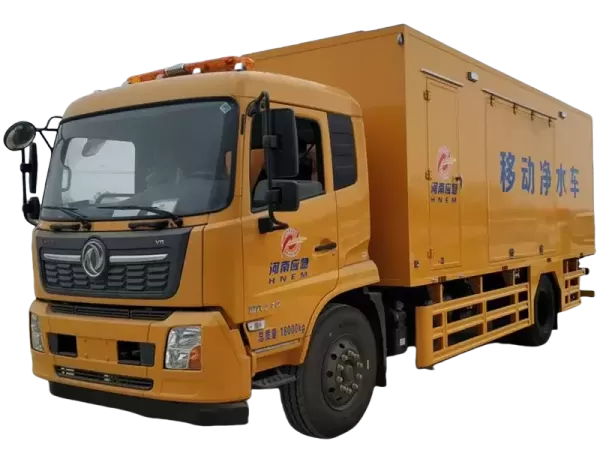 Dongfeng Mobile Water Purification Truck for Rural Supply
Tanker Truck
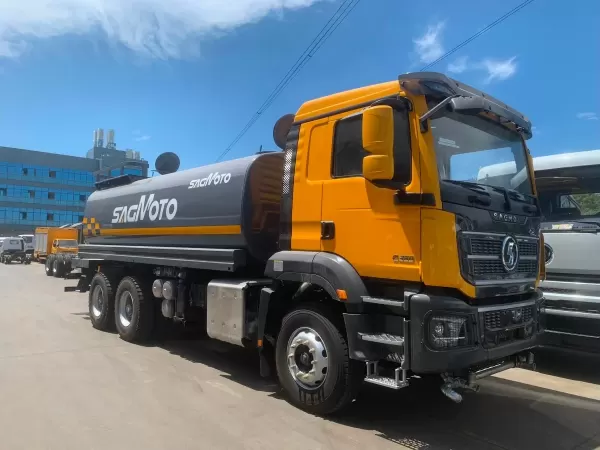 SHACMAN 6x4 15cbm Water Tanker for Construction Supply
Tanker Truck
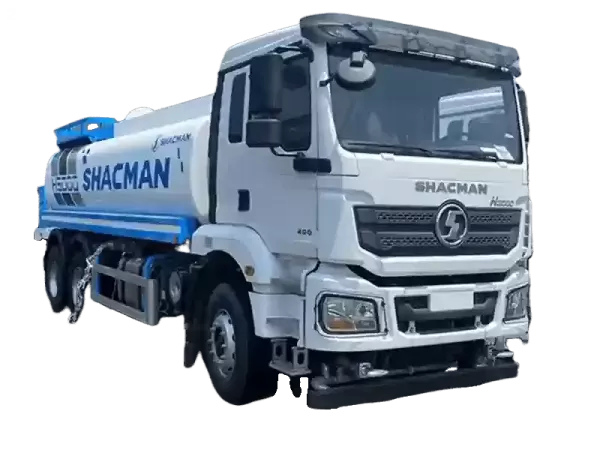 SHACMAN 6x4 15cbm Water Tanker for Bulk Supply
Tanker Truck
Tell us your truck model and quantity — an engineer replies within 12 hours with a factory-direct price.
Tell us the model and your requirement — an engineer replies within 12 hours, factory direct.