CLW Chengli Special Automobile · Suizhou, China
CLW concrete trucks cover mixer trucks from 3 to 16 m3 drum capacity and boom pump trucks with 37-56 m vertical reach, plus trailer pumps and line pumps. Mixer drums use Q345 and 520 wear steel with Bosch-Rexroth class hydraulic drives; pump trucks use S-valve or Z-fold booms with proportional control. Chassis options run from 4x2 city mixers to 8x4 mega mixers and 6x4 pump carriers.
Match axle load: 6-8 m3 runs on 4x2, 10-12 m3 on 6x4 and 14+ m3 needs 8x4. CLW supplies the GVW breakdown per destination so you pass local weighbridges.
With the hydraulic agitate circuit running at 2-6 rpm the load stays within placing consistency for 90-120 minutes depending on mix design and ambient temperature.
Price depends on drum or boom size, chassis brand, hydraulic package and control system. A 4x2 6-8 m3 mixer is the entry tier; a 37-56 m boom pump on a 6x4 carrier is the heavy tier. Send the pour volume, height and site access for a configuration.
MOQ is one unit. Standard mixers ship in 20-35 working days after deposit; boom pumps and trailer pumps take 35-55 working days because of the boom and hydraulic testing.
Yes. CLW can quote mixer trucks, boom or trailer pumps, placing booms and line pipe as one package, with output matching so the pump does not outrun the mixer fleet.
MIIT and ISO certification, certificate of origin and inspection report. The whole vehicle carries a two-year warranty; the pump and hydraulic package ship with their own manufacturer certificate and spare-parts list.
Size the drum from the plant output and the site access, not from the largest model available. A 6 m3 drum on a 4x2 suits city plants and narrow sites, 8-10 m3 on a 6x4 is the common export choice, and 12 m3 on an 8x4 is for high-volume pours with good roads. Tell us the batch size, the pour cycle and the axle limits so the drum volume, water tank and chute reach are checked together.
No. A mixer transports ready-mix and discharges through a chute; placing concrete needs a separate boom pump, a trailer pump or a site pump. If your projects vary, a mixer fleet plus one boom pump is normally cheaper than one compromise machine, because a pump sits idle whenever it is not placing.
Check the mixing blades and the drum shell at the discharge end, where abrasion is highest, and look for concrete build-up behind the blades that reduces mixing efficiency. Record shell thickness at fixed points each year. Worn blades give a slower, less uniform mix that shows up as segregation on site long before the drum fails.
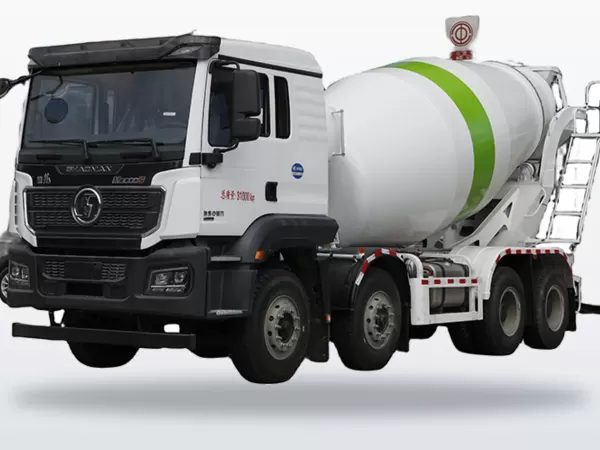
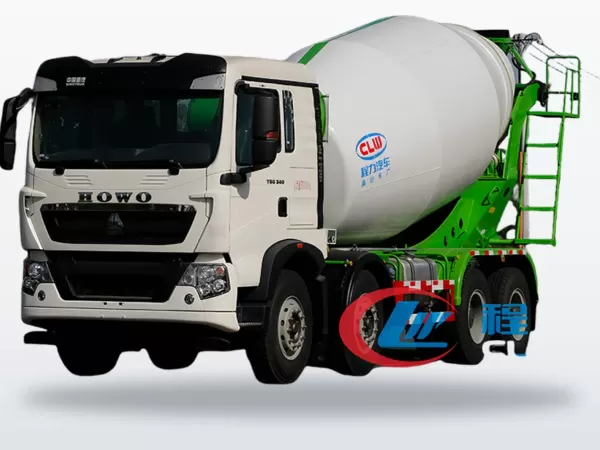
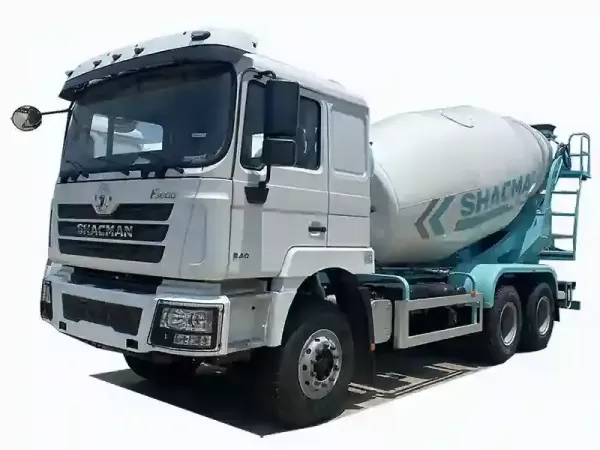
A concrete truck is either a transit mixer or a placing pump, and the two are bought for different jobs. CLW builds mixer drums of 6, 8, 10 and 12 m3 on light 4x2, 6x4 and heavy 8x4 chassis, using wear-resistant steel drums with replaceable mixing blades, hydraulic drum drive and a pressurised water tank for washing out. Boom pump trucks are specified separately by boom length and output.
The drum volume is limited by legal gross weight and by the pour rate the site can take, not by the chassis you prefer.
Five inputs decide the mixer configuration:
Send these with the destination port. CLW confirms drum volume, chassis class, water tank and chute geometry, and returns the axle-load calculation before deposit rather than after the first overweight stop.
Factory-direct FOB bands for standard specifications; a budget framework, not a quotation.
Compare drum steel grade and thickness, blade design, hydraulic pump and motor brand, water tank volume, chute and ladder detail, and paint system. Two quotations with the same drum volume can differ by a tonne of steel and a hydraulic package, and that difference appears in the third year of operation.
CLW builds mixers on MIIT-approved chassis in an ISO-certified factory. Export documents include certificate of origin, commercial invoice, packing list, bill of lading and inspection report on request. Drum rotation and hydraulic tests are recorded before shipment, and the record travels with the truck.
Lead time is typically 25-40 working days for standard mixers after deposit, and 35-55 working days for 8x4 heavy units and boom pump trucks. Small mixers ship on flat racks or by RoRo; 8x4 units normally move by RoRo. Lifting points, blocking plans and loading photos are supplied before departure, and right-hand-drive or local homologation packages are prepared where the market allows them.
Most mixer problems are hydraulic or mechanical rather than electronic. Check the drum drive gearbox, hydraulic pump and motor for leaks and temperature, and inspect the blades and shell thickness at the discharge end each season. Wash the drum at the end of every shift; hardened concrete behind the blades reduces mixing efficiency and adds load the hydraulic system was not sized for.
Keep the water tank clean and the wash system working, check the chute, ladder and drum guard for damage, and confirm the drum lock and emergency stop operate before loading. Retarder and slump planning belong to the batch plant, but the driver should know the maximum haul time. CLW supplies drum seals, blades, hydraulic filters and the original drum drawing with every mixer.
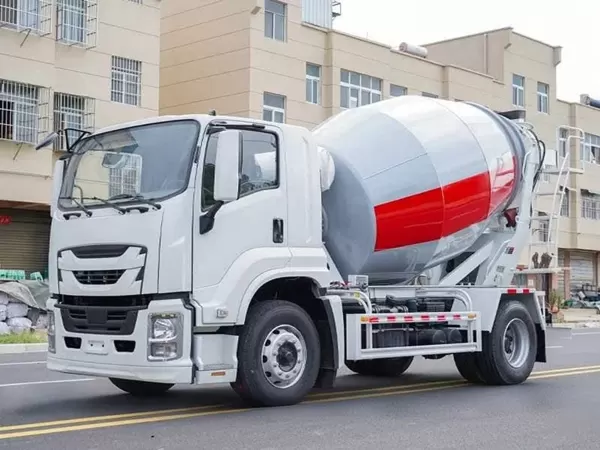
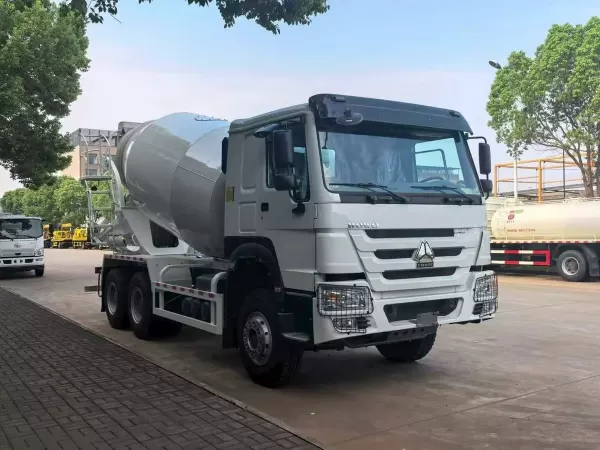
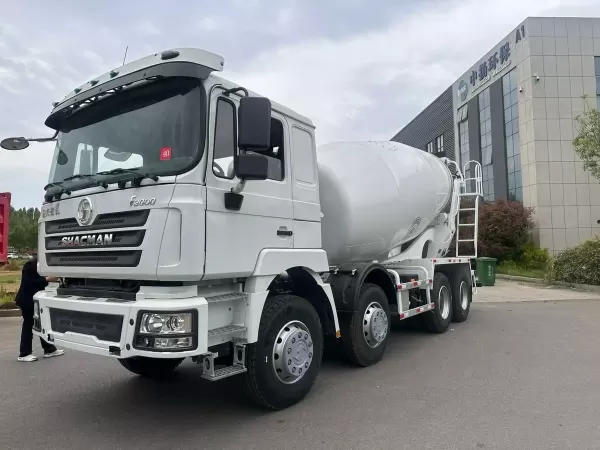
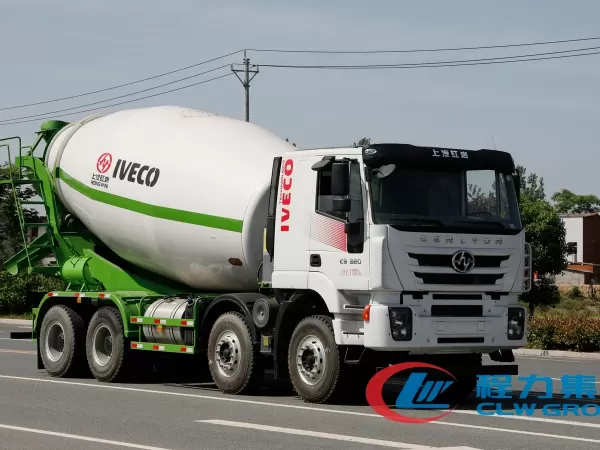
Main models: ISUZU GIGA 6x4 Concrete Mixer Truck 300HP Transit Mixer Red White Drum SINOTRUK HOWO 6x4 RHD Concrete Mixer Truck, 8-12CBM Cement Mixing Truck SHACMAN F3000 8x4 Concrete Mixer Truck 12CBM Heavy Duty Cement Mixer Vehicle For Road & Building Construction HONGYAN 6X4 8 cbm Concrete Mixer Truck for Ready-Mix Delivery SHACMAN 6X4 8 cbm Concrete Mixer Truck for Ready-Mix Delivery SINOTRUK HOWO 6X4 10 cbm Concrete Mixer Truck for Ready-Mix Delivery
Related categories: Cargo & Dump Trucks Road Construction Truck Mounted Cranes Water Tankers Buying Guides Delivery Cases
Tell us your truck model and quantity — an engineer replies within 12 hours with a factory-direct price.
Tell us the model and your requirement — an engineer replies within 12 hours, factory direct.