A septic truck is a vacuum tanker built to empty pits, septic tanks and cesspools that no gravity sewer reaches. The body looks simple — a steel tank, a pump, a hose — but the pump curve, the tank thickness and the discharge arrangement decide whether the truck clears a tank in twenty minutes or stalls at six metres of lift. This guide explains what a septic truck is, how a vacuum truck works, which tank and chassis size fits which duty, and what to specify before you ask for a quotation.
The terms are used loosely in the trade. A septic truck — also called a septic tank truck, cesspit emptier or honey wagon — is a vacuum tanker whose job is domestic and commercial septic tank cleaning: emptying a pit, carrying the sludge to a treatment works and rinsing the tank. A vacuum truck is the wider family: the same pump-and-tank principle applied to sewage lines, gully cleaning, industrial spills, sludge haulage and even dry powder recovery. A sewage truck or sewage suction truck usually means the municipal version, working on manholes and sewer lines rather than domestic tanks.
The practical difference is in the duty cycle, not the name. Septic work is short runs from many small tanks, so the truck needs a modest tank, a fast suction hose and a discharge that empties completely. Sewer-line work is longer runs with heavy sludge and grit, so the tank needs thicker plate, a larger pump and often a jetting system to loosen the load before it can be pulled out. Buyers who order a septic truck for sewer work, or the reverse, usually discover the mismatch in the first month.
CLW builds these bodies on sanitation truck chassis from ISUZU, DONGFENG, FOTON, SINOTRUK HOWO and SHACMAN. The same chassis that carries a road sweeper body can carry a vacuum tank, which is why fleet buyers often order both from one factory and share spare parts and driver training.
A vacuum tanker does not suck in the way a drinking straw does. The pump removes air from the sealed tank, the pressure inside falls below atmospheric, and the outside air pressure pushes the liquid up the hose and into the tank. The engine drives the pump through a power take-off (PTO) on the gearbox, so the truck must be stationary with the handbrake on and the PTO engaged before suction starts.
Three numbers govern the result:
Discharge is the other half of the cycle. Most septic trucks empty by gravity through a rear door or a large-bore valve, with the tank tilted or the truck positioned downhill. Sludge that will not flow can be pushed out by reversing the pump to pressurise the tank, but that is a controlled operation: the tank has a pressure-relief valve for a reason, and a blocked discharge line under pressure is how tanks split.
Four body types cover almost every order. The right choice follows from what is in the pit and where the load goes.
| Body type | What it does | Best duty | Typical capacity | Watch out for |
|---|---|---|---|---|
| Septic vacuum truck | Suction and gravity discharge of domestic and commercial tank sludge | Septic tank cleaning, cesspit emptying, portable toilet servicing | 4–12 m³ | Small pump and thin plate limit it on grit and long runs |
| Sewage suction truck | Heavy suction from manholes and sewer lines, rear door discharge | Municipal sewer maintenance, storm drains, sludge haulage | 8–25 m³ | Needs a bigger pump, thicker shell and a wash-down system |
| Combination vacuum and jetting truck | High-pressure water jet to loosen the blockage, then vacuum to remove it | Blocked sewers, grease lines, industrial drains | 8–18 m³ tank, 2–6 m³ water | Two systems, two maintenance routines; water capacity limits range |
| Dry vacuum truck | Air-driven recovery of dry powder, grit, sawdust or spills without liquid | Industrial cleaning, construction dust, material recovery | 6–15 m³ | Filtration and cyclone design matter more than tank size |
If one truck has to cover both domestic tanks and blocked sewers, the combination body is usually the better compromise than a larger septic truck, because the jetting function solves the problem the vacuum alone cannot: compacted solids that will not move until water breaks them up.
Buyers usually start from tank volume, but the daily duty should set it. Count the tanks or manholes served per shift, multiply by the average volume removed, and add the discharge trip. A truck that fills in forty minutes and spends two hours driving to the treatment plant is the wrong size, however good the price was.
The chassis follows the tank. A 4–8 m³ body sits comfortably on a 4x2 chassis with a 3–5 t payload; 10–15 m³ needs a 6x4 with 8–12 t; 18–25 m³ needs a 6x4 or 8x4 with a reinforced frame and a larger pump. Axle limits, bridge weights and the legal gross vehicle weight in your market decide the final combination, not the tank drawing alone.
| Capacity | Chassis | Drive | Pump example | Duty it suits |
|---|---|---|---|---|
| 4–6 m³ | Dongfeng or ISUZU light | 4x2 | Rotary vane, PTO driven | Domestic septic tanks in narrow streets and estates |
| 7–8 m³ | ISUZU KV600 / ELF | 4x2 | MORO PM80A, Battioni MEC 6500 | Septic service plus light sewer work, LHD or RHD |
| 10 m³ | ISUZU GIGA / HOWO | 4x2 or 6x4 | MORO PM80A, Jurop series | Municipal sewer cleaning and sludge haulage |
| 15 m³ | SINOTRUK HOWO | 6x4 | Jurop PNR 106 | Depot and trunk-line work with long discharge runs |
| 18 m³ combination | HOWO V7-X | 6x4 | Vacuum pump plus high-pressure jetting pump | Blocked sewers, grease lines, industrial drains |
| 20–25 m³ | SHACMAN H3000 / M3000 | 6x4 or 8x4 | Large displacement vacuum pump | Heavy municipal sludge, treatment-plant transfer |
Two specification details decide how the truck feels in service. The first is tank shape: a cylindrical shell with dished ends is stronger per kilogram and drains better than a rectangular box, which is why almost every vacuum body is round. The second is the rear door: a full-opening hydraulic door empties faster and cleans more easily than a small manhole, but it adds weight and cost, and it must seal perfectly or the truck will not hold vacuum.
The pump is the single most important choice after tank volume. Rotary vane pumps are simple, self-priming and tolerant of dirty air, which is why they dominate septic work. Liquid-ring pumps handle continuous duty and hot or wet air better, at the cost of needing a water supply and more maintenance. Sliding-vane and screw pumps appear on larger industrial units.
Brand and spares matter more than catalogue numbers. A MORO PM80A, a Battioni MEC 6500 or a Jurop PNR 106 all do the same job, but the service network in your country decides which one keeps working in year five. Ask for the pump's air-flow curve, the maximum vacuum, the drive ratio and the recommended oil and vane replacement interval. A pump rated only by tank size, with no curve, is a pump you cannot compare.
Two accessories separate a good installation from a cheap one: a vacuum relief valve that protects the shell if the hose blocks, and a moisture trap or cyclone ahead of the pump that stops sludge reaching the vanes. Both are inexpensive at the factory and expensive to retrofit.
Septic and sewage sludge is wet, slightly acidic and often abrasive. Carbon steel plate of 5–6 mm with an internal anti-corrosion coating is the standard, and the coating matters more than the plate thickness: a 6 mm shell with a breached coating will perforate at the bottom long before a well-coated 5 mm shell does. Stainless steel is used where the load is aggressive or the market demands it, but it costs roughly twice as much and is rarely necessary for domestic septic work.
Inside the tank, transverse baffles reduce surge when the truck brakes with a partial load, and a sloped floor or dished end lets the last of the sludge drain. Outside, the details that fail first are the door gasket, the hose couplings and the paint at the welds. Specify a replaceable gasket, stainless or galvanised couplings, and a proper primer system rather than a single topcoat.
Level indication is worth paying for. A sight glass or an electronic level sensor stops the driver overfilling the tank and pulling sludge into the pump, which is the most common cause of premature pump failure on septic trucks.
Vacuum truck work is confined-space work next to the vehicle. Hydrogen sulphide, methane and oxygen deficiency in a pit can kill, and the truck cannot protect the operator from any of them. The vehicle specification should support a safe procedure, not replace it: a hose long enough to work from outside the pit, a wash-down tank and hand-wash point, warning beacons, and a reverse alarm are the minimum.
Discharge is regulated in most markets. Where the load must go to a licensed treatment works, the truck needs a discharge record, and some countries require a sealed discharge valve and a flow totaliser. Check the local rules before you approve the body drawing; adding a totaliser after delivery costs more than specifying it at the factory.
Prices below are indicative factory-direct FOB China bands for standard specification in early 2026. The pump brand, tank material, door type and emission standard move the number more than the chassis badge does, so treat these as a budget range, not a quotation.
| Class | Capacity | Indicative FOB | What moves the price |
|---|---|---|---|
| Light septic truck | 4–6 m³, 4x2 | USD 18,000–30,000 | Pump brand, tank coating, LHD/RHD |
| Medium vacuum truck | 7–10 m³, 4x2 or 6x4 | USD 26,000–42,000 | Chassis, pump displacement, level sensor |
| Heavy sewage suction | 15–20 m³, 6x4 | USD 38,000–58,000 | Shell thickness, pump model, emission standard |
| Combination jetting | 8–18 m³, 6x4 | USD 45,000–70,000 | High-pressure pump, water tank, control system |
| Large municipal | 25 m³, 8x4 | USD 55,000–80,000 | Axle configuration, tank steel, discharge equipment |
Send these ten inputs and a factory can quote a buildable truck instead of a range:
The pump dominates the maintenance budget. Change the oil at the interval the pump maker specifies, inspect vanes for wear, keep the moisture trap drained and never run the pump dry for long. Flush the tank at the end of every shift that carried grit, and inspect the door gasket monthly — a hard or torn gasket shows up as lost vacuum, not as a leak you can see.
The rest is ordinary commercial-vehicle care with one addition: check the PTO shaft and its guards every week. A worn PTO coupling is cheap to replace and expensive to ignore, because it fails under load with the tank full.
Tell us the tank or manhole type, the volume per shift, the suction depth and the discharge point. We will propose a capacity and chassis, name the pump that suits the duty, and return a line-item quotation with the tank drawing, delivery time and the spare-parts list. Current septic and sewage vacuum trucks are listed in our sewage suction truck range, and combination jetting units are built to the same export specification.
If the same fleet also handles street cleaning, the road sweeper range shares the ISUZU and DONGFENG chassis, which keeps driver training and parts common across the depot.
Sewage Suction Truck Price Guide Budget framework only, not a quotation — every truck is built to order.
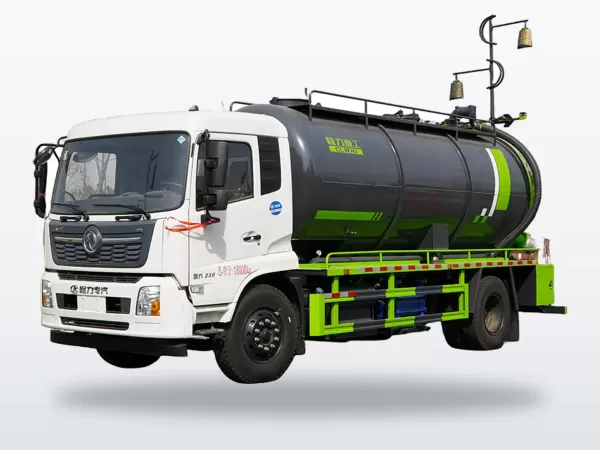 Dongfeng 4X2 4 cbm Sewage Suction Truck for Municipal Sewer Cleaning
Sanitation Truck
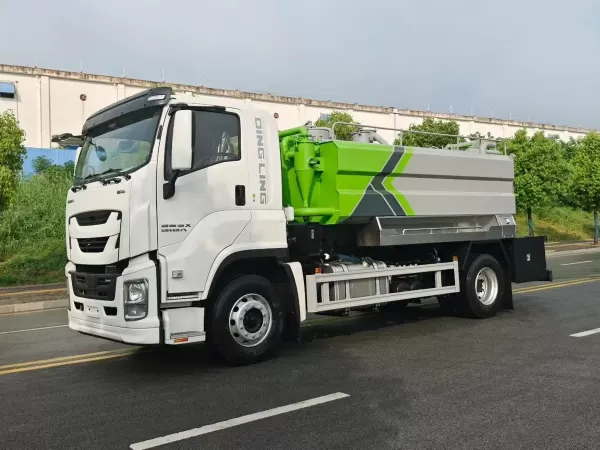 ISUZU FTR Combination Vacuum Truck | 8m3 Sewage + 4m3 Water Tank, 205Hp
Sanitation Truck
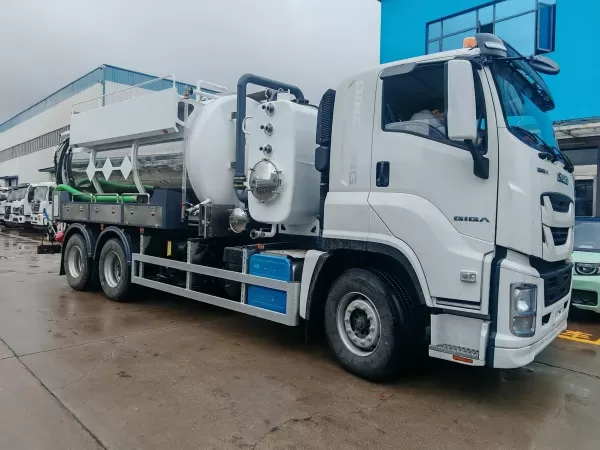 ISUZU GIGA 6x4 Sewage Suction Truck Large Vacuum Tank for Municipal Sludge
Sanitation Truck
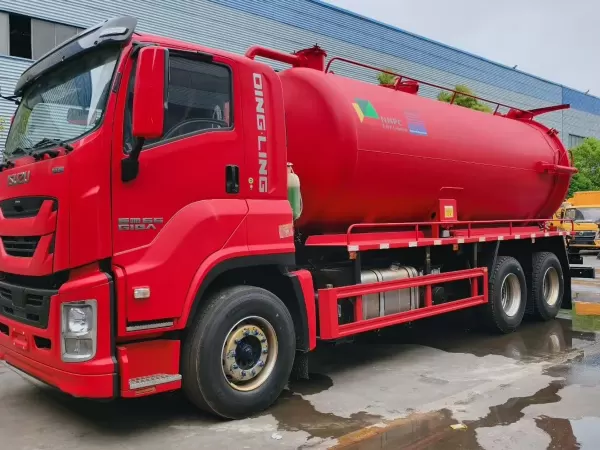 ISUZU 6x4 Sewage Suction Truck Red Vacuum Tank Heavy Duty Municipal Service
Sanitation Truck
Tell us your truck model and quantity — an engineer replies within 12 hours with a factory-direct price.
Tell us the model and your requirement — an engineer replies within 12 hours, factory direct.