For sale · factory direct
A sewage suction truck is a vacuum pump, a sealed tank and a hose. The pump pulls a vacuum in the tank, atmospheric pressure pushes the liquid up the hose, and the load leaves by gravity, by pressure or by tipping the tank. Pump type and tank volume decide both the price and the jobs the truck can take.
Every figure on this page is a budget framework for factory-direct FOB China, not a quotation. Chassis brand, pump type, tank material, jetting equipment, emission standard and freight all move the final number.
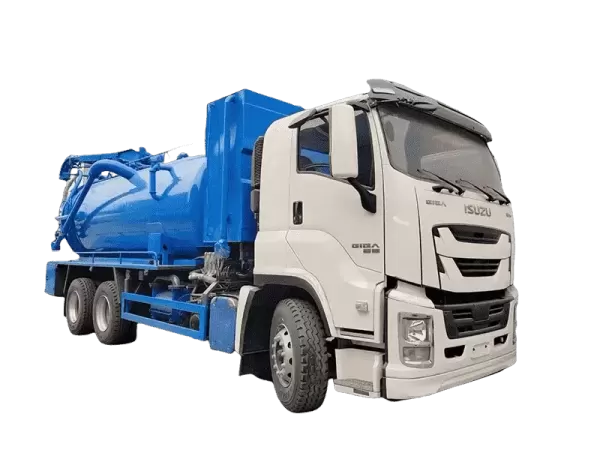
Standard specifications, carbon steel tank, left-hand drive, China FOB. Figures are a budget framework, not a quotation.
| Configuration | Tank volume | Typical budget (USD, FOB) | Fits |
|---|---|---|---|
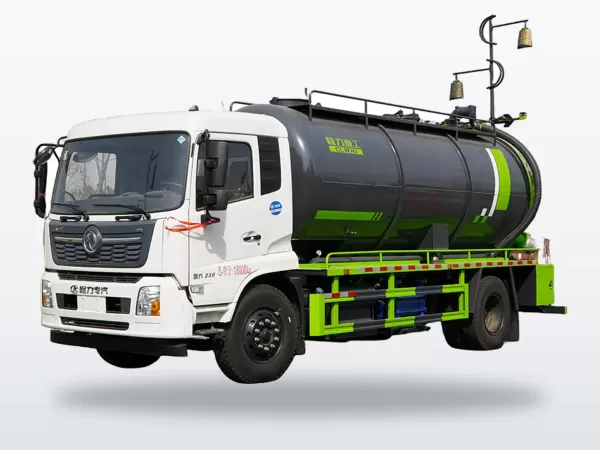
| 4x2 sewage suction truck | 5–8 m³ | 28,000 – 45,000 | Septic tanks, estates, small municipal fleets |
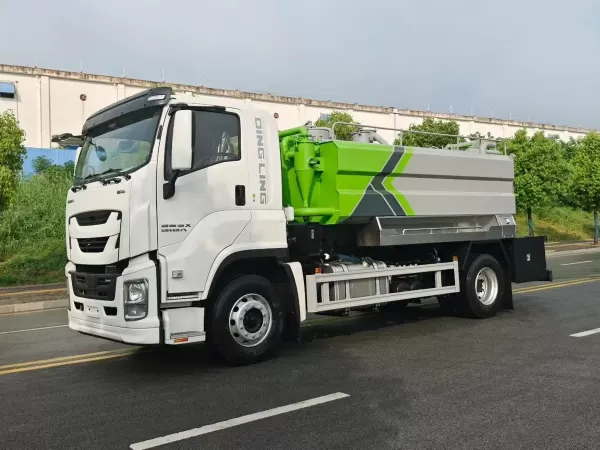
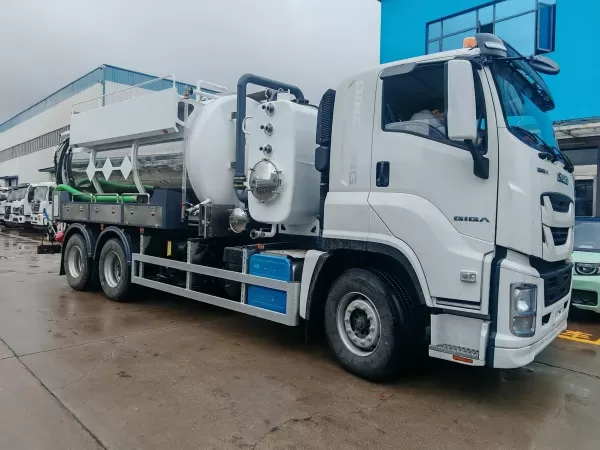
| 6x4 suction or combination jetter | 12–16 m³ | 55,000 – 80,000 | City sewer lines, storm drains, catch basins |
| 8x4 high-volume tanker | 20–25 m³ | Quoted per configuration | Depot transfer, long runs, low-disposal-fee areas |
| Stainless or lined tank | Same as base tank | Quoted per specification | Corrosive industrial waste, brine, chemical sludge |
The 8x4 row sits above the 6x4 band because the chassis, pump and tank all grow together. It is quoted against a written duty — tank volume, suction depth, hose length and daily trips — rather than from a price list.
The principle is simple; the engineering is in the pump, the tank and the valves between them.
The pump evacuates air from the sealed tank. Atmospheric pressure then pushes liquid up the suction hose and into the tank. This is why a leaking tank cover or a worn hose collapses the whole system: the truck is only as strong as its seal.
Liquid rises until the float or level sensor cuts the vacuum. Filling past the rated level pulls liquid into the pump and is the most common way a vacuum pump is destroyed. A working level gauge and an automatic cut-off are not accessories.
Gravity discharge at a treatment works is slow but free. Pressure discharge is faster and can lift the load, but the tank must be rated for pressure. Tipping tanks dump fastest but add a tipping frame, hydraulics and weight — the choice follows the disposal site, not the brochure.
Ask how the truck will be emptied before choosing the pump. A high-vacuum pump on a tank that cannot be discharged quickly is money standing still at the treatment works.
The pump is the most expensive single component and the one that decides which jobs the truck can accept.
| Pump type | How it behaves | Good for | Trade-off |
|---|---|---|---|
| Liquid-ring vacuum pump | Handles wet gas and small slugs of liquid without damage | Municipal sewer cleaning, septic and sludge work | Needs a water supply and a separator; not the highest vacuum |
| Rotary-vane vacuum pump | Higher vacuum, dry running, compact | Deeper lifts, longer suction hoses, industrial pits | Vanes wear and are sensitive to liquid carry-over |
| Roots blower combination | High air flow at moderate vacuum | Dry bulk and grit recovery, long runs | Not a liquid pump; needs a different tank and filtration |
Two trucks with the same tank volume and the same chassis can differ by a wide margin on price because of the pump alone. Name the duty — suction depth, hose length, solids content — and the pump choice stops being a guess.
Municipal sewer work, septic service and industrial recovery are three different trucks.
| Job | Truck to plan for | Why | Watch out for |
|---|---|---|---|
| City sewers and storm drains | 6x4 combination jetter, 12–16 m³ | High-pressure jetting clears the line; vacuum removes the debris in the same pass | Water tank size, jetting pressure and hose reel are separate decisions |
| Septic tanks, estates, small towns | 4x2 suction truck, 5–8 m³ | Short wheelbase reaches driveways; the volume matches a normal septic round | Check the suction depth: shallow tanks can sit far from the truck |
| Catch basins and grit chambers | 6x4 or 8x4 with high-volume tank | Solids settle; volume per stop matters more than vacuum depth | Grit wears pumps and valves — ask about wear protection |
| Industrial sludge and chemical waste | Stainless or lined tank, specified pump | Corrosion resistance decides tank life | Confirm what the waste actually is before specifying materials |
If one truck has to do both municipal sewer work and septic rounds, price the combination unit against two dedicated trucks. The combination usually wins on mobilisation cost and loses on volume.
The tank is a pressure vessel in one direction and a wear item in the other.
Plate thickness at the shell, the dished ends and the baffles decides how the tank behaves under vacuum and pressure. Internal baffles stop the load from surging on the road; without them, a part-full tank is a handling problem on every bend.
Anti-corrosion treatment matters more than paint colour. Sewage is aggressive: a coated carbon steel tank with proper surface preparation lasts, an uncoated one pits at the water line. Stainless is the answer for brine, chemical sludge and salt-water environments, and is quoted per specification rather than as a fixed surcharge.
Practical details decide daily usability: a sight glass or level gauge that can be read from the ground, a drain valve that does not block on solids, a hose carrier that keeps the suction hose off the paint, and a manhole large enough for inspection and cleaning.
Ask every supplier for the same line items, then compare column by column.
A quotation that leaves a line out is not cheaper. Ask for the missing item in writing and compare again.
Suction trucks are built to MIIT catalog requirements in an ISO-certified factory. Tanks are pressure- and vacuum-tested before shipment, and the pump is run against a closed valve to verify the vacuum it can hold. Test records are supplied with the shipping documents on request.
Lead time is typically 25–35 working days for a standard 4x2 suction truck after drawing approval and deposit, and 35–50 working days for combination jetter units or stainless tanks. Chassis availability and the emission package are the two items most likely to extend that window.
Export files include certificate of origin, commercial invoice, packing list and bill of lading, with inspection or test records on request. Loading photos, lifting points and blocking instructions are supplied before departure. Right-hand drive and local homologation packages are prepared per order where the destination market requires them.
For septic versus municipal duty, tank capacities and pump selection in more depth, read the vacuum and septic truck buying guide; the full sanitation range is on the sanitation truck page.
It depends on the pump, the hose and the seal, not only on the vacuum figure. A truck rated for a deep lift needs a pump that holds vacuum under load, a hose that does not collapse, and tight tank seals. Tell us the actual suction depth you work at and the pump is specified against it.
If the job is blocked sewer lines, you need jetting: high-pressure water clears the line and the vacuum removes the debris in the same pass. For septic tanks and liquid waste, a plain suction truck does the work at a lower price and lower maintenance cost.
Yes. Stainless is specified for brine, chemical sludge and salt-water environments, and it is quoted against the tank volume and plate specification rather than as a fixed surcharge. For ordinary sewage, a properly coated carbon steel tank is the normal choice.
Three ways: by gravity at a treatment works, by pressure discharge through the pump or a dedicated compressor, or by tipping the tank. The right answer depends on where you unload and how fast the site accepts trucks — tell us the disposal point and the discharge method follows.
Right-hand drive, Euro 3 to Euro 6 engines and market-specific cooling packages are configured per order, subject to chassis availability in that specification. Tell us the destination country at the enquiry stage, because the emission standard and homologation package have to be decided before the chassis is ordered.
Send the tank volume, suction depth, hose length, waste type, discharge method and destination port. You get a specification sheet and a budget band for that exact configuration, usually within one working day, with no obligation.
Tell us your truck model and quantity — an engineer replies within 12 hours with a factory-direct price.
Tell us the model and your requirement — an engineer replies within 12 hours, factory direct.