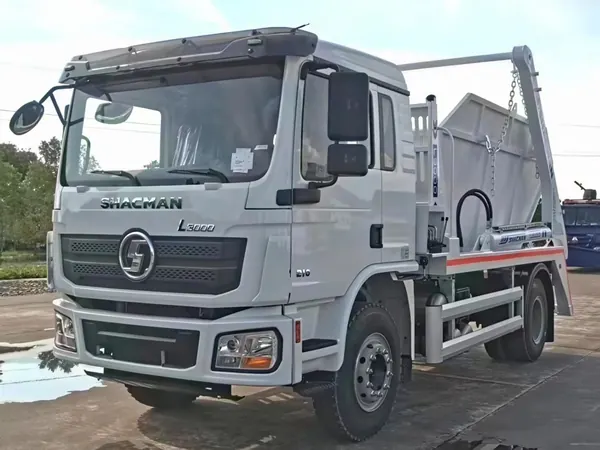
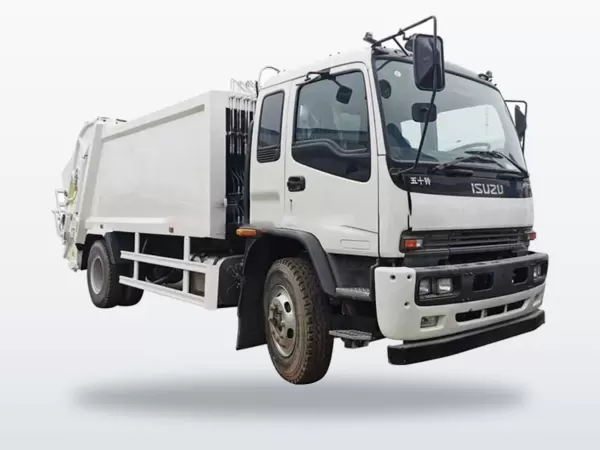
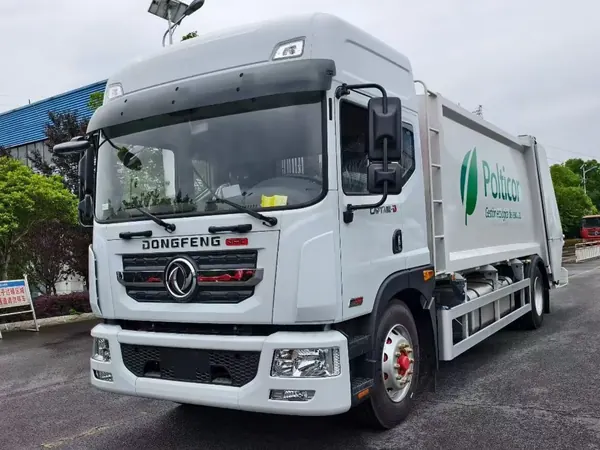
Price guide
A garbage truck is priced by the route it has to serve, not by the name on the body. Tell us the bin type, body volume, chassis and destination port, and a factory price band turns into a real number, usually within one working day.
Every figure on this page is a budget framework for factory-direct FOB China. It is not a quotation: chassis brand, body steel, bin-lift type, emission standard, right-hand drive and freight all move the final number.
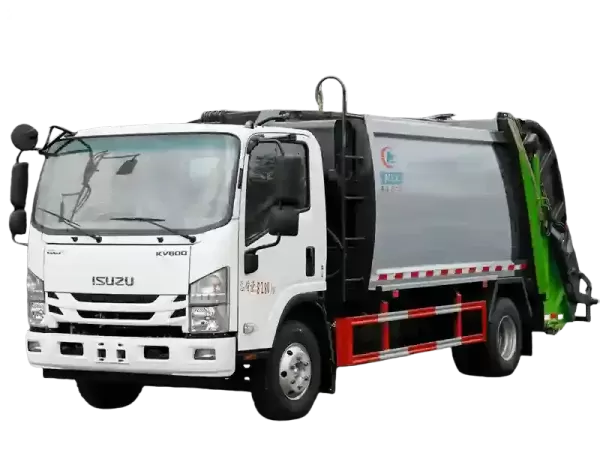
Standard specifications, carbon steel body, left-hand drive, China FOB. Figures are a budget framework, not a quotation.
| Body type and configuration | Body volume | Typical budget (USD, FOB) | Best suited to |
|---|---|---|---|
| 4x2 rear-loader compactor | 5-8 m3 | 28,000 - 40,000 | Residential lanes and streets under 7 m wide |
| 6x4 rear-loader compactor with bin lift | 10-12 m3 | 45,000 - 65,000 | City routes with 120 L and 240 L wheelie bins |
| Side-loader body | 8-10 m3 | 42,000 - 60,000 | One-man operation, kerbside collection |
| Hooklift or skip loader with one open body | 8-20 m3 | 30,000 - 45,000 | Construction waste and container exchange |
| Stainless or food-waste body | same as base body | add 15-25% | Wet, corrosive or organic waste |
The wide bands are honest: the same 10 m3 compactor can leave the factory at two very different prices depending on the chassis underneath it and the hydraulic package on top. Narrowing the band is a five-line specification job, not a negotiation.
Six items explain most of the gap between two quotations for the same body volume.
A 4x2 light chassis and a 6x4 heavy chassis carry the same 8 m3 body at very different cost. Gross vehicle weight, engine output and gearbox choice follow the route gradient and the payload.
Side and floor plate thickness, wear strips at the loading sill and the paint system decide how many years the body survives. A thinner plate is the most common hidden saving in a low quotation.
Pump and valve brand, cylinder size and cycle time set both the compaction ratio and the maintenance profile. A slower eject cycle at the landfill costs crew hours every single shift.
Manual rear-loading, a 240 L comb lift, a dual-bin lift or a side-loading arm are different machines. The lift rating and the interlock are safety items, not accessories.
Euro 3, Euro 5 and Euro 6 engines are priced differently and not every market accepts every standard. Right-hand drive, local homologation and tropical cooling packages are quoted per order.
A 4x2 unit fits a 40FT container or a flat rack; a 6x4 usually moves by RoRo. Freight, packing, insurance and port charges are separate lines and should be shown separately.
The cheapest way to overspend is to buy the wrong body type and then live with it for eight years.
| Route pattern | Recommended body | Volume to plan for | Why |
|---|---|---|---|
| Narrow residential lanes, many stops | 4x2 rear loader | 5-8 m3 | Short wheelbase, slow-speed manoeuvring, crew loading by hand |
| Dense city streets, standard wheelie bins | 6x4 rear loader with bin lift | 10-12 m3 | Higher compaction per trip, lift removes manual handling |
| Wide avenues, single-operator shifts | Side loader | 8-10 m3 | Driver loads from the cab side, one person per truck |
| Construction and bulky waste, transfer stations | Hooklift or skip loader | 8-20 m3 | One chassis serves several bodies, containers are dropped and swapped |
If the route mixes narrow lanes and a transfer station, price two trucks against one large truck before deciding. The body is usually the cheaper half of that argument.
Ask for the same line items from every supplier, then compare column by column.
A quotation that omits a line is not cheaper. Ask for the missing item in writing and compare again.
Trucks are built to MIIT catalog requirements in an ISO-certified factory. Compactor bodies are tested for pack, eject and bin-lift cycles before shipment, and the test video is sent together with the shipping documents.
Lead time is typically 20-35 working days for a standard rear loader after drawing approval and deposit, and 30-45 working days for stainless, side-loader or multi-function bodies. The chassis order and the emission package are the two items most likely to extend that window.
Export files include certificate of origin, commercial invoice, packing list, bill of lading, and inspection or test records on request. Lifting points, blocking instructions and loading photos are supplied before departure. Where the destination market allows it, right-hand-drive and local homologation packages are prepared.
If you are still deciding between body types, the garbage truck buying guide explains compaction, bin systems and body construction in more detail; this page stays on cost.
The delivered cost is the FOB price plus freight, insurance, port charges and any local homologation. For a 6x4 rear-loader compactor with bin lift, the FOB band above is USD 45,000-65,000; freight to most African and South American ports typically adds a four-figure sum per unit, and should always be quoted as its own line.
Most of the difference sits in three places: the chassis underneath (4x2 light versus 6x4 heavy), the plate thickness and wear strips of the body, and the hydraulic package. Ask for each of those in writing before comparing the totals.
Yes, for markets where a suitable chassis is available and local mounting is allowed. The price then covers the body, hydraulic kit and bin lift; shipping volume drops sharply, which is often the larger saving.
Sometimes, if the hydraulic system and body plate are genuinely sound. Compactor maintenance is dominated by hydraulic and structural wear, and both are expensive to correct after purchase. A used unit needs an inspection of the packing panel, ejector ram and body plate before the price can be judged.
Yes. Seal kits, wear plates, hydraulic filters and the original body drawing are supplied with every truck, and repeat orders of consumables are quoted against the chassis and body serial numbers.
Send the bin type, body volume, chassis preference and destination port. You get a specification sheet and a price band for that exact configuration, usually within one working day, with no obligation.
Tell us your truck model and quantity — an engineer replies within 12 hours with a factory-direct price.
Tell us the model and your requirement — an engineer replies within 12 hours, factory direct.