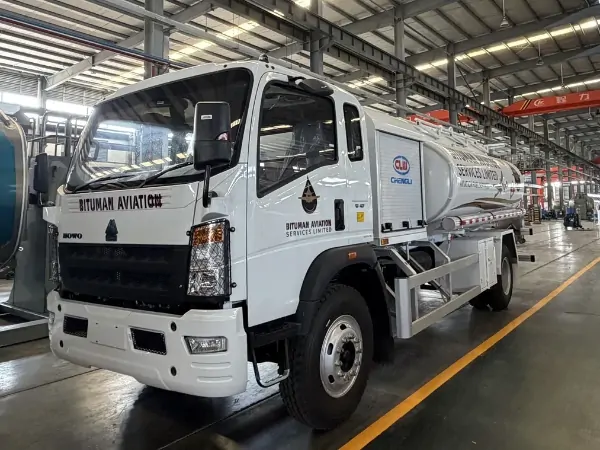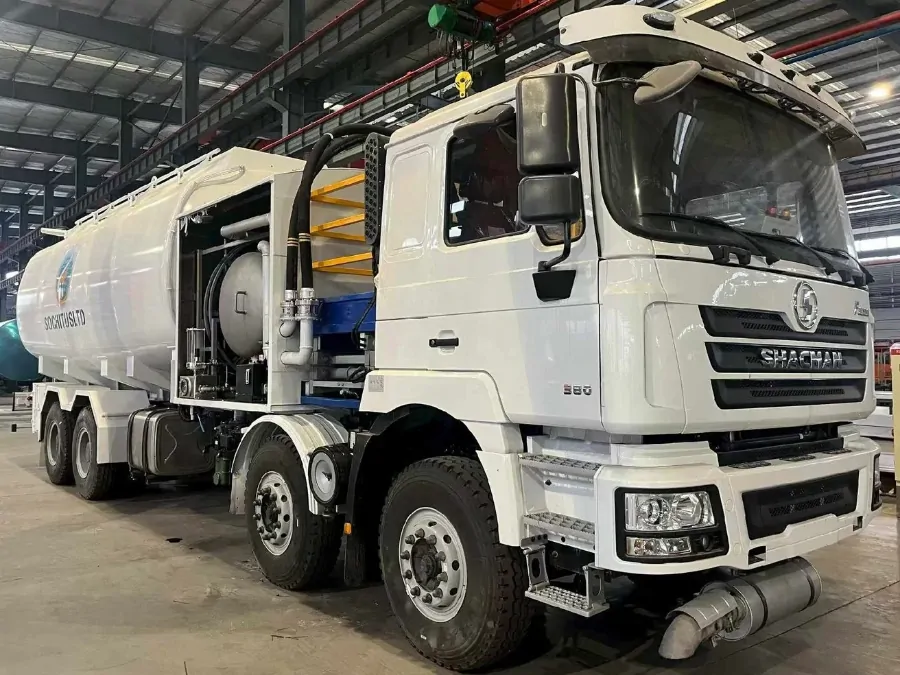
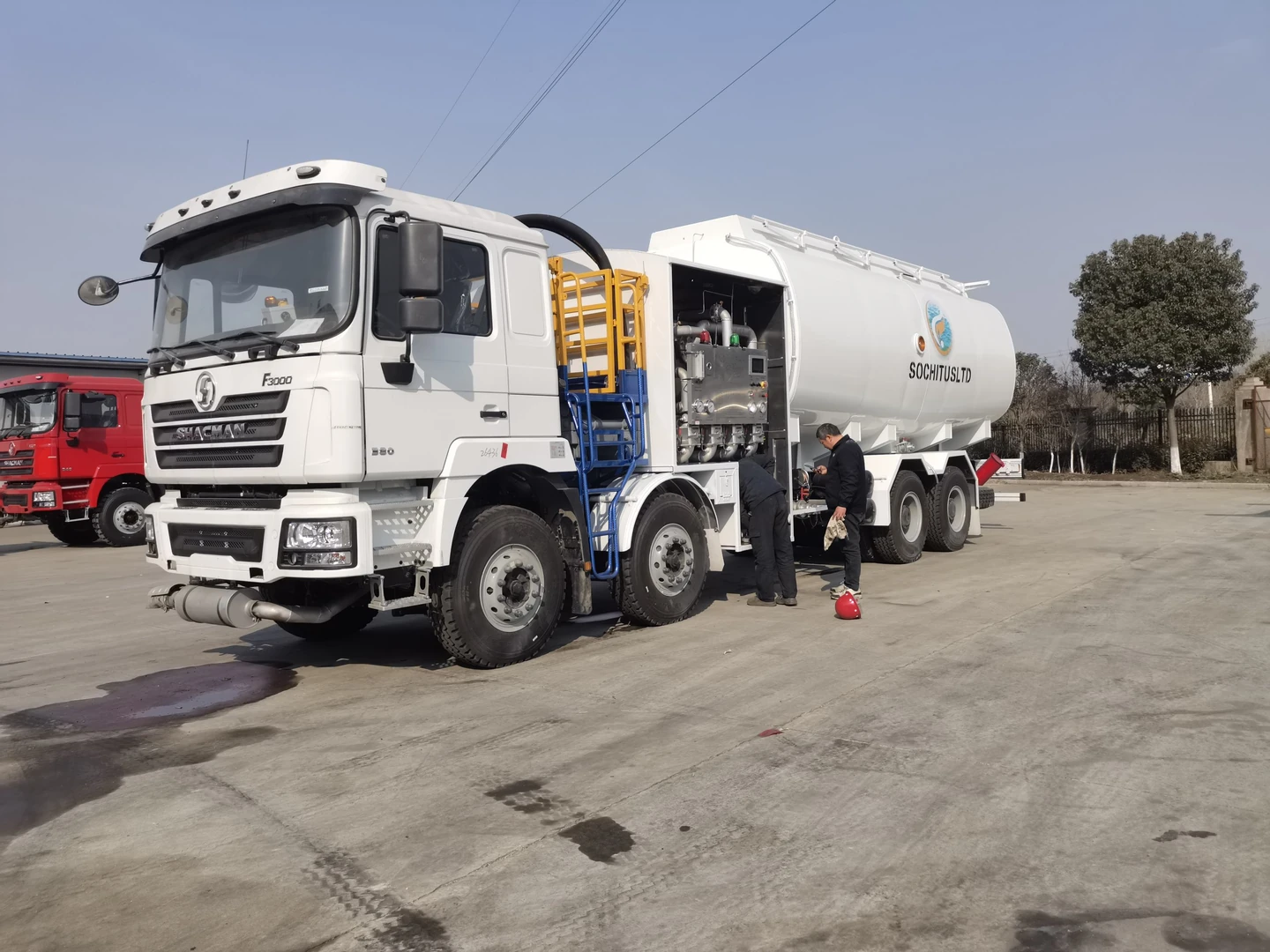
The SHACMAN F3000 8x4 aircraft refueling truck is a 14,000-litre aviation bowser for airport aprons, helipads and remote fuel depots. Its single-compartment tank carries JET A-1 behind a lockable cabinet that holds the filter/water separator, flow meter, deadman valve and four-point bottom-loading manifold, so one truck can load, filter and dispense without a fixed fuel farm. The F3000 cab carries a 380 hp badge and the 8x4 chassis spreads the full 14,000 litres over four axles, keeping axle loads legal on the public road between depot and apron. A rear ladder and top walkway give safe access to the manhole, and the red/green beacons and emergency stop are wired into the refueling circuit. Tell us your aircraft type, required flow rate and destination port, and we will confirm the tank certificate, filter model and hose length before quoting.
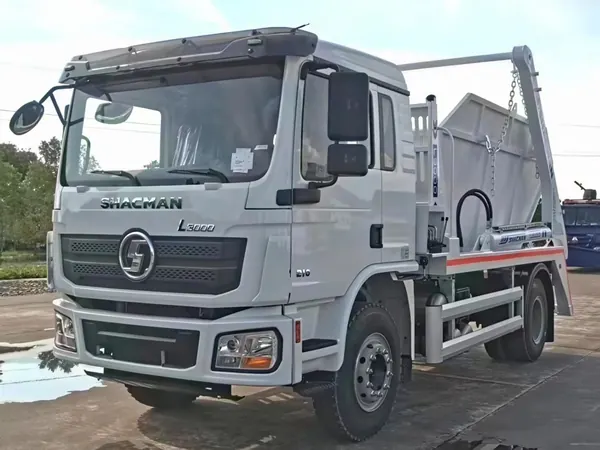 SHACMAN L3000 4x2 210HP Skip Loader Garbage Truck 10m3
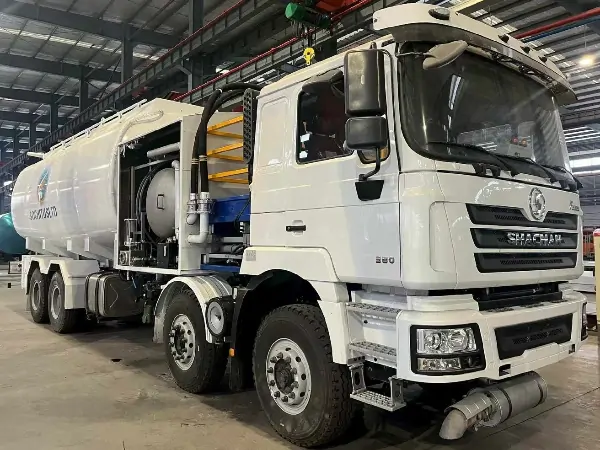 SHACMAN F3000 8x4 Aircraft Refueling Truck 14,000 L JET A-1
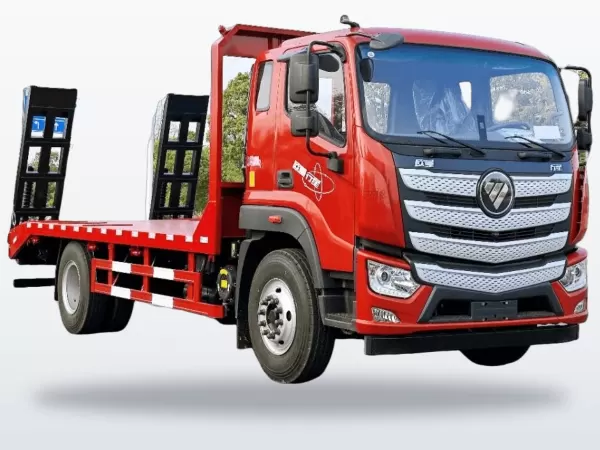 FOTON Aumark 4.5-Ton Light Wrecker for Mall & Port Patrol
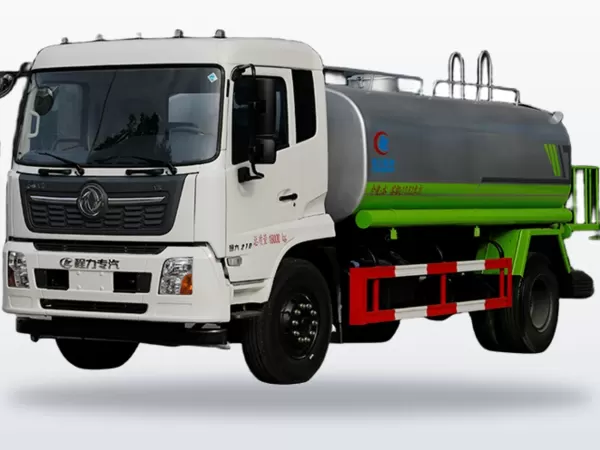 Dongfeng 8X4 20 cbm Water Sprinkler Truck for Road Washing &
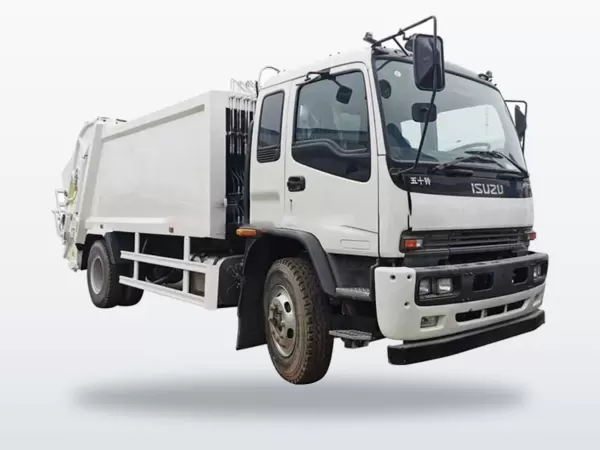 ISUZU 4X2 10 cbm Compactor Garbage Truck for Municipal Waste
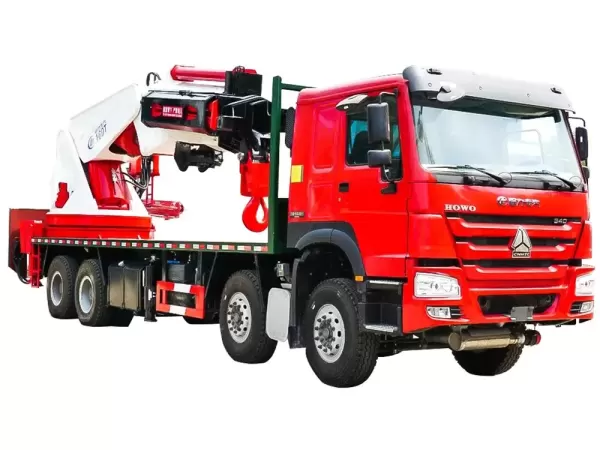 HOWO 8x4 400HP with 35-Ton Crane for Heavy Project Lifts
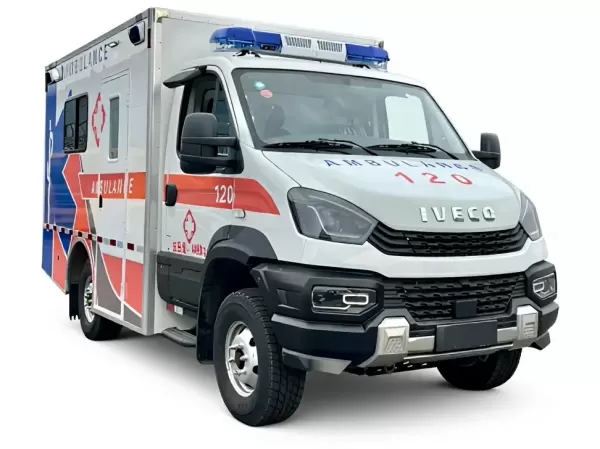 IVECO Daily ICU Ambulance for Critical Care Transport
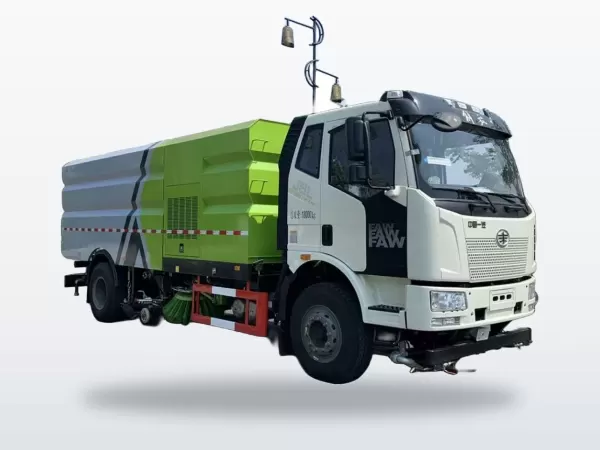 FAW Jiefang 4X2 12 cbm Road Sweeper Truck for City Arterial
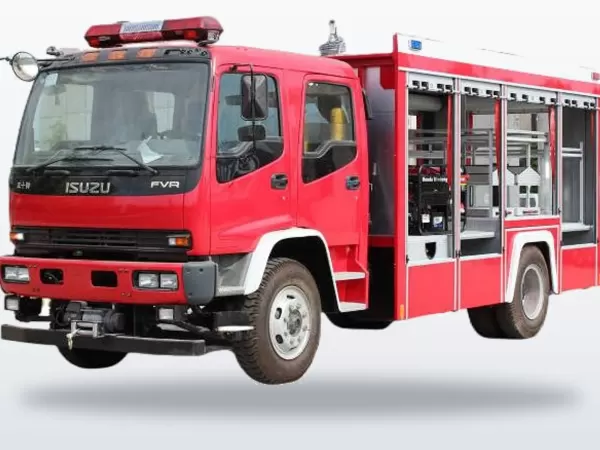 ISUZU 6X2 3 cbm Foam Fire Truck for Industrial Fire Response
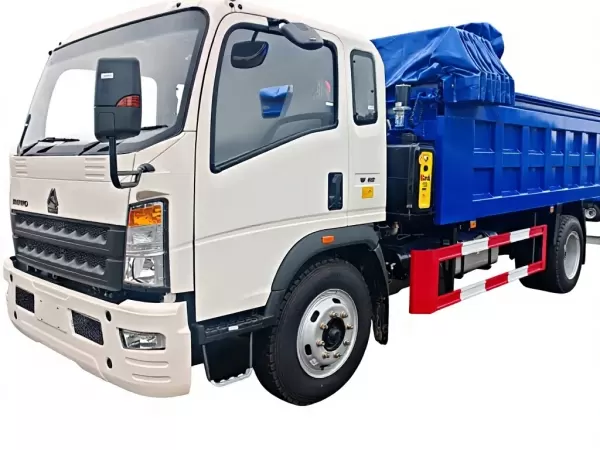 SINOTRUK 4x2 Light Dump with Electric Tarp for City Muck
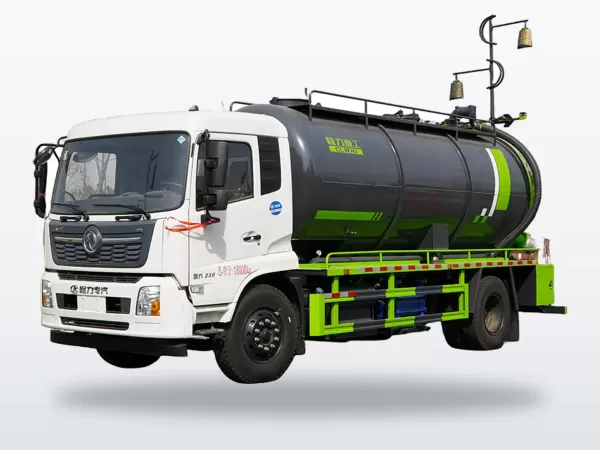 Dongfeng 4X2 4 cbm Sewage Suction Truck for Municipal Sewer
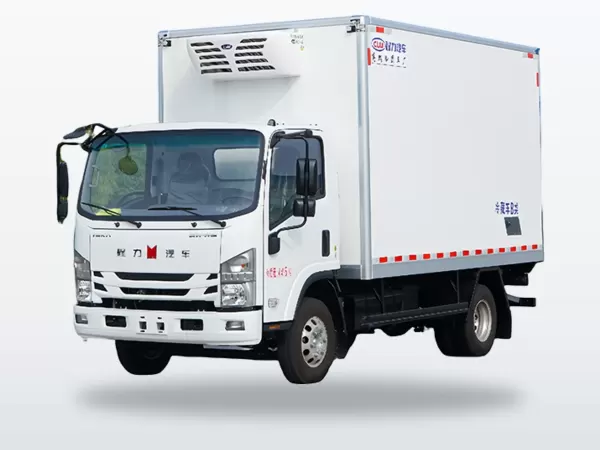 ISUZU 4X2 12 cbm Refrigerated Box Truck for Cold-Chain Deliv
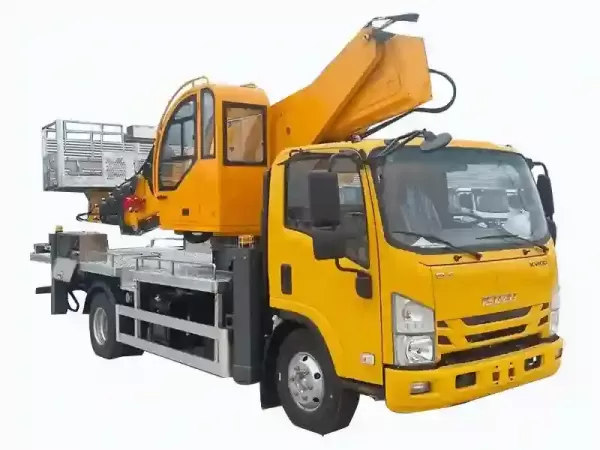 ISUZU 32 m Aerial Platform Truck for Utility Maintenance
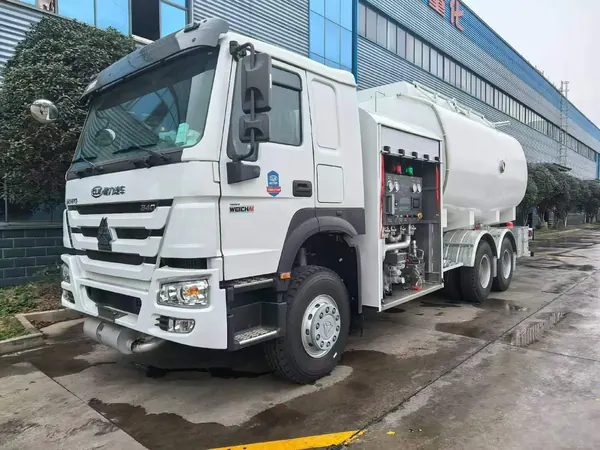 HOWO 6x4 Aircraft Refueling Truck 12,000 L JET A-1 Bowser wi
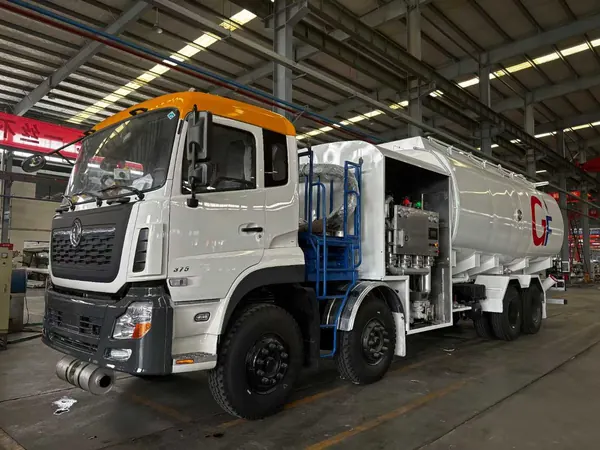 Dongfeng Tianlong 8x4 Aircraft Refueling Truck 30,000 L JET
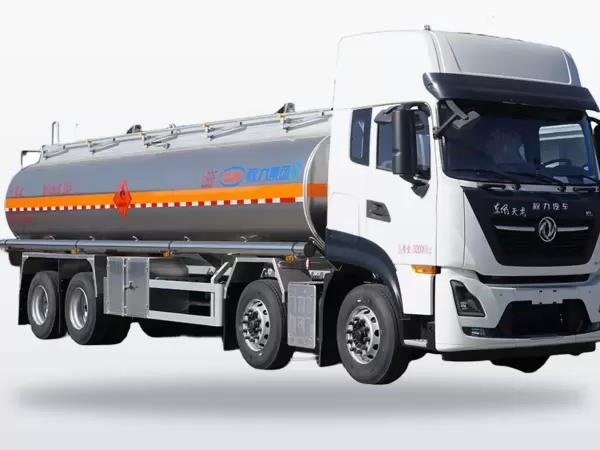 Dongfeng 8X4 22000L Fuel Tanker Truck
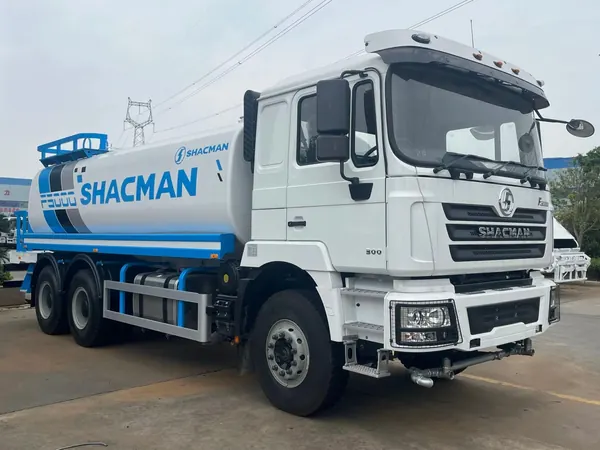 20 CBM Water Sprinkler Truck for Sale – SHACMAN F3000 6x4 30
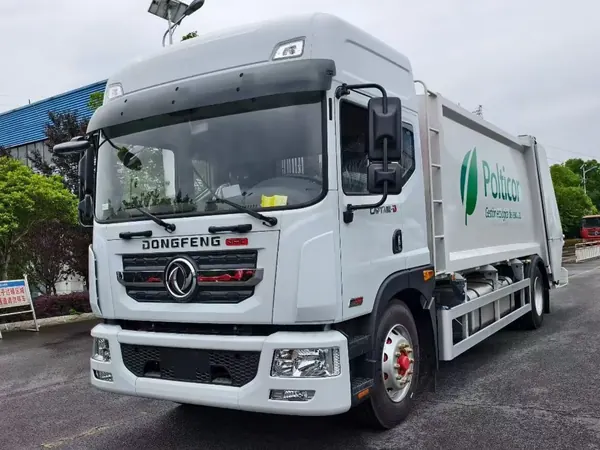 16 CBM Compactor Garbage Truck for Sale – Dongfeng 4x2 Rear
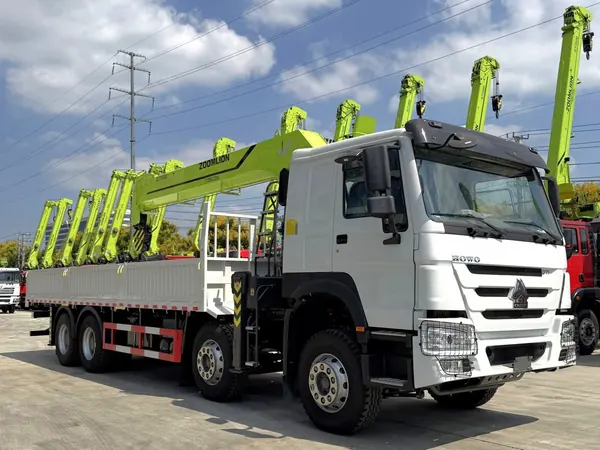 14 Ton Crane Truck for Sale – HOWO 8x4 with ZOOMLION 5-Secti
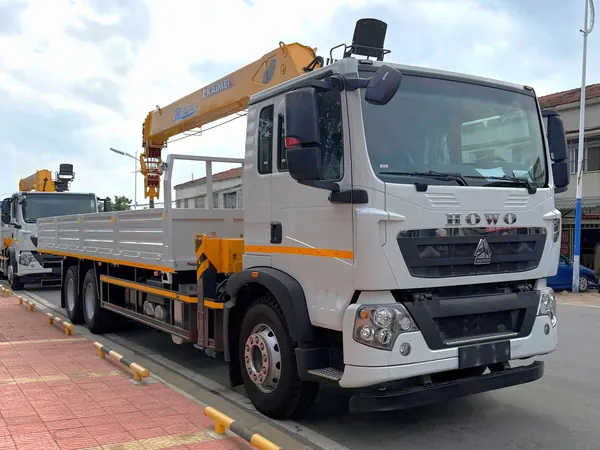 12 Ton Crane Truck for Sale – HOWO T5G 6x4 with KAIMEI Boom
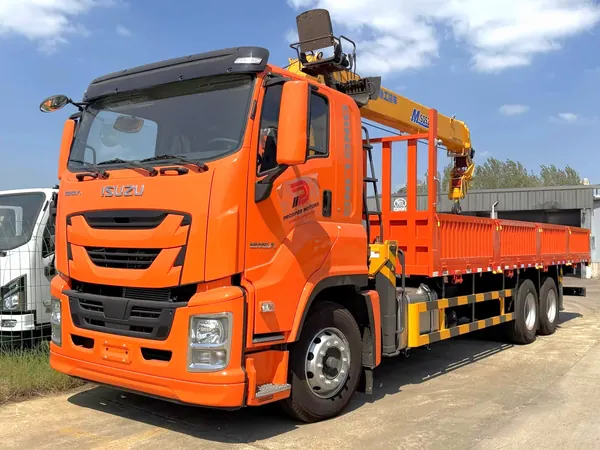 ISUZU GIGA 6x4 10 Ton XCMG Truck Mounted Crane for Sale with
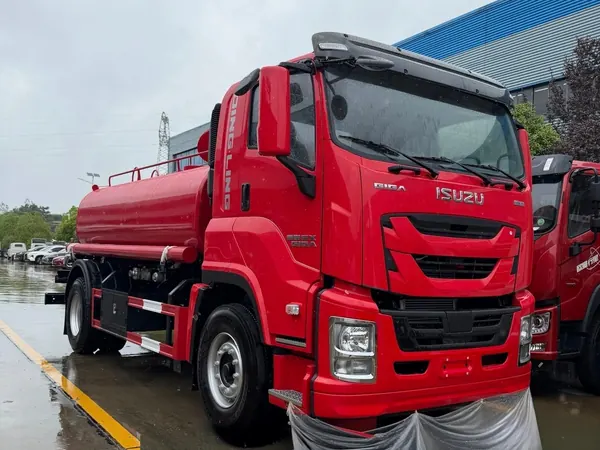 ISUZU GIGA 4x2 12 CBM Water Sprinkler Truck for Sale – 12,00
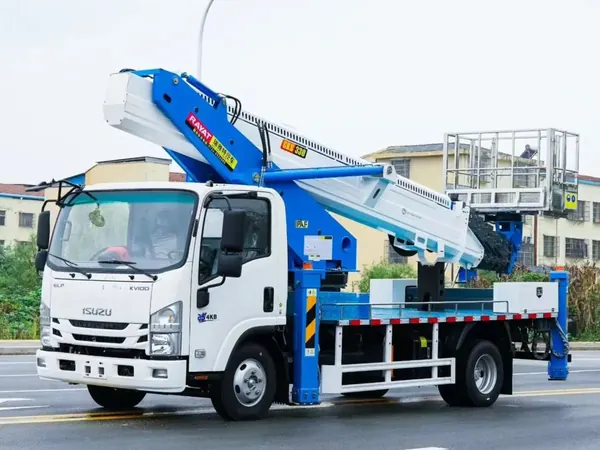 ISUZU ELF 4x2 32m Manlift Bucket Truck for Sale with 200 kg
 25 Ton Dump Truck for Sale – SHACMAN F3000 6x4 380 HP with 5
|
SHACMAN F3000 8x4 Aircraft Refueling Truck — 14,000 L |
||
| Chassis & Cab | Chassis | SHACMAN F3000, 8x4 |
| Cab | F3000 day cab, left-hand drive, white | |
| Engine | 380 hp diesel, 11.6 L class (badge rating; model on nameplate) | |
| Gearbox | Manual, ratio set per build | |
| Gross vehicle weight | 31,000 kg class, subject to axle ratings | |
| Tyres | 12.00R20 tube-type, dual rear (confirm per build) | |
| Brakes | Air brake with ABS | |
| Tank & Loading | Capacity | 14,000 L nominal (tank certificate governs) |
| Compartments | 1 | |
| Material | Carbon steel, painted; internal anti-surge baffles | |
| Manhole | Top manhole, rear ladder and walkway | |
| Bottom loading | 4-point manifold | |
| Vapour recovery | Fitted with bottom-loading system | |
| Refueling Equipment | Pump drive | Power take-off (PTO) from gearbox |
| Filtration | Filter/water separator with differential-pressure gauge | |
| Metering | Flow meter with mechanical counter | |
| Control | Deadman valve, emergency stop, red/green beacons | |
| Hose | Hose reel and aviation nozzle; length and nozzle per order | |
| Grounding | Static grounding reel with clamp | |
| Safety & Marking | Overfill protection | Optional; recommended for hydrant-fed depots |
| Hazard marking | UN 1863 placards for JET A-1 | |
| Fire extinguishers | 2 × dry powder, size per destination market | |
| Livery | Customer graphics; standard finish is white | |
▶ Most airfields outside the major hubs have no hydrant system: fuel arrives by road tanker and every aircraft is serviced from a bowser. That duty is a sequence — draw from the depot, filter, meter, deliver and account for every litre — so a refueler is specified around how fast that sequence repeats. A 14,000 L single-compartment tank covers a shift of light aircraft, helicopters or regional turboprops before the truck returns to the depot, which matters when the fuel farm is 40 km away.
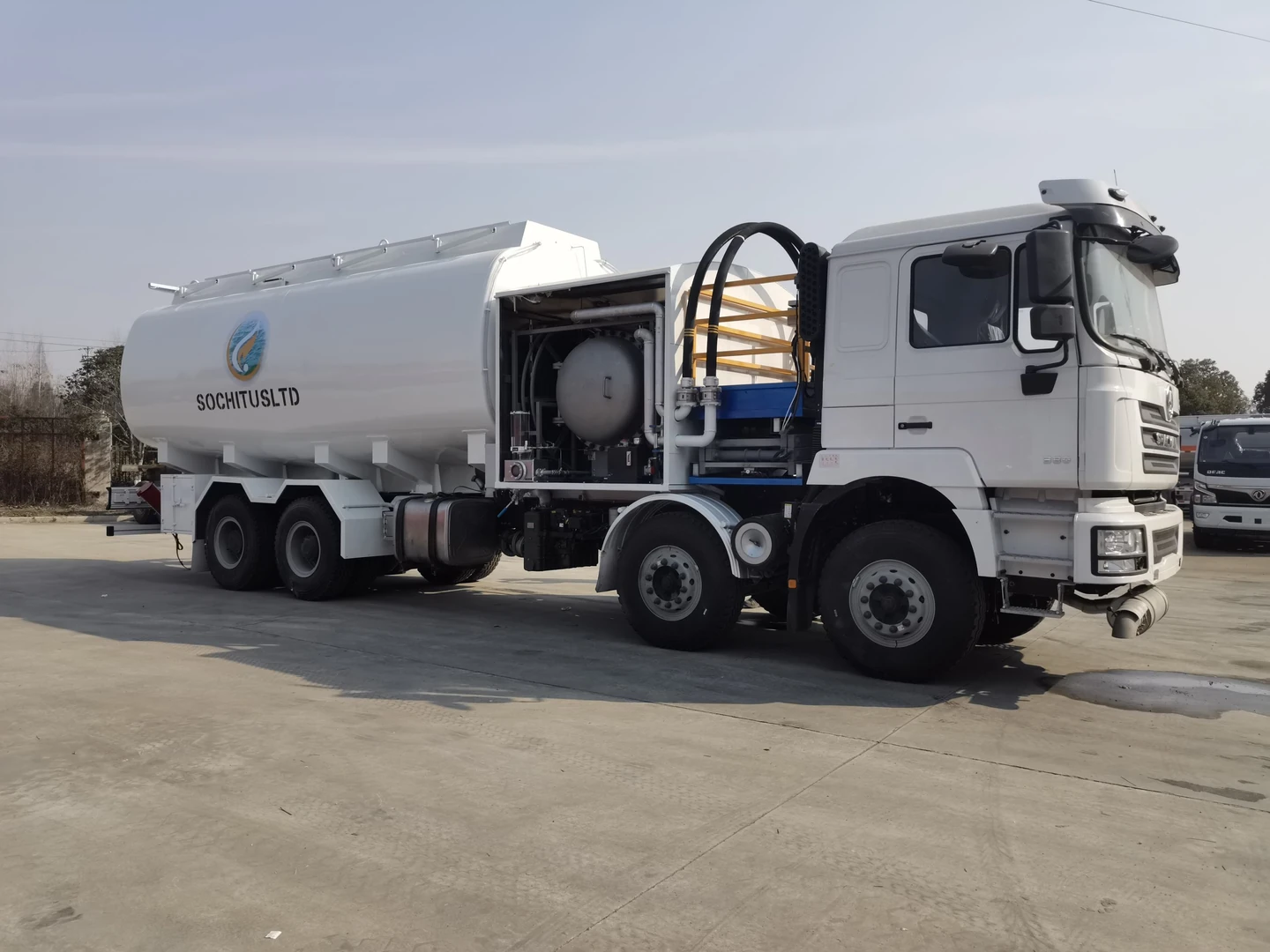
The lockable cabinet behind the cab does the technical work. Fuel leaves the tank through a PTO-driven pump, passes a filter/water separator watched by a differential-pressure gauge, and is measured by a flow meter before it reaches the hose reel. The deadman valve requires the operator to hold the control through the whole delivery, and the emergency stop, red/green beacons and static grounding reel sit in the same circuit. Four bottom-loading couplers let the truck refill from a depot standpipe without opening the top manhole, and vapour recovery keeps displaced vapour off the apron.
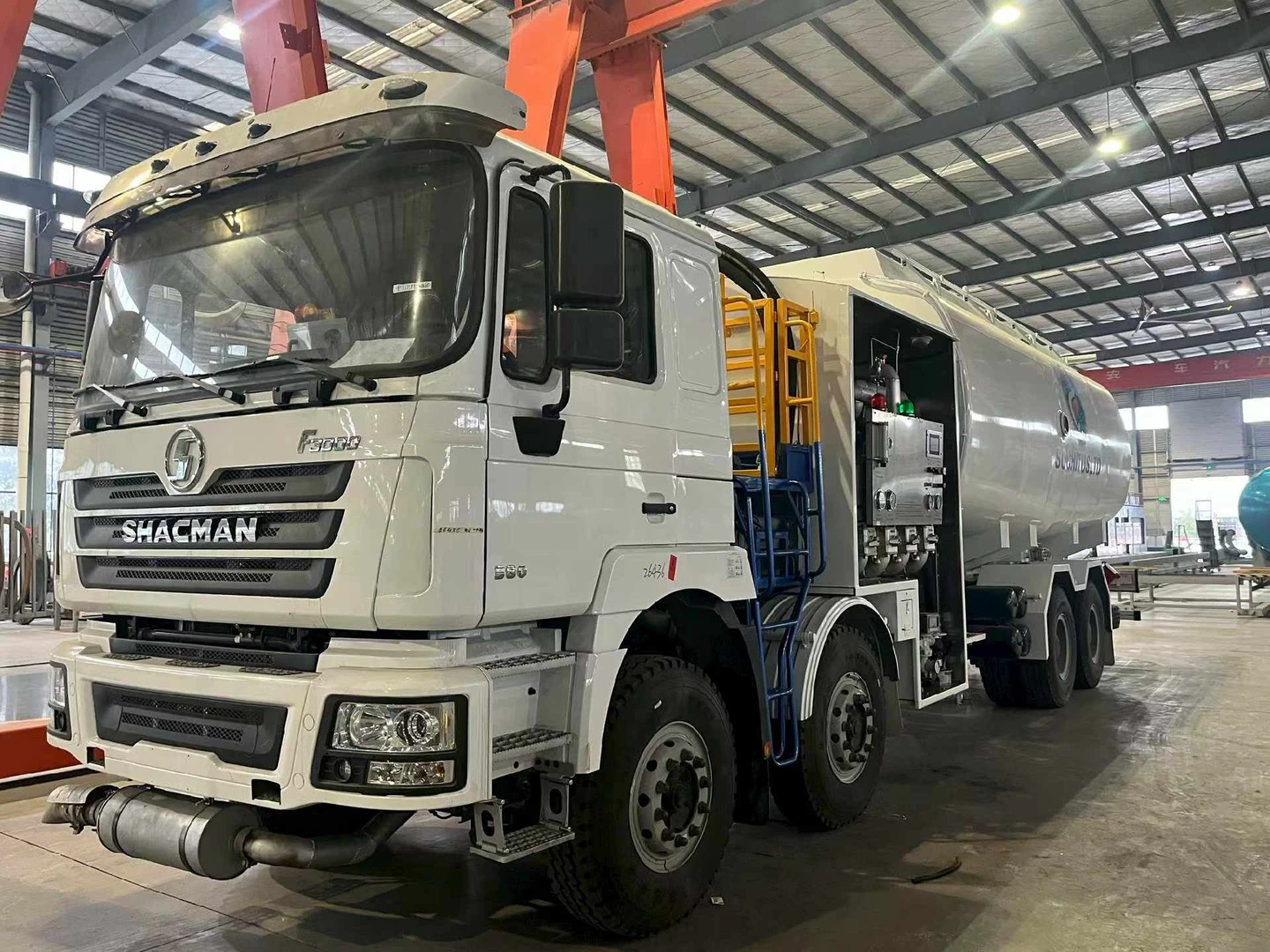
The 8x4 chassis is what makes the volume legal. Fourteen cubic metres of JET A-1 weighs about 11 tonnes; spread over two steering axles and a rear tandem, axle loads stay inside road limits on the public route between depot and airport. The F3000 cab carries a 380 hp badge and a day cab is enough for apron work. Hose length, nozzle type and overfill protection are build items — send us the aircraft you serve and the flow rate you need, and the specification is confirmed against the tank certificate before the order is released.
How much fuel does it carry?
14,000 litres nominal in a single compartment. The exact usable volume is stated on the tank certificate supplied with the truck; confirm it against your build sheet before ordering.
Can it refuel both jets and helicopters?
Yes, with the right nozzle and hose set. Helicopters usually need a lower flow rate and a longer hose reach; the pump and meter are matched to the aircraft listed in the order.
Is the tank suitable for AVGAS?
The body can be built for AVGAS 100LL, but the grade must be declared at order because seals, filters and bonding differ from JET A-1. Do not switch grades on a tank commissioned for jet fuel without checking the certificate.
Send your aircraft type, required flow rate and destination port for a specification and FOB quotation within 24 hours.
✔ Factory-direct build
Chassis and tank body are assembled to one build sheet, so the PTO, piping and cabinet fit the chassis instead of being adapted afterwards.
✔ Grade-specific commissioning
Tank, seals and filters are specified for the fuel grade you declare: JET A-1, JET A or AVGAS 100LL.
✔ Five-language documentation
Specification, operation notes and export documents are issued in English, Spanish, French, Arabic or Russian.
✔ 24-hour quotation
Send aircraft type, required flow rate and destination port; we return a specification and FOB quotation within one working day.
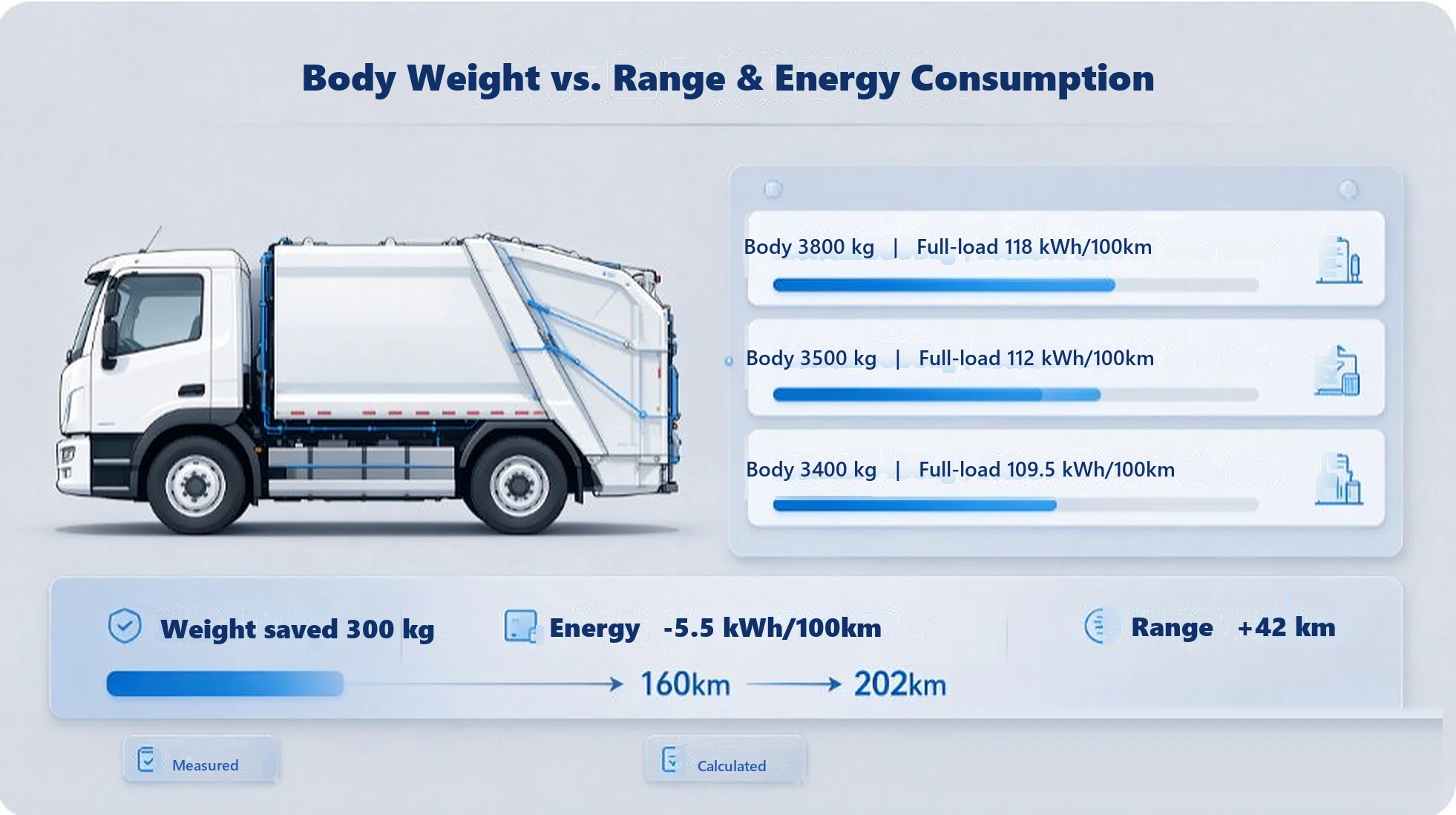 News
Electric Garbage Truck Body Lightweighting: Balancing Strength and Range
 News
At the 140th Canton Fair, CLW's Best Sales Tool Was a Calculator
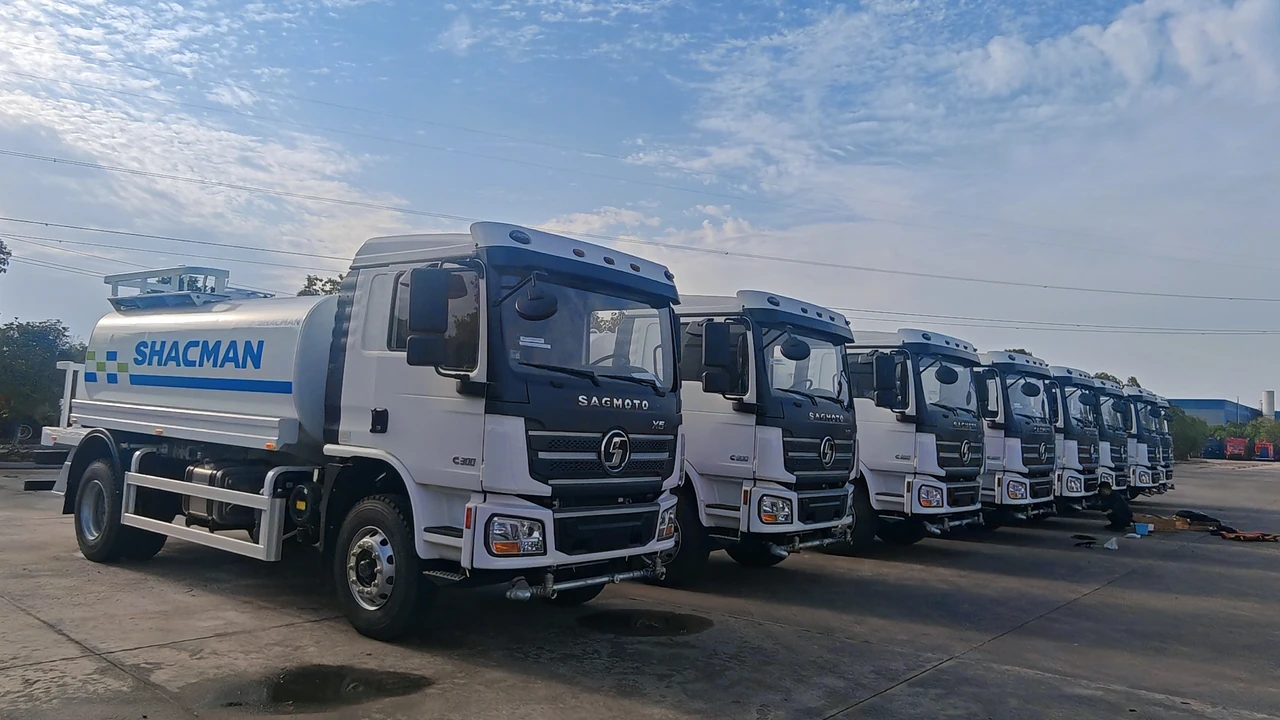 Delivery Case
8 Units SHACMAN X5S Cab-Controlled Water Sprinkler Trucks for Sale to Southeast Asia
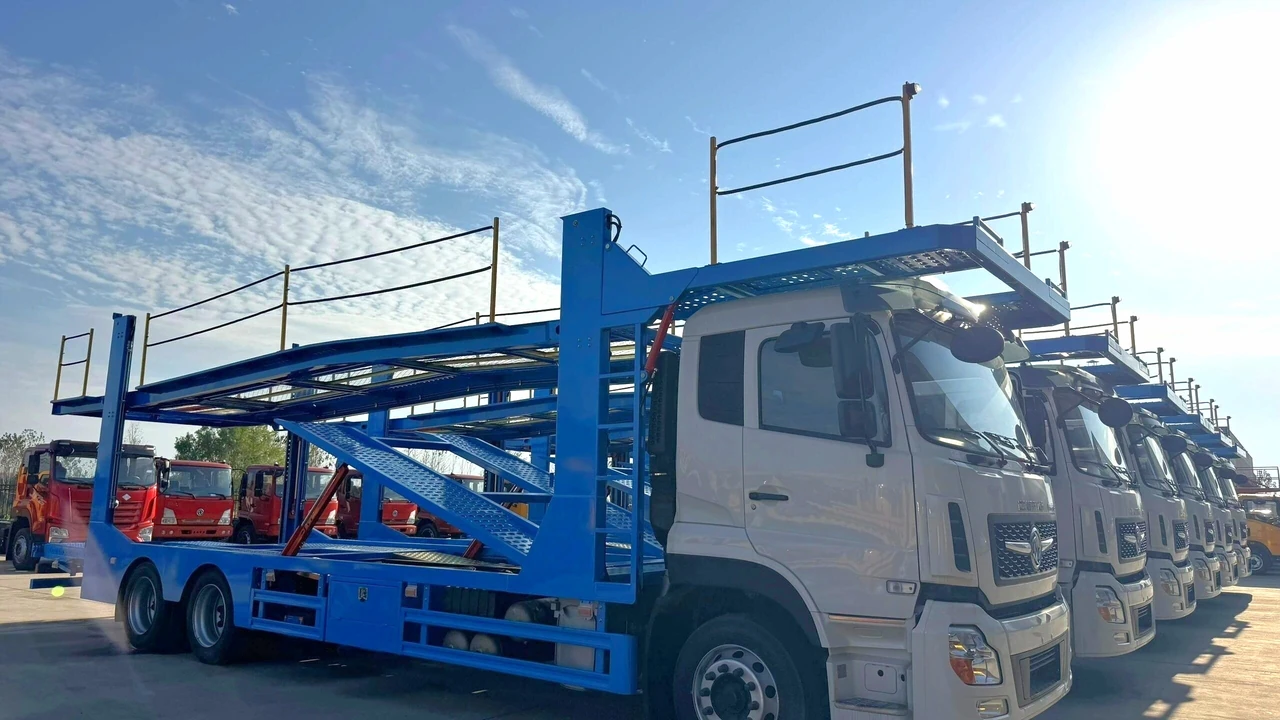 Delivery Case
10 Units Dongfeng 6x4 Car Carrier Truck for Sale to Ghana, Hydraulic Upper Deck Auto Transporter
Tell us your truck model and quantity — an engineer replies within 12 hours with a factory-direct price.
Tell us the model and your requirement — an engineer replies within 12 hours, factory direct.